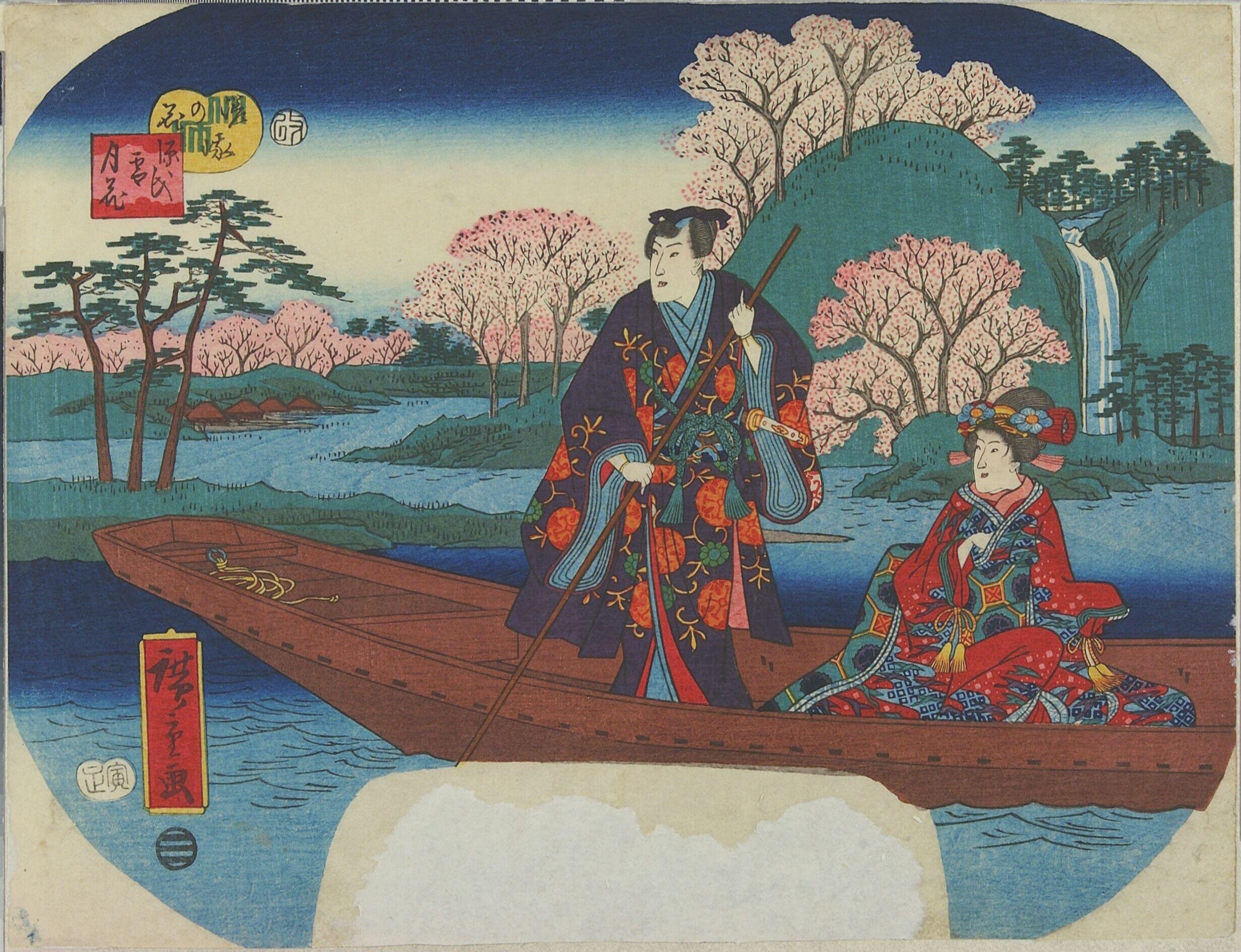
Cherry Blossoms at Saga
- Date:
- 1854
- Medium:
- Source:
- Victoria and Albert Museum
Description
Cherry Blossoms at Saga, an 1854 print by Utagawa Hiroshige in the Victoria and Albert Museum, depicts one of the most famous cherry-viewing locales in the western capital, the rural Saga district at the foot of the western hills of Kyoto. Saga had long been associated with classical waka, with Heian-period retreats, and with annual hanami pilgrimages by townspeople, courtiers, and clerics. Hiroshige treats the scene in his characteristic Edo ukiyo-e landscape print idiom, opening a broad view of blossoming trees against a sky softened by bokashi gradation and threading the foreground with small figures enjoying the season. Whether the composition foregrounds a particular temple, lane, or grove, the unifying note is the white-and-pink cascade of cherry blossom that turns the landscape into a celebratory canopy. By the mid-1850s Hiroshige's reputation as a chronicler of famous places extended well beyond Edo proper, and he was producing series that ranged across the country to include sites in the Kansai region. Saga, with its literary heritage and visual richness, was a natural subject. The colour palette balances cool greens and pale pinks with carefully placed accents of red and ochre, while the design avoids overcrowding so that the trees themselves remain the protagonists. For collectors, the V&A sheet offers a representative example of his late-career engagement with Kyoto-area subjects, demonstrating how cherry blossom could be rendered as both natural phenomenon and cultural emblem.
More Prints by Utagawa Hiroshige


More Landscapes Prints

Lake Kugushi in Wakasa Province (Wakasa Kugushiko), from the series Souvenirs of Travel I (Tabi miyage dai isshu)"
Wakasa Kugushiko
1920
Color woodblock print; oban
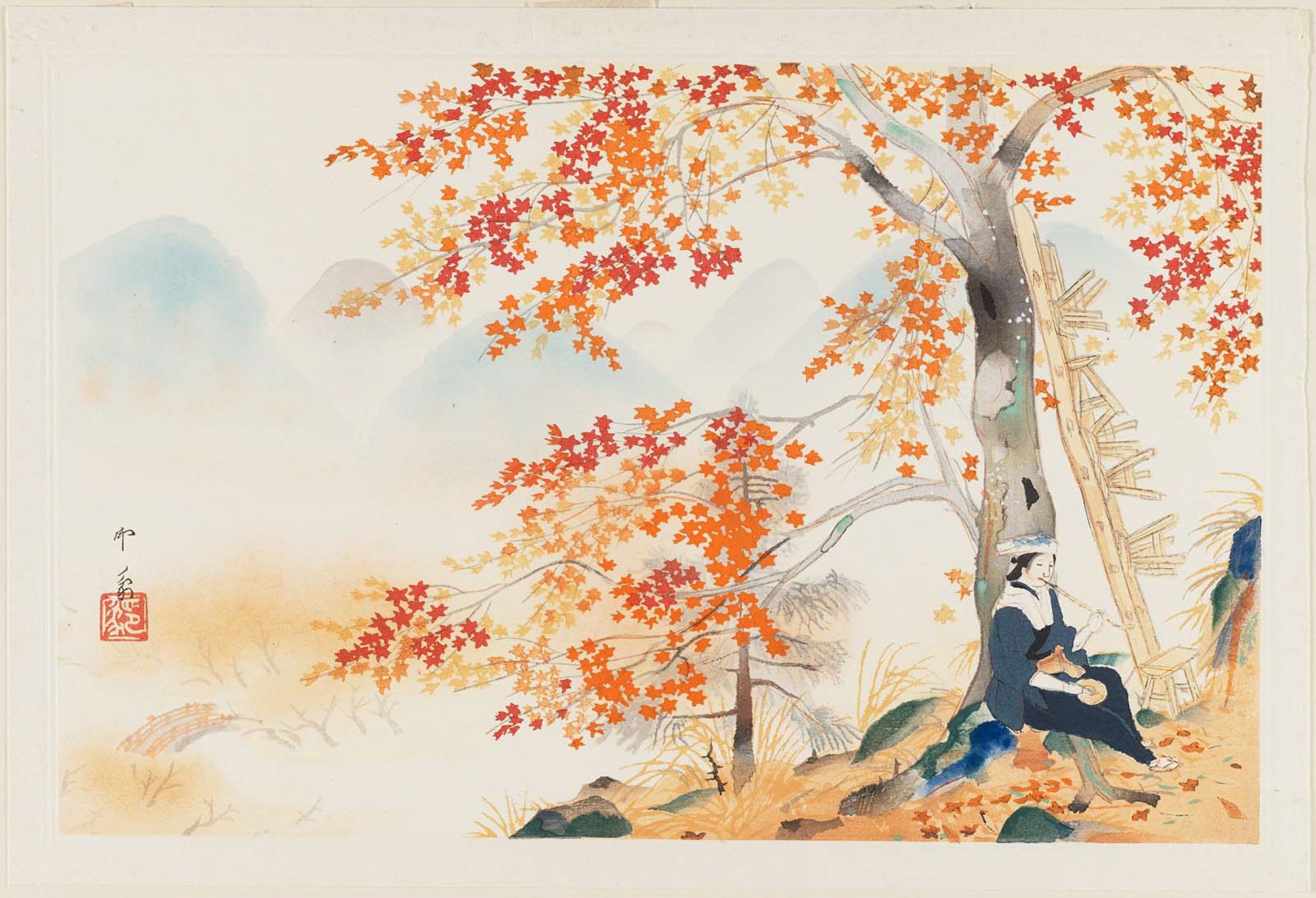
Autumn Maple Leaves at Takao, from the album Eight Views of Kyoto (Kyôto hakkei)
Woodblock print

The Beach at Kaiganji in Sanuki Province (Sanuki Kaiganji no hama), from the series "Collection of Views of Japan II, Kansai Edition (Nihon fukei shu II Kansai hen)"
1934
Color woodblock print; oban

Tea Kettle, section of a sheet from the series "Mirror of Stone Rubbings of Views of the Provinces" (Kohon meihitsu ishizuri kagami)
n.d.
Woodblock print; ishizuri-e, section of harimaze sheet
Featured in Collections
Curated cross-cuts that include this print.
Frequently Asked Questions
Cherry Blossoms at Saga was created by Utagawa Hiroshige (歌川広重) in 1854.
Cherry Blossoms at Saga depicts landscapes and spring.