Chrysanthemum, from the series Gods of Good Fortune Represented as Flowers (Hana zukushi mitate fukurokuju)
- Date:
- 20th century
- Medium:
- Woodblock print; ink and color on paper
- Source:
- Harvard Art Museums
Description
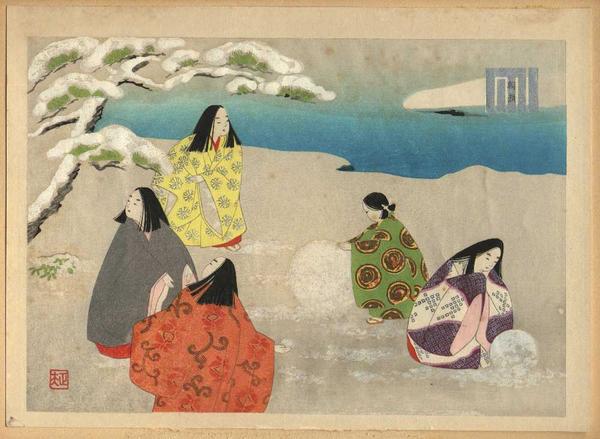
Chrysanthemum, from the series Gods of Good Fortune Represented as Flowers (Hana zukushi mitate Fukurokuju), belongs to one of Utagawa Hiroshige's mitate projects, in which familiar subjects are represented by witty visual substitutes. Fukurokuju, one of the Seven Gods of Good Fortune, was the deity of longevity, wisdom, and high office, conventionally drawn as an old sage with an elongated head, and in this series each god is figured by a flower whose qualities echo their attributes. The chrysanthemum, kiku, was the flower of autumn and of longevity, and so its association with Fukurokuju was both poetically apt and pictorially direct. Hiroshige's design isolates a flowering chrysanthemum stem with its full blooms and serrated leaves against a softly tinted ground, allowing the formal qualities of the flower to carry the entire reference. As with his bird-and-flower prints and his landscape designs alike, the Edo ukiyo-e landscape print sensibility informs the work even in this small kacho-e mitate: confident outline, restrained palette, careful balance of subject and negative space. The Harvard Art Museums impression preserves the delicate layered printing of the chrysanthemum petals and the soft ground gradation. The Hana zukushi series remains a charming example of Hiroshige's gift for combining pictorial economy with the playful literary games his Edo audience expected.
More Prints by Utagawa Hiroshige


More Birds & Flowers Prints
Featured in Collections
Curated cross-cuts that include this print.
Frequently Asked Questions
Chrysanthemum, from the series Gods of Good Fortune Represented as Flowers (Hana zukushi mitate fukurokuju) was created by Utagawa Hiroshige (歌川広重) in 20th century.
Chrysanthemum, from the series Gods of Good Fortune Represented as Flowers (Hana zukushi mitate fukurokuju) depicts birds & flowers and landscapes.