
Chrysanthemums
- Date:
- c. 1840s
- Medium:
- Color woodblock print; uchiwa-e
- Source:
- Art Institute of Chicago
Description
Chrysanthemums, designed by Utagawa Hiroshige around 1840 and held by the Art Institute of Chicago, belongs to the kacho-e branch of Edo ukiyo-e devoted to flowers, birds, and other natural subjects. The composition shows a cluster of chrysanthemums in bloom, with curving petals rendered in graded shades that exploit the woodblock medium's capacity for soft transitions. Chrysanthemums carried richly layered meanings in Japanese culture: as a symbol of autumn, of long life, and of the imperial household, they appear in classical poetry, ceremonial display, and seasonal festival. Hiroshige composes the sheet with characteristic poise, allowing the plant to occupy most of the picture surface while leaving generous space for an inscribed poem and the play of light around the blooms. Although better known for his landscape print designs of the Tokaido and Edo neighborhoods, Hiroshige brought the same discipline of color and atmospheric bokashi to small-scale natural subjects like this one. The result is a print that reads as both botanical observation and lyric meditation. The decision to isolate the flowers against an open background mirrors the literati painting tradition adapted by Edo print designers and rewards close attention to the printer's craft. Each color block had to register precisely to preserve the delicate transitions across each petal, and the inscriptions often used specialty inks to harmonize with the floral palette. Chrysanthemums of this type circulated as affordable gifts, as components of seasonal albums, and as standalone collectibles for connoisseurs who admired Hiroshige's ability to render the quiet beauty of garden flowers with the same authority he applied to highways and harbors.
More Prints by Utagawa Hiroshige


More Landscapes Prints

Lake Kugushi in Wakasa Province (Wakasa Kugushiko), from the series Souvenirs of Travel I (Tabi miyage dai isshu)"
Wakasa Kugushiko
1920
Color woodblock print; oban
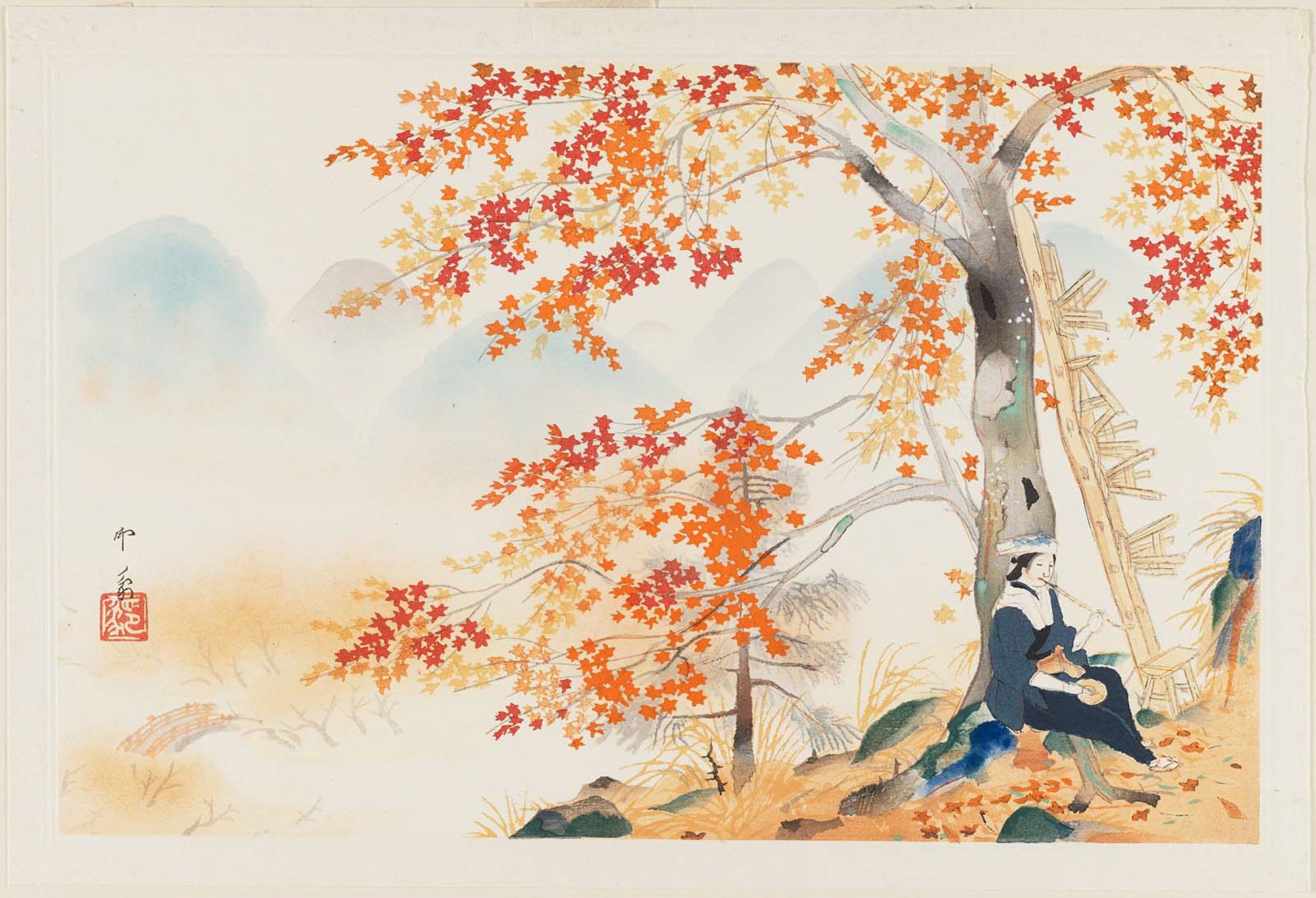
Autumn Maple Leaves at Takao, from the album Eight Views of Kyoto (Kyôto hakkei)
Woodblock print

The Beach at Kaiganji in Sanuki Province (Sanuki Kaiganji no hama), from the series "Collection of Views of Japan II, Kansai Edition (Nihon fukei shu II Kansai hen)"
1934
Color woodblock print; oban

Tea Kettle, section of a sheet from the series "Mirror of Stone Rubbings of Views of the Provinces" (Kohon meihitsu ishizuri kagami)
n.d.
Woodblock print; ishizuri-e, section of harimaze sheet
Featured in Collections
Curated cross-cuts that include this print.
Frequently Asked Questions
Chrysanthemums was created by Utagawa Hiroshige (歌川広重) in c. 1840s.
Chrysanthemums depicts landscapes.