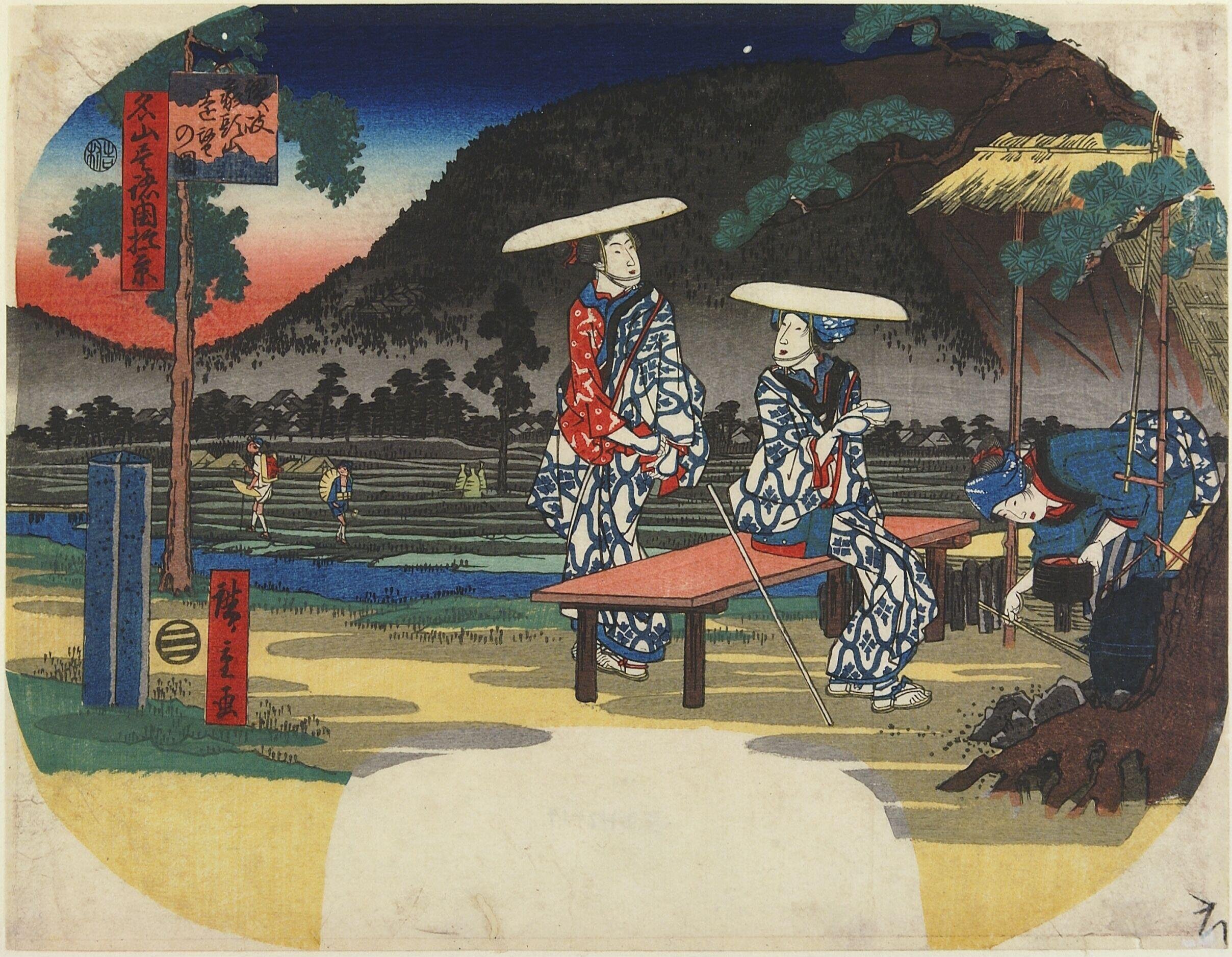
Distant View of Mount Zozu in Sanuki Province
- Date:
- 1843-1847
- Medium:
- Source:
- Victoria and Albert Museum
Description
Distant View of Mount Zozu in Sanuki Province is an 1843 landscape print by Utagawa Hiroshige (1797 to 1858), part of the Edo ukiyo-e designer's wide-ranging survey of Japan's celebrated mountains and shrines. Sanuki Province, on Shikoku island, was best known for the great Kotohira shrine that climbed the slopes of Mount Zozu, also known as Mount Kotohira or Konpira, dedicated to a deity who protected seafarers. The Konpira shrine was one of the most popular pilgrimage destinations of Edo-period Japan, drawing visitors from across the country who undertook the long journey to Shikoku in hope of safe passage on later voyages. Mount Zozu's distinctive silhouette, rising from the surrounding lowlands, made it a recognizable subject in meisho-e production. Hiroshige composes the print as a distant view, allowing the mountain's full profile to occupy the middle distance while a foreground of fields, paths, or coastline provides the human and geographical context. As a landscape print, the work participates in Hiroshige's broader project of fixing the famous places of Japan within the conventions of the woodblock medium. The 1843 date situates it within the productive middle phase of his career, the period of his thematic seasonal and elemental sets and his sustained provincial surveys. The impression is held in the Victoria and Albert Museum, London, where it forms part of the museum's holdings of Hiroshige provincial views and offers a window onto the geographical scope of his print practice well beyond the Tokaido road and the views of Edo itself.
More Prints by Utagawa Hiroshige


More Landscapes Prints

Lake Kugushi in Wakasa Province (Wakasa Kugushiko), from the series Souvenirs of Travel I (Tabi miyage dai isshu)"
Wakasa Kugushiko
1920
Color woodblock print; oban
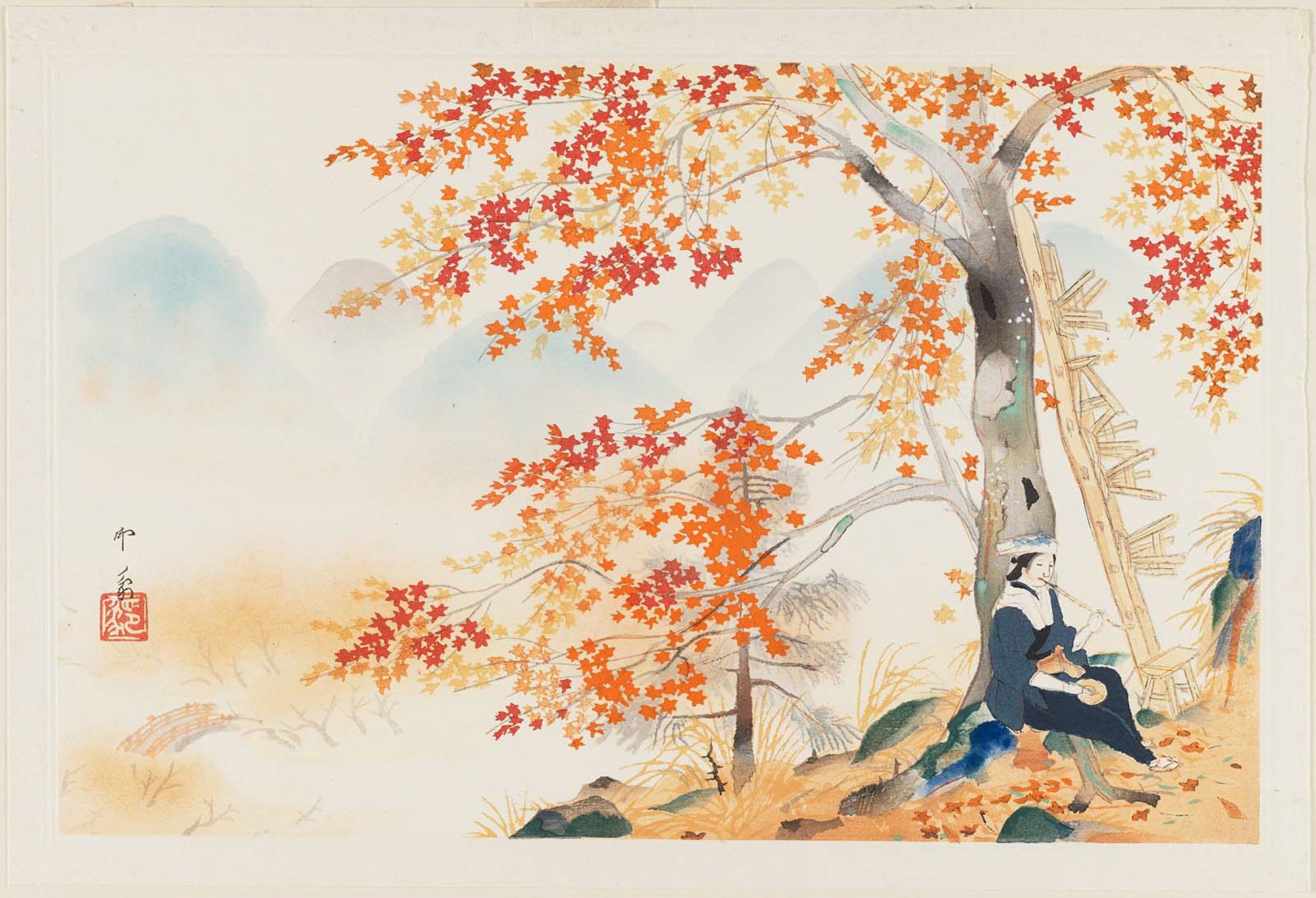
Autumn Maple Leaves at Takao, from the album Eight Views of Kyoto (Kyôto hakkei)
Woodblock print

The Beach at Kaiganji in Sanuki Province (Sanuki Kaiganji no hama), from the series "Collection of Views of Japan II, Kansai Edition (Nihon fukei shu II Kansai hen)"
1934
Color woodblock print; oban

Tea Kettle, section of a sheet from the series "Mirror of Stone Rubbings of Views of the Provinces" (Kohon meihitsu ishizuri kagami)
n.d.
Woodblock print; ishizuri-e, section of harimaze sheet
Featured in Collections
Curated cross-cuts that include this print.
Frequently Asked Questions
Distant View of Mount Zozu in Sanuki Province was created by Utagawa Hiroshige (歌川広重) in 1843-1847.
Distant View of Mount Zozu in Sanuki Province depicts landscapes.