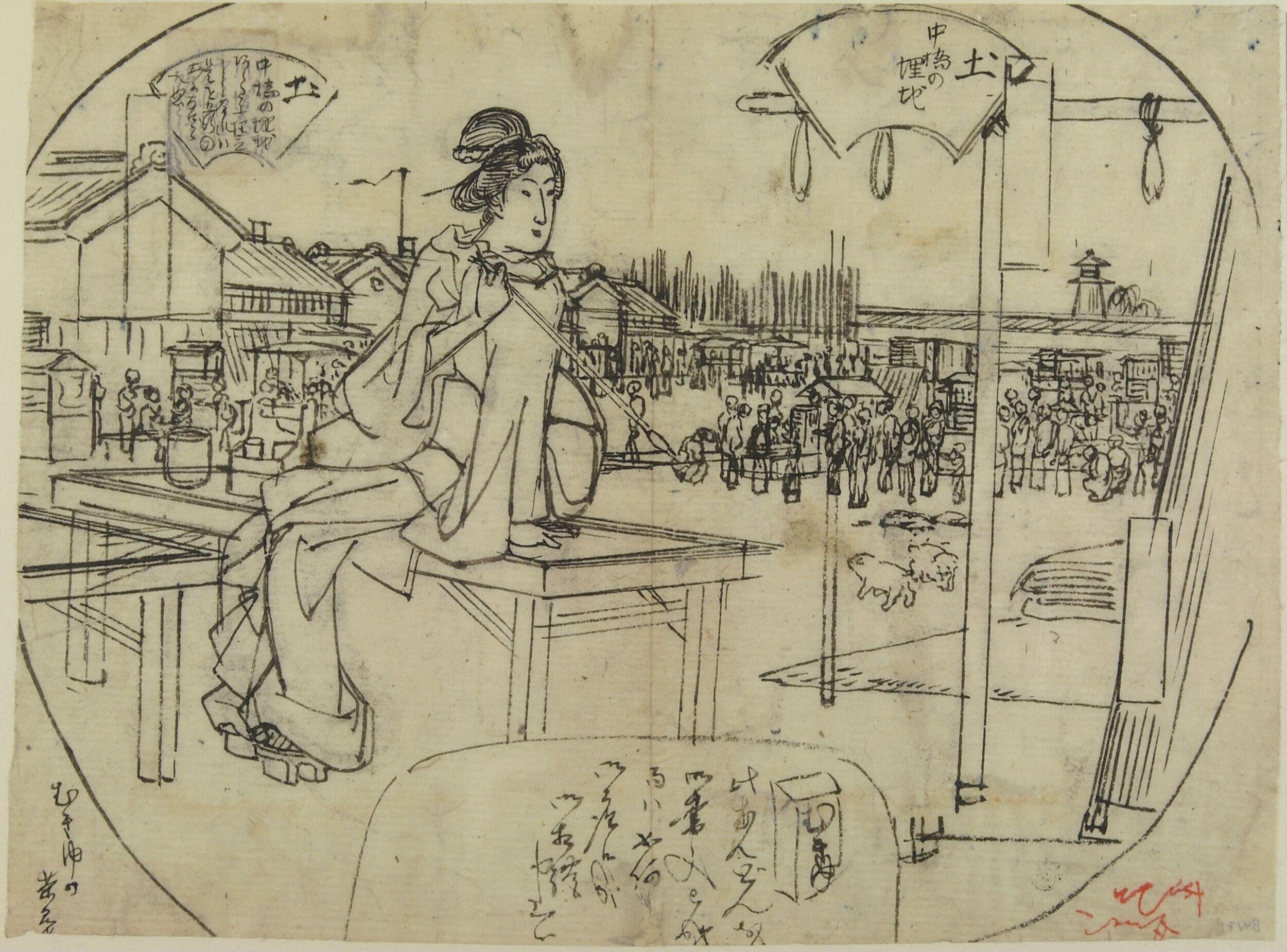
Earth
- Date:
- 1843 - 1847
- Medium:
- Source:
- Victoria and Albert Museum
Description
Earth is an 1843 print by Utagawa Hiroshige (1797 to 1858), one of his designs drawing on the traditional East Asian system of the five elements—earth, water, fire, wood, and metal—or on closely related elemental groupings. In Sino-Japanese cosmological thought these elements served as principles of change and as categories within which natural and human phenomena could be classified. Hiroshige's Earth treats the element through associated landscape and figural motifs, drawing on the visual conventions developed across Chinese and Japanese painting for representing the earth's mass, fertility, and stillness. As a print in the broader Edo ukiyo-e tradition, Earth participates in the practice of issuing thematically linked sets that invited collectors to acquire the full sequence. The 1843 date places this work alongside other Hiroshige series of the period and within the constraints of the Tenpo Reforms, the shogunal regulations that had pushed print designers toward subjects deemed morally edifying or classical in reference. Elemental subjects, with their roots in Confucian and Buddhist cosmology, were well suited to this climate. While not a landscape print in the topographical sense, Earth nonetheless engages with Hiroshige's broader sensibility for natural form, and the compositional decisions reflect the same training and instincts that produced his Tokaido and meisho-e work. The impression is held in the Victoria and Albert Museum, London. Within Hiroshige's broader output it offers a window onto the conceptual sets and thematic series that constituted an important part of his production alongside the more familiar landscape prints for which he is best known.
More Prints by Utagawa Hiroshige


More Landscapes Prints

Lake Kugushi in Wakasa Province (Wakasa Kugushiko), from the series Souvenirs of Travel I (Tabi miyage dai isshu)"
Wakasa Kugushiko
1920
Color woodblock print; oban
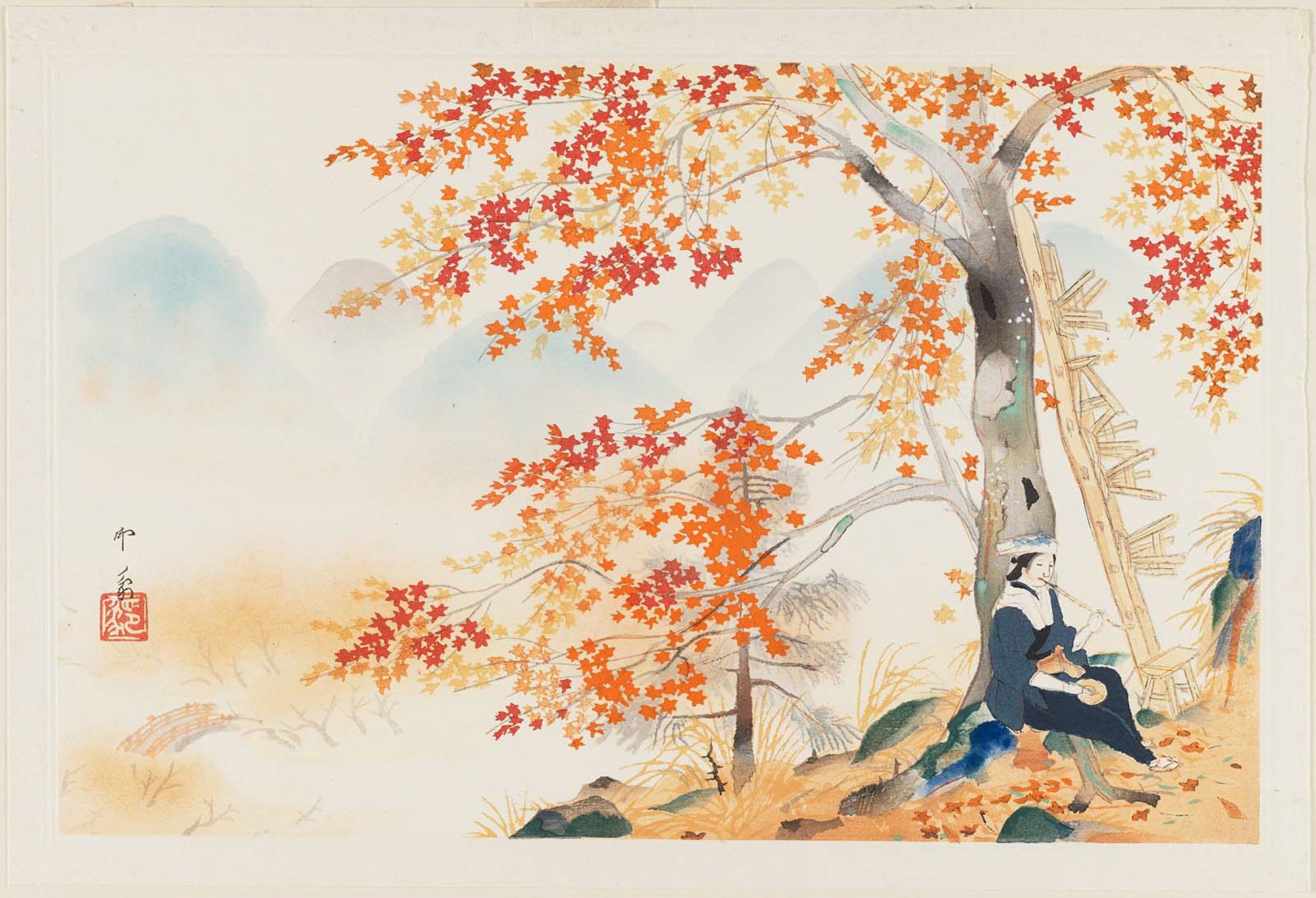
Autumn Maple Leaves at Takao, from the album Eight Views of Kyoto (Kyôto hakkei)
Woodblock print

The Beach at Kaiganji in Sanuki Province (Sanuki Kaiganji no hama), from the series "Collection of Views of Japan II, Kansai Edition (Nihon fukei shu II Kansai hen)"
1934
Color woodblock print; oban

Tea Kettle, section of a sheet from the series "Mirror of Stone Rubbings of Views of the Provinces" (Kohon meihitsu ishizuri kagami)
n.d.
Woodblock print; ishizuri-e, section of harimaze sheet
Featured in Collections
Curated cross-cuts that include this print.
Frequently Asked Questions
Earth was created by Utagawa Hiroshige (歌川広重) in 1843 - 1847.
Earth depicts landscapes.