
Eggs of Silk Worms
- Source:
- ukiyo-e.org
Description
Eggs of Silk Worms is a print by Utagawa Hiroshige (1797-1858) that turns the woodblock idiom of Edo ukiyo-e toward the close observation of rural craft and the cycles of agrarian production. Sericulture, the cultivation of silkworms and the harvesting of their cocoons, was a vital cottage industry in nineteenth-century Japan, organizing the labor of farming households across many provinces and supplying the textile economy that clothed Edo's urban consumers. Hiroshige's image attends to a specific, almost technical moment in that cycle: the eggs from which the worms hatch and on which the entire downstream chain of silk production depends. Although his enduring reputation rests on the landscape print, Hiroshige worked productively in many genres, and prints like this one belong to a broader visual literature that informed townspeople about provincial work they rarely saw firsthand. The composition makes careful use of line to render the tiny ovoid forms and the trays and tools that contain them, while restrained color keeps the focus on description rather than spectacle. The image rewards the same attention Hiroshige gave to a stretch of the Tokaido or a rain-veiled bridge, here redirected to a humbler subject. Preserved at ukiyo-e.org, the print is a useful document of how Edo print culture extended its curiosity into the textures of rural labor as well as the panoramas of mountains and shorelines.
More Prints by Utagawa Hiroshige


More Landscapes Prints

Lake Kugushi in Wakasa Province (Wakasa Kugushiko), from the series Souvenirs of Travel I (Tabi miyage dai isshu)"
Wakasa Kugushiko
1920
Color woodblock print; oban
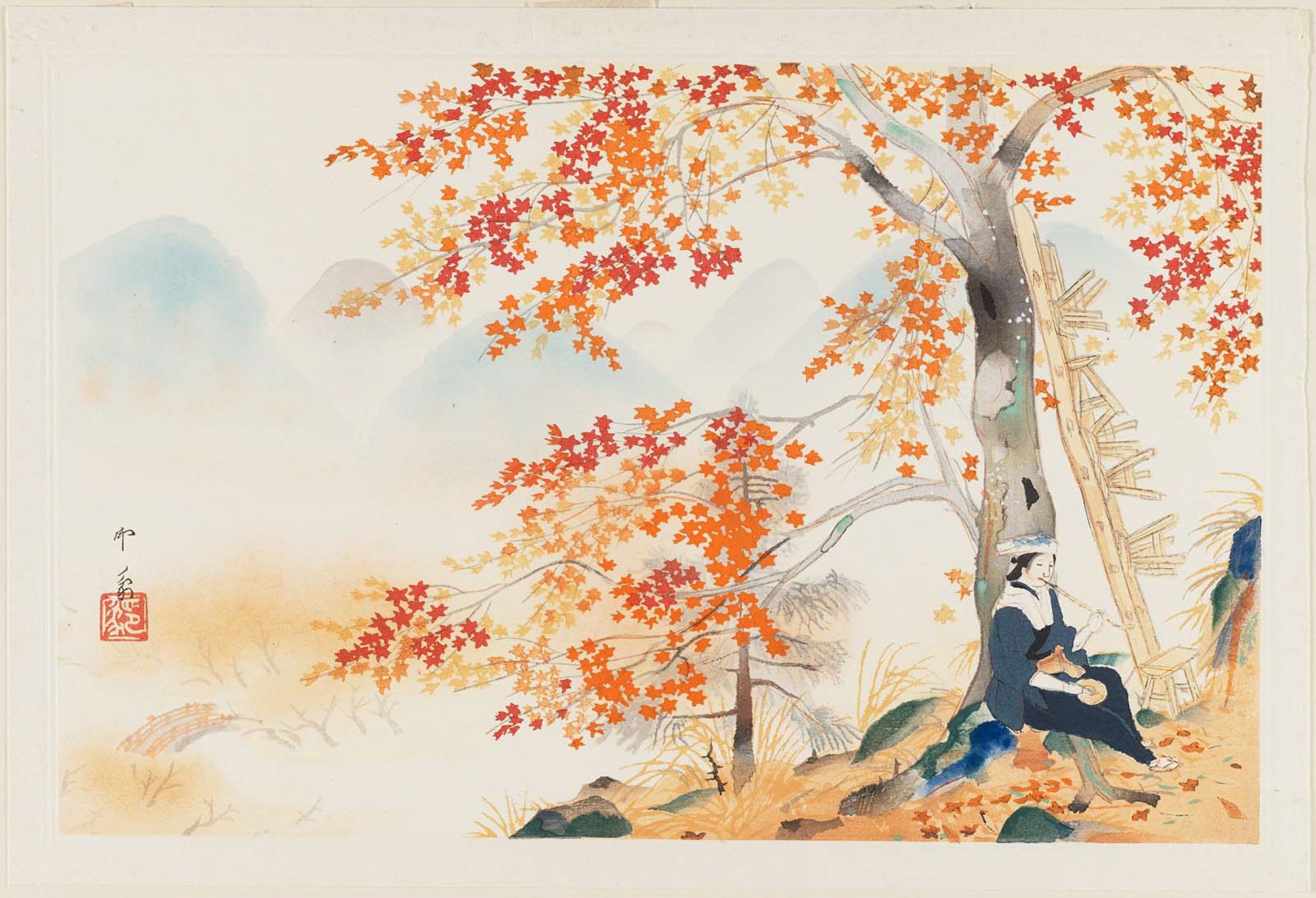
Autumn Maple Leaves at Takao, from the album Eight Views of Kyoto (Kyôto hakkei)
Woodblock print

The Beach at Kaiganji in Sanuki Province (Sanuki Kaiganji no hama), from the series "Collection of Views of Japan II, Kansai Edition (Nihon fukei shu II Kansai hen)"
1934
Color woodblock print; oban

Tea Kettle, section of a sheet from the series "Mirror of Stone Rubbings of Views of the Provinces" (Kohon meihitsu ishizuri kagami)
n.d.
Woodblock print; ishizuri-e, section of harimaze sheet
Featured in Collections
Curated cross-cuts that include this print.
Frequently Asked Questions
Eggs of Silk Worms was created by Utagawa Hiroshige (歌川広重).
Eggs of Silk Worms depicts landscapes.