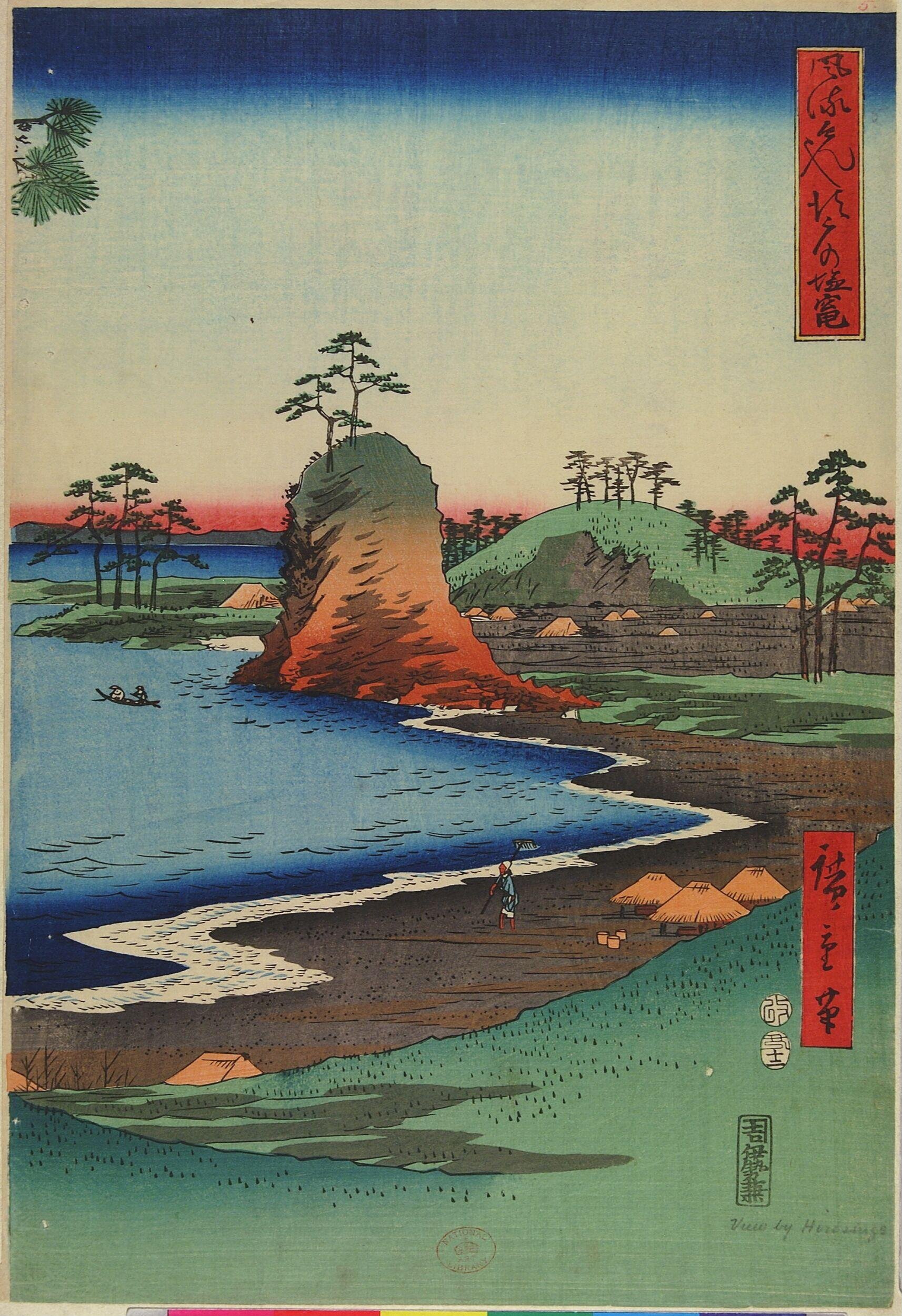
Elegant Genji at the Salt Kilns at Suma (Fūryū Genji Suma no Shiogama)
- Date:
- 1853
- Medium:
- Source:
- Victoria and Albert Museum
Description
Elegant Genji at the Salt Kilns at Suma (Furyu Genji Suma no Shiogama) is a landscape print by Utagawa Hiroshige produced around 1853, with this impression held in the Victoria and Albert Museum. The design belongs to the broader nineteenth-century Edo ukiyo-e fashion for furyu (elegant or stylish) updates of classical literature, in this case Murasaki Shikibu's Tale of Genji as filtered through the popular novel Inaka Genji and its Genji-e tradition. Hiroshige sets the romantic exile chapters of the tale on the windswept coast of Suma in Settsu Province, where the smoking salt kilns (shiogama) were a classical poetic motif evoking longing and loneliness. The composition shows figures in courtly costume by the shore while drifting smoke and the dim outline of pine-clad hills perform their literary work. As with his more straightforward landscape print series, Hiroshige uses bokashi gradients to render mist, sea, and sky, but here the imagery is overlaid with cultural memory: every fan, every wave, and every boat doubles as a reference to the Genji canon familiar to his audience. The print therefore sits at the intersection of meisho-e and yamato-e revival, demonstrating that even in the late Edo period the landscape print could carry sophisticated allusions to centuries of Japanese poetry and painting. The Victoria and Albert Museum impression is a useful example for those interested in how Hiroshige and his publishers responded to the runaway success of Inaka Genji and other reimaginings of classical narrative. Within Hiroshige's broader career, the Suma design illustrates the flexible role of landscape: at once geographical record, literary allusion, and stylish commercial print rooted in Edo ukiyo-e fashion.
More Prints by Utagawa Hiroshige


More Landscapes Prints

Lake Kugushi in Wakasa Province (Wakasa Kugushiko), from the series Souvenirs of Travel I (Tabi miyage dai isshu)"
Wakasa Kugushiko
1920
Color woodblock print; oban
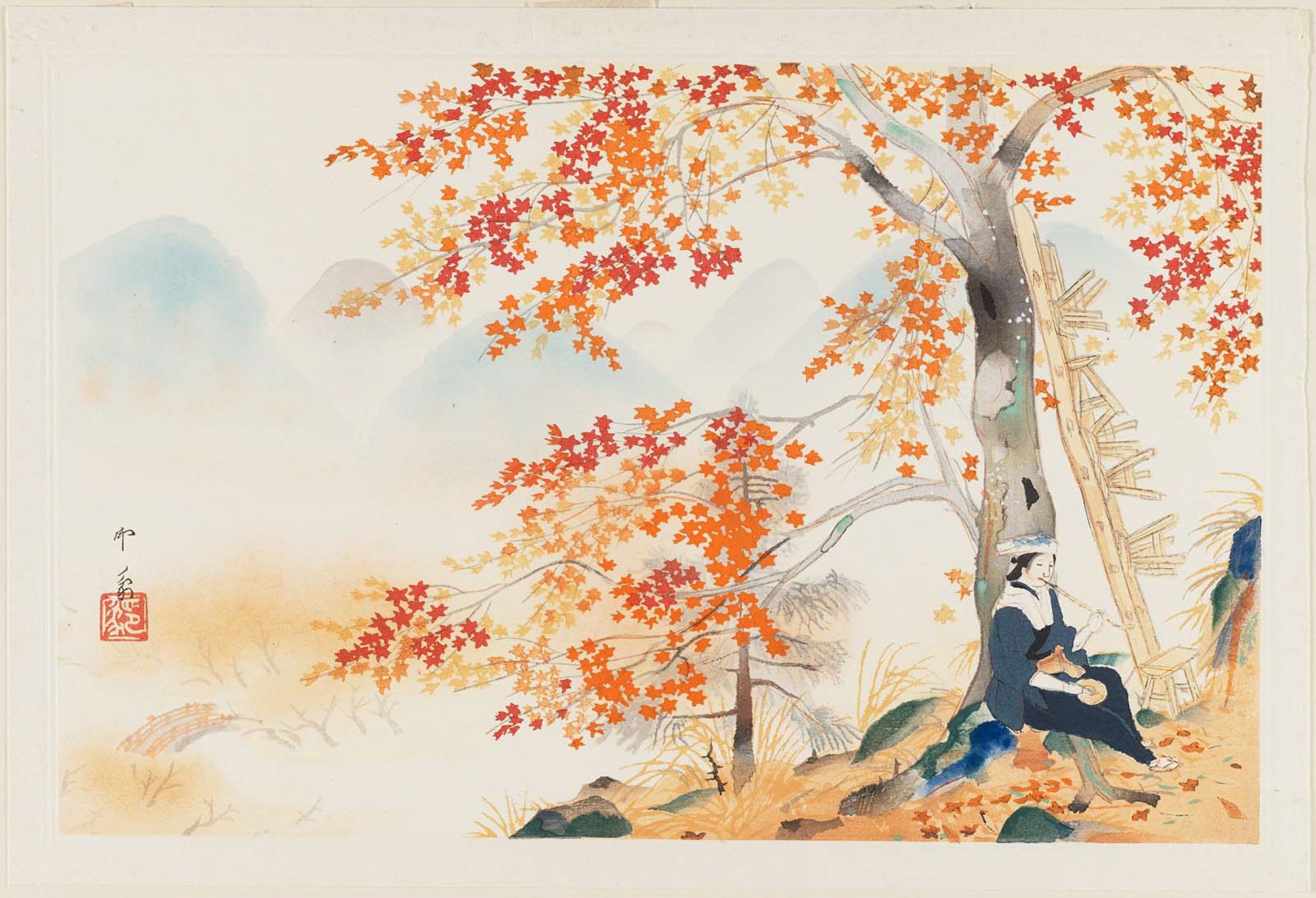
Autumn Maple Leaves at Takao, from the album Eight Views of Kyoto (Kyôto hakkei)
Woodblock print

The Beach at Kaiganji in Sanuki Province (Sanuki Kaiganji no hama), from the series "Collection of Views of Japan II, Kansai Edition (Nihon fukei shu II Kansai hen)"
1934
Color woodblock print; oban

Tea Kettle, section of a sheet from the series "Mirror of Stone Rubbings of Views of the Provinces" (Kohon meihitsu ishizuri kagami)
n.d.
Woodblock print; ishizuri-e, section of harimaze sheet
Featured in Collections
Curated cross-cuts that include this print.
Frequently Asked Questions
Elegant Genji at the Salt Kilns at Suma (Fūryū Genji Suma no Shiogama) was created by Utagawa Hiroshige (歌川広重) in 1853.
Elegant Genji at the Salt Kilns at Suma (Fūryū Genji Suma no Shiogama) depicts landscapes.