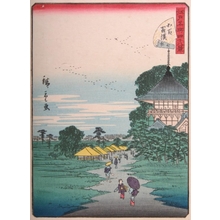
Gohyakurakan
- Medium:
- Woodblock print
- Source:
- Art Gallery of Greater Victoria
- Image courtesy of
- Art Gallery of Greater Victoria
Description
Gohyakurakan-ji (Temple of the Five Hundred Rakan) was a temple in the Honjo district of Edo housing an extraordinary collection of five hundred carved figures of arhats—Buddhist disciples who have attained enlightenment—arranged in a great hall. Hiroshige's print likely shows the exterior approach to the temple or a view of the hall's interior, where the densely arranged stone or wood figures create a visually overwhelming repetitive pattern that was itself a popular attraction for Edo residents. The composition may use a long corridor perspective to suggest the uncanny proliferation of the rakan, their individual expressions and poses barely distinguishable at the scale of a woodblock print. A curved stone bridge over the pond in the temple garden was another frequently depicted feature of the site. The Gohyakurakan-ji was simultaneously a devotional site and a curiosity, drawing visitors who came as much for the spectacle of the figures as for religious purposes, and Hiroshige's treatment would capture both the architectural setting and the temple's unusual character.
More Prints by Utagawa Hiroshige


More Urban Scenes Prints
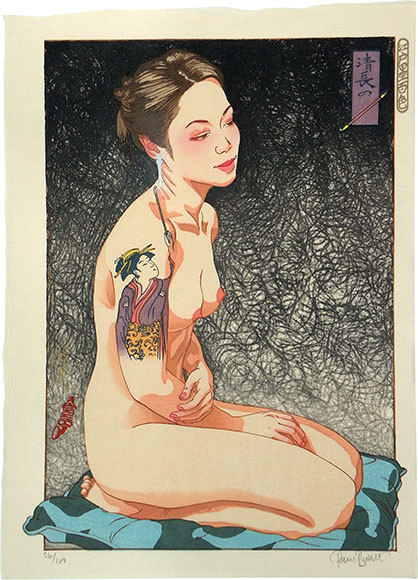
A Hundred Shades of Ink of Edo: Kiyonaga's Pipe (Edo zumi hyaku shoku: Kiyonaga no kiseru)
Woodblock print

View of Kabuki Theater from Matsuya (Ginza Matsuya yori Kabukiza), no. 3 from the series "Pictures of Ginza, First Series (Gashu Ginza dai isshu)"
1928
Color lithograph

Distant View of Mitsukoshi Movie Theater in Shinjuku from the Sixth Floor of Hoteiya (Hoteiya rokkai kara Shinjuku Mitsukoshi Musashi no kan enbo zu), no. 1 from the series "Scenery of Shinjuku (Gashu Shinjuku fukei)"
1930
Color lithograph
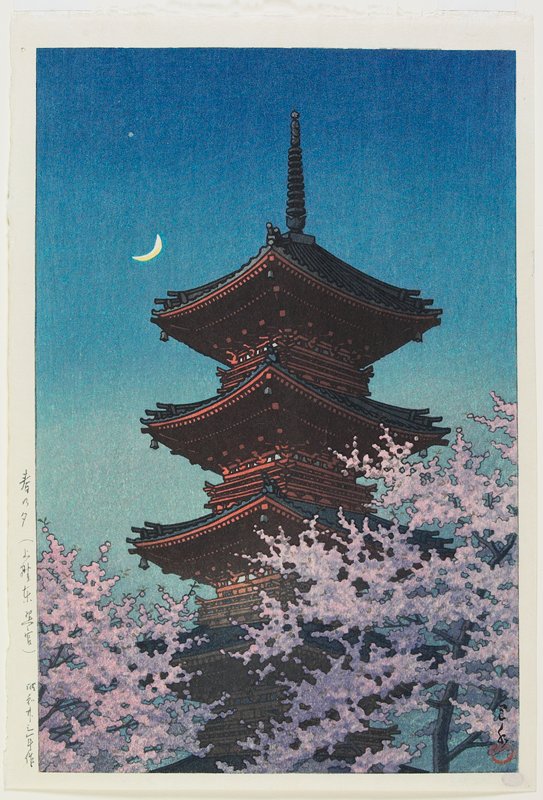
Spring Dusk at the Tōshō Shrine in Ueno
1948
Woodblock print, ink and color on paper
Featured in Collections
Curated cross-cuts that include this print.
Frequently Asked Questions
Gohyakurakan was created by Utagawa Hiroshige (歌川広重).
Gohyakurakan depicts urban scenes and temples & shrines.