
Kabuki Theatre
- Source:
- ukiyo-e.org
Description
Kabuki Theatre is a print by Utagawa Hiroshige (1797-1858) that turns his eye on the spectacle of Edo's most celebrated form of popular drama. Although the kabuki playhouses of Edo were principally documented in actor prints by other Utagawa-school masters such as Toyokuni and Kunisada, Edo ukiyo-e also produced views of the theatre districts and the buildings themselves, presenting the playhouse as an architectural and social phenomenon within the city. Hiroshige's contribution to this genre situates a kabuki theatre as one of the meisho or famous places of Edo, akin in importance to its temples, bridges, and avenues. The composition organizes the elaborate facade, towering signboards, paper lanterns, and crowds of patrons into a layered urban scene, with restrained color and careful line conveying the density of theatrical signage and the bustle of the street. While distinct from the landscape print idiom for which Hiroshige is best known, the image draws on the same compositional instincts: a clear foreground, a depth-defining middle ground, and an atmospheric upper register. Preserved at ukiyo-e.org, the print contributes to an understanding of how his Edo views encompassed not only natural scenery but also the great civic stages on which the city's social and cultural life unfolded.
More Prints by Utagawa Hiroshige


More Landscapes Prints

Lake Kugushi in Wakasa Province (Wakasa Kugushiko), from the series Souvenirs of Travel I (Tabi miyage dai isshu)"
Wakasa Kugushiko
1920
Color woodblock print; oban
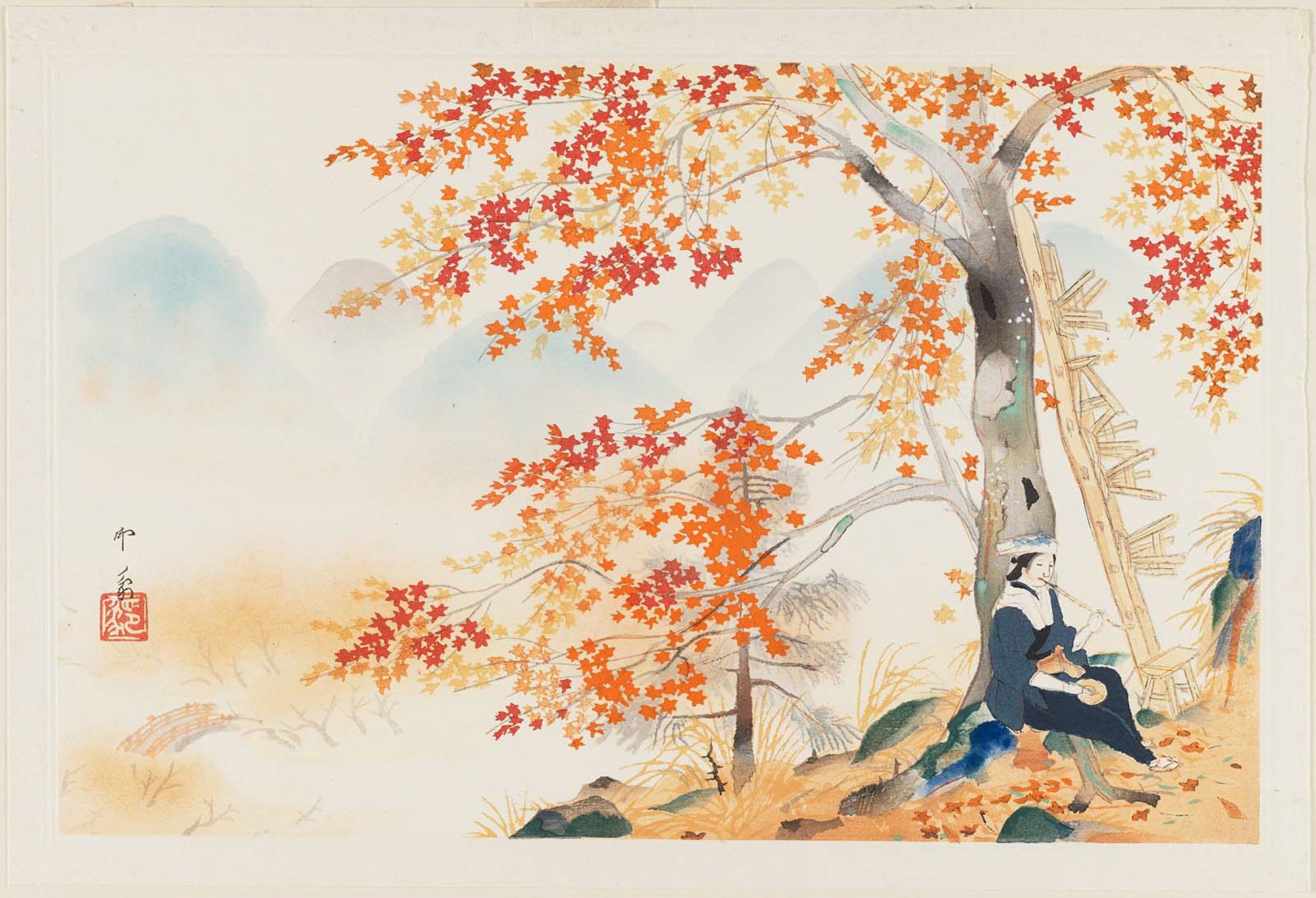
Autumn Maple Leaves at Takao, from the album Eight Views of Kyoto (Kyôto hakkei)
Woodblock print

The Beach at Kaiganji in Sanuki Province (Sanuki Kaiganji no hama), from the series "Collection of Views of Japan II, Kansai Edition (Nihon fukei shu II Kansai hen)"
1934
Color woodblock print; oban

Tea Kettle, section of a sheet from the series "Mirror of Stone Rubbings of Views of the Provinces" (Kohon meihitsu ishizuri kagami)
n.d.
Woodblock print; ishizuri-e, section of harimaze sheet
Featured in Collections
Curated cross-cuts that include this print.
Frequently Asked Questions
Kabuki Theatre was created by Utagawa Hiroshige (歌川広重).
Kabuki Theatre depicts landscapes.