
Koume Embankment
- Source:
- ukiyo-e.org
Description
Koume Embankment is a quiet riverside scene by Utagawa Hiroshige, the Edo ukiyo-e master whose landscape print designs returned again and again to the watercourses and embankments that shaped daily life in the shogunal capital. The Koume district lay on the east bank of the Sumida and was crossed by a network of canals and embanked footpaths used by farmers, tradespeople, and casual walkers. Hiroshige's view places the embankment as a long, gently curving form in the middle ground, lined with trees that punctuate the recession into the distance, while figures move along the path beneath a broad sky banded with subtle gradation. The composition exemplifies the principles that made his Edo views so influential: a clear spatial armature, a few telling human details, and a coloration calibrated to time of day and season. Koume was familiar to his Edo audience as one of the semi-rural fringes of the city where seasonal pleasures such as plum-blossom viewing and summer evening walks took place, and the embankment view stages that mixture of cultivated nature and ordinary traffic. The impression recorded on ukiyo-e.org documents the work outside the major museum holdings and contributes to the larger picture of Hiroshige's commitment to the embankments, bridges, and waterways that thread through his cityscapes. As with many of his quieter compositions, the design rewards patient looking with its attention to atmosphere, balance, and the subdued life of the city's margins.
More Prints by Utagawa Hiroshige


More Landscapes Prints

Lake Kugushi in Wakasa Province (Wakasa Kugushiko), from the series Souvenirs of Travel I (Tabi miyage dai isshu)"
Wakasa Kugushiko
1920
Color woodblock print; oban
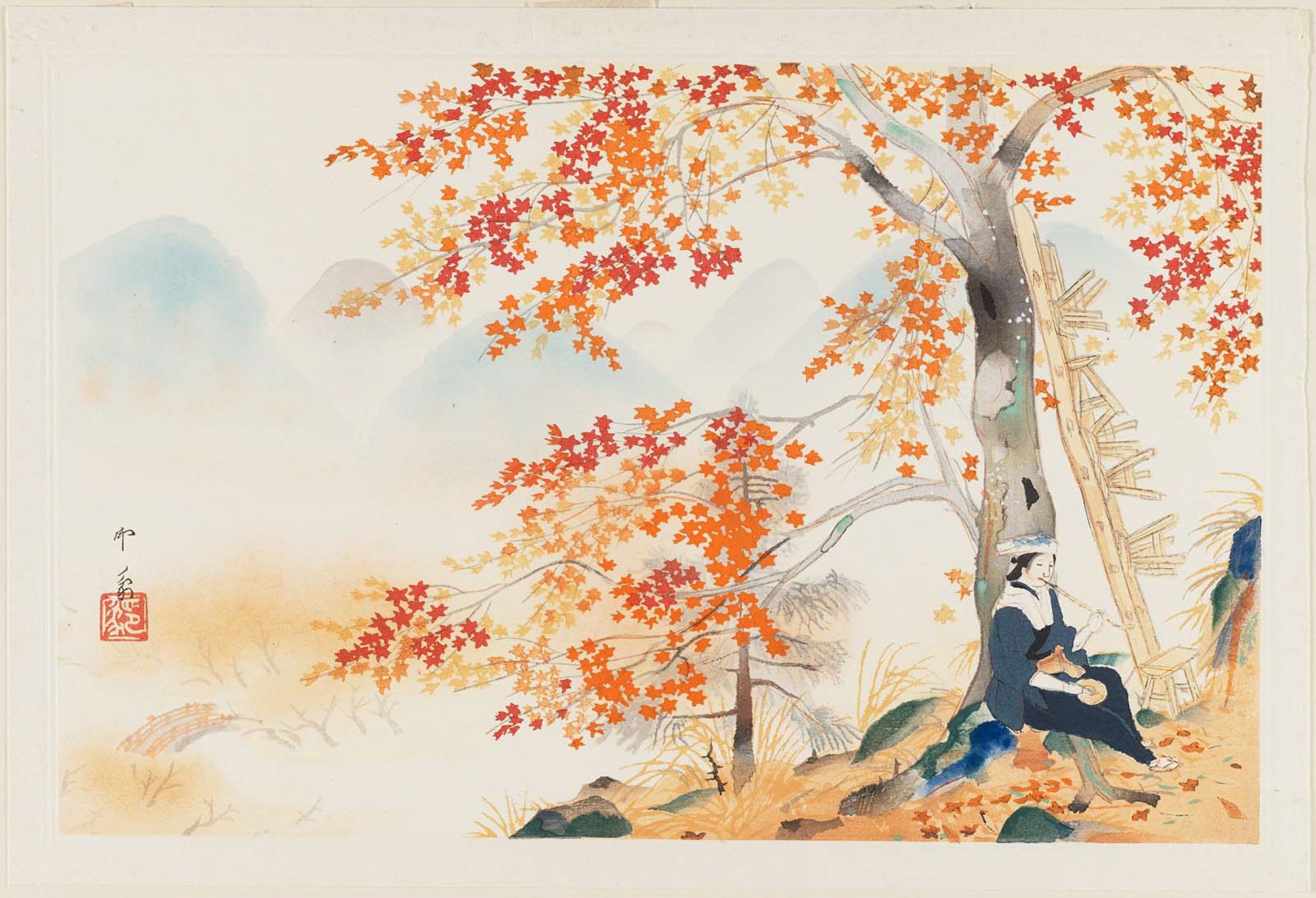
Autumn Maple Leaves at Takao, from the album Eight Views of Kyoto (Kyôto hakkei)
Woodblock print

The Beach at Kaiganji in Sanuki Province (Sanuki Kaiganji no hama), from the series "Collection of Views of Japan II, Kansai Edition (Nihon fukei shu II Kansai hen)"
1934
Color woodblock print; oban

Tea Kettle, section of a sheet from the series "Mirror of Stone Rubbings of Views of the Provinces" (Kohon meihitsu ishizuri kagami)
n.d.
Woodblock print; ishizuri-e, section of harimaze sheet
Featured in Collections
Curated cross-cuts that include this print.
Frequently Asked Questions
Koume Embankment was created by Utagawa Hiroshige (歌川広重).
Koume Embankment depicts landscapes.