
Moonlight at Takanawa
- Source:
- ukiyo-e.org
Description
Moonlight at Takanawa is one of several views by Utagawa Hiroshige of the Takanawa district, a coastal stretch on the southern edge of Edo where the Tōkaidō entered the city by the bay. In Hiroshige's landscape print designs Takanawa appears repeatedly as a place of arrival and departure: travelers leaving for Kyoto or arriving from the west crossed here, and the shoreline supported a constant traffic of porters, palanquins, and pack horses. The moonlit treatment in this composition mutes the daytime bustle and reframes the view as a nocturne, with the bay rendered in cool tones, the moon set in a deep upper sky, and figures and boats reduced to silhouettes against the water. Hiroshige's command of the night scene was central to his reputation; he understood how to use restraint and selective coloration to suggest both the actual darkness of an unlit landscape and the way moonlight could pick out particular shapes against it. The Takanawa setting was familiar enough to Edo viewers that this kind of reinterpretation operated as a quiet variation on a known place, and the design joins a wider family of his nocturnal Edo cityscapes. The impression preserved on ukiyo-e.org documents the work outside major institutional collections and supports comparison with related Takanawa subjects elsewhere in his oeuvre.
More Prints by Utagawa Hiroshige


More Landscapes Prints

Lake Kugushi in Wakasa Province (Wakasa Kugushiko), from the series Souvenirs of Travel I (Tabi miyage dai isshu)"
Wakasa Kugushiko
1920
Color woodblock print; oban
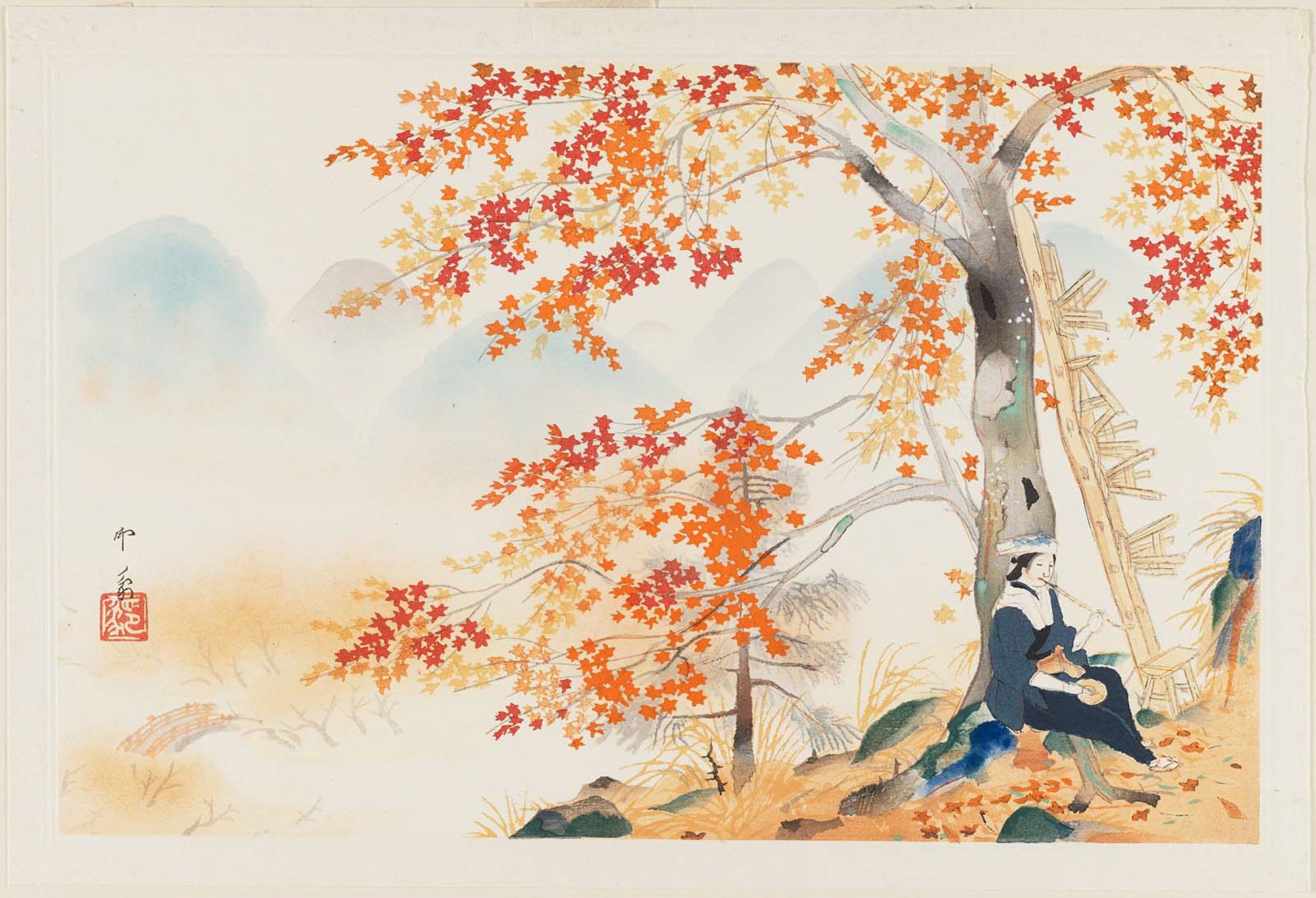
Autumn Maple Leaves at Takao, from the album Eight Views of Kyoto (Kyôto hakkei)
Woodblock print

The Beach at Kaiganji in Sanuki Province (Sanuki Kaiganji no hama), from the series "Collection of Views of Japan II, Kansai Edition (Nihon fukei shu II Kansai hen)"
1934
Color woodblock print; oban

Tea Kettle, section of a sheet from the series "Mirror of Stone Rubbings of Views of the Provinces" (Kohon meihitsu ishizuri kagami)
n.d.
Woodblock print; ishizuri-e, section of harimaze sheet
Featured in Collections
Curated cross-cuts that include this print.
Frequently Asked Questions
Moonlight at Takanawa was created by Utagawa Hiroshige (歌川広重).
Moonlight at Takanawa depicts landscapes and moonlight.