
Nihon Bridge and Edo Bridge (Nihonbashi, Edobashi), from the series "One Hundred Famous Views of Edo (Meisho Edo hyakkei)"
- Series:
- One Hundred Famous Views of Edo (print 43 of 118)
- Medium:
- Color woodblock print
- Source:
- Art Institute of Chicago
Description
This oban-format nishiki-e from the "One Hundred Famous Views of Edo" depicts Nihonbashi—the official zero-kilometer origin point of Japan's five major highways—and the adjacent Edobashi crossing. The Nihonbashi fish market (uogashi) operated at the foot of the bridge, making it among the most commercially active sites in the city, and Hiroshige's composition engages with the bridge as a hub of labor and exchange rather than purely scenic spectacle. The composition may adopt a low or lateral viewpoint along the length of the bridge, with porters and merchants in the foreground and the secondary arch of Edobashi receding into the middle distance. Blue bokashi in the sky and the surface of the Nihonbashi River frame the scene, while the arc of the bridge structure provides a strong formal element. Published from 1856 onward under Uoya Eikichi, the series used the tate-e vertical oban format throughout, and this urban subject reflects Hiroshige's command of the city's commercial geography.
More Prints by Utagawa Hiroshige


More Landscapes Prints

Lake Kugushi in Wakasa Province (Wakasa Kugushiko), from the series Souvenirs of Travel I (Tabi miyage dai isshu)"
Wakasa Kugushiko
1920
Color woodblock print; oban
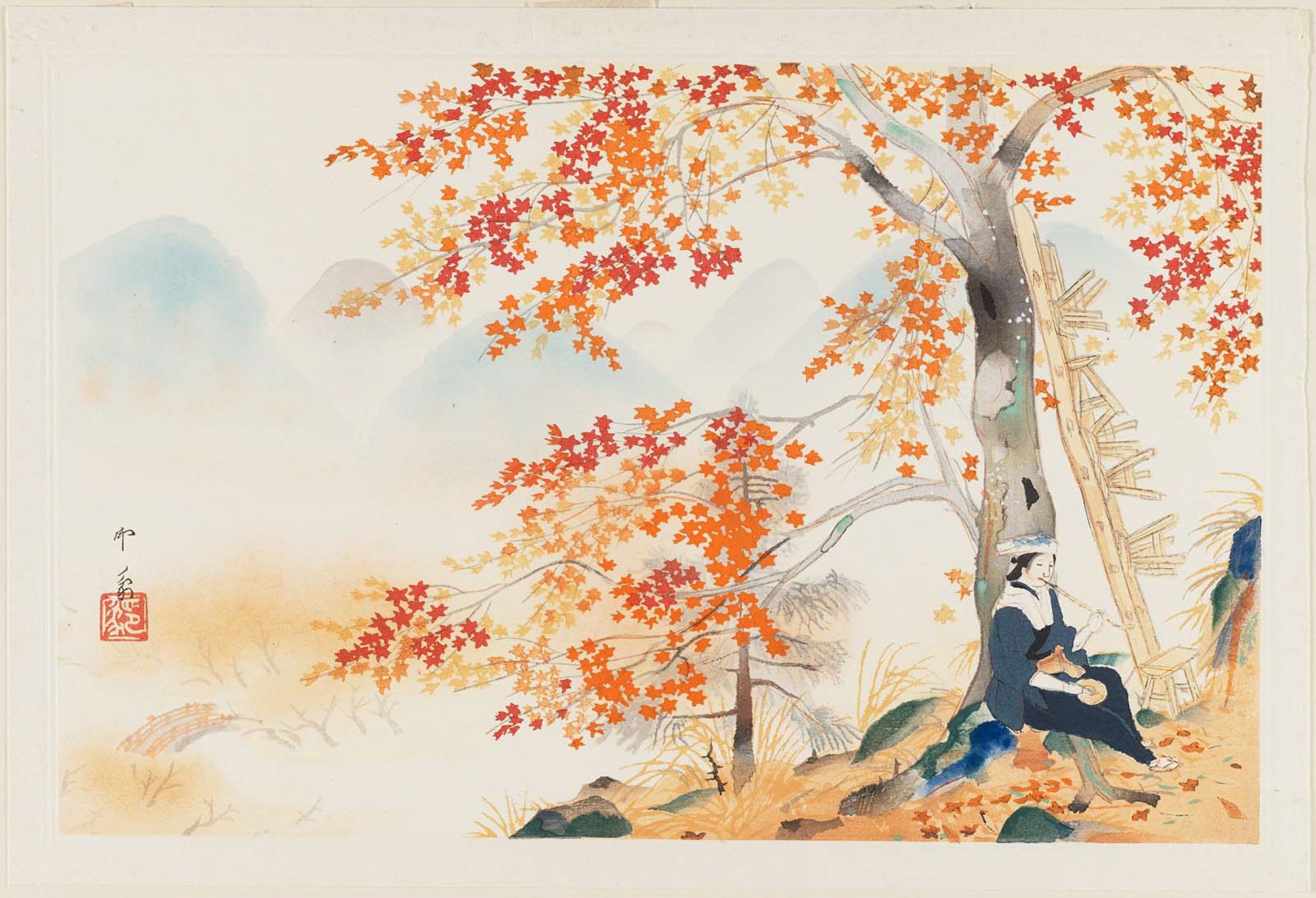
Autumn Maple Leaves at Takao, from the album Eight Views of Kyoto (Kyôto hakkei)
Woodblock print

The Beach at Kaiganji in Sanuki Province (Sanuki Kaiganji no hama), from the series "Collection of Views of Japan II, Kansai Edition (Nihon fukei shu II Kansai hen)"
1934
Color woodblock print; oban

Tea Kettle, section of a sheet from the series "Mirror of Stone Rubbings of Views of the Provinces" (Kohon meihitsu ishizuri kagami)
n.d.
Woodblock print; ishizuri-e, section of harimaze sheet
Featured in Collections
Curated cross-cuts that include this print.
Frequently Asked Questions
Nihon Bridge and Edo Bridge (Nihonbashi, Edobashi), from the series "One Hundred Famous Views of Edo (Meisho Edo hyakkei)" was created by Utagawa Hiroshige (歌川広重).
Yes — Nihon Bridge and Edo Bridge (Nihonbashi, Edobashi), from the series "One Hundred Famous Views of Edo (Meisho Edo hyakkei)" is part of the One Hundred Famous Views of Edo series (print 43 of 118) by Utagawa Hiroshige.
Nihon Bridge and Edo Bridge (Nihonbashi, Edobashi), from the series "One Hundred Famous Views of Edo (Meisho Edo hyakkei)" depicts landscapes, edo & tokyo, and famous places (meisho-e).