
The Five Pines on the Onagi River (Onagigawa Gohonmatsu), from the series "One Hundred Famous Views of Edo (Meisho Edo hyakkei)"
- Series:
- One Hundred Famous Views of Edo (print 97 of 118)
- Medium:
- Color woodblock print
- Dimensions:
- 36 × 24.2 cm
- Source:
- Art Institute of Chicago
Description
Gohonmatsu—five pines—along the Onagigawa canal in the Kôtô district of eastern Edo were a celebrated meisho associated with the waterside culture of the city's working-class eastern wards. Hiroshige's design from the One Hundred Famous Views of Edo series shows the distinctive pine trees rising above the still canal waters, with flat-bottomed cargo boats moored along the banks. The canal's calm surface allowed Hiroshige to exploit reflections, a compositional device he used frequently to create visual depth and implied symmetry in landscape prints. The eastern canal district of shitamachi had a character quite different from the official landscape of the city center, and Hiroshige documented it with the same attention to meisho convention as more celebrated sites near Edo Castle or along the Tôkaidô. The five pines themselves—named specimens associated with a specific location—represent the Japanese practice of identifying particular trees as landmarks worthy of artistic commemoration.
More Prints by Utagawa Hiroshige


More Landscapes Prints

Lake Kugushi in Wakasa Province (Wakasa Kugushiko), from the series Souvenirs of Travel I (Tabi miyage dai isshu)"
Wakasa Kugushiko
1920
Color woodblock print; oban
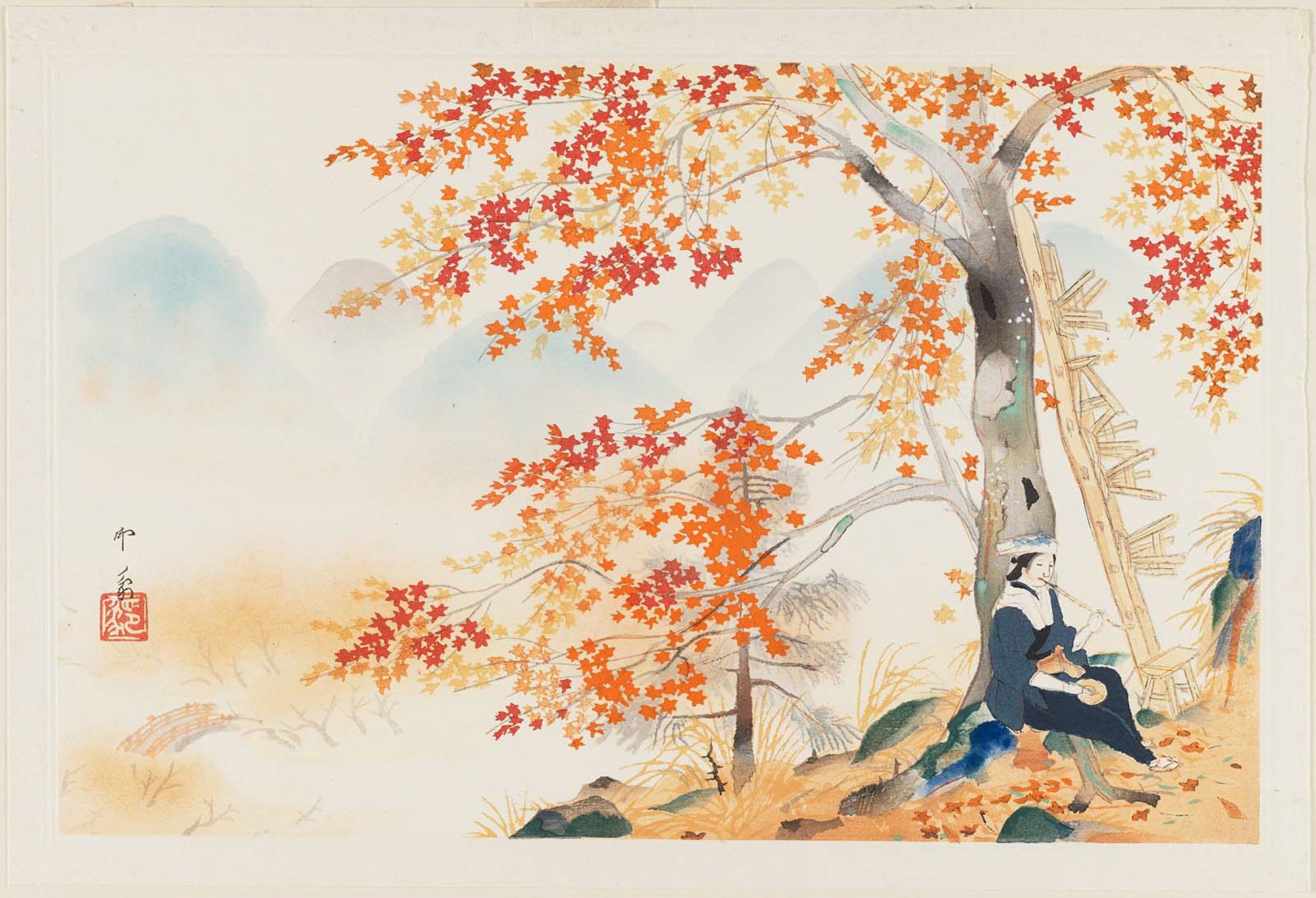
Autumn Maple Leaves at Takao, from the album Eight Views of Kyoto (Kyôto hakkei)
Woodblock print

The Beach at Kaiganji in Sanuki Province (Sanuki Kaiganji no hama), from the series "Collection of Views of Japan II, Kansai Edition (Nihon fukei shu II Kansai hen)"
1934
Color woodblock print; oban

Tea Kettle, section of a sheet from the series "Mirror of Stone Rubbings of Views of the Provinces" (Kohon meihitsu ishizuri kagami)
n.d.
Woodblock print; ishizuri-e, section of harimaze sheet
Featured in Collections
Curated cross-cuts that include this print.
Frequently Asked Questions
The Five Pines on the Onagi River (Onagigawa Gohonmatsu), from the series "One Hundred Famous Views of Edo (Meisho Edo hyakkei)" was created by Utagawa Hiroshige (歌川広重).
Yes — The Five Pines on the Onagi River (Onagigawa Gohonmatsu), from the series "One Hundred Famous Views of Edo (Meisho Edo hyakkei)" is part of the One Hundred Famous Views of Edo series (print 97 of 118) by Utagawa Hiroshige.
The Five Pines on the Onagi River (Onagigawa Gohonmatsu), from the series "One Hundred Famous Views of Edo (Meisho Edo hyakkei)" depicts landscapes, edo & tokyo, and famous places (meisho-e).
The Five Pines on the Onagi River (Onagigawa Gohonmatsu), from the series "One Hundred Famous Views of Edo (Meisho Edo hyakkei)" measures 36 × 24.2 cm.