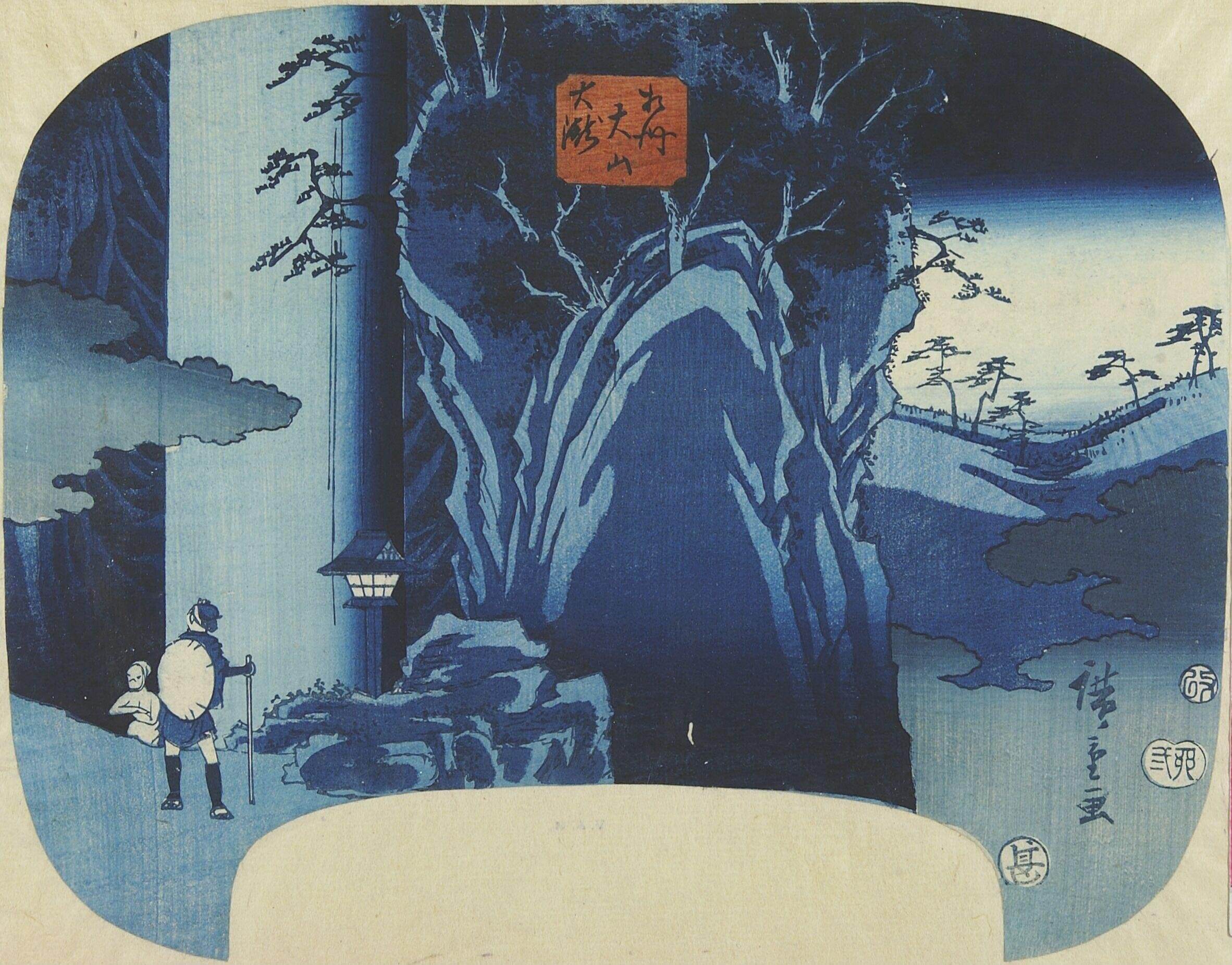
The Great Waterfall at Oyama in Sagami Province
- Date:
- 1855
- Medium:
- Source:
- Victoria and Albert Museum
Description
The Great Waterfall at Ōyama in Sagami Province, dated 1855 and held by the Victoria and Albert Museum, is an Edo ukiyo-e landscape print by Utagawa Hiroshige depicting one of the major destinations for popular pilgrimage in the late Tokugawa period. Mount Ōyama, in modern Kanagawa, was sacred to the deity Sekison and famous for its rugged scenery and waterfalls, where pilgrims performed ritual ablutions. The Ōyama-mode procession from Edo to the mountain was a defining urban practice. In this Utagawa Hiroshige landscape print the artist organises a vertical composition dominated by the falling water, with worshippers in white robes performing misogi at the base while crags and trees frame the scene. The Edo ukiyo-e treatment of waterfalls allowed Hiroshige to play with strongly graphic patterns of water set against the irregular silhouettes of rocks and foliage. The 1855 dating places the print in the artist's final, highly inventive period, when his landscape print designs increasingly favoured striking vertical formats. The Victoria and Albert Museum impression preserves the careful registration and the subtle bokashi shading that give the water its sense of falling weight. As a Utagawa Hiroshige landscape print of a celebrated devotional site, the work documents not only a geography but a religious-social practice that made mountains, waterfalls and roadside shrines integral to the imaginative life of Edo's residents.
More Prints by Utagawa Hiroshige


More Landscapes Prints

Lake Kugushi in Wakasa Province (Wakasa Kugushiko), from the series Souvenirs of Travel I (Tabi miyage dai isshu)"
Wakasa Kugushiko
1920
Color woodblock print; oban
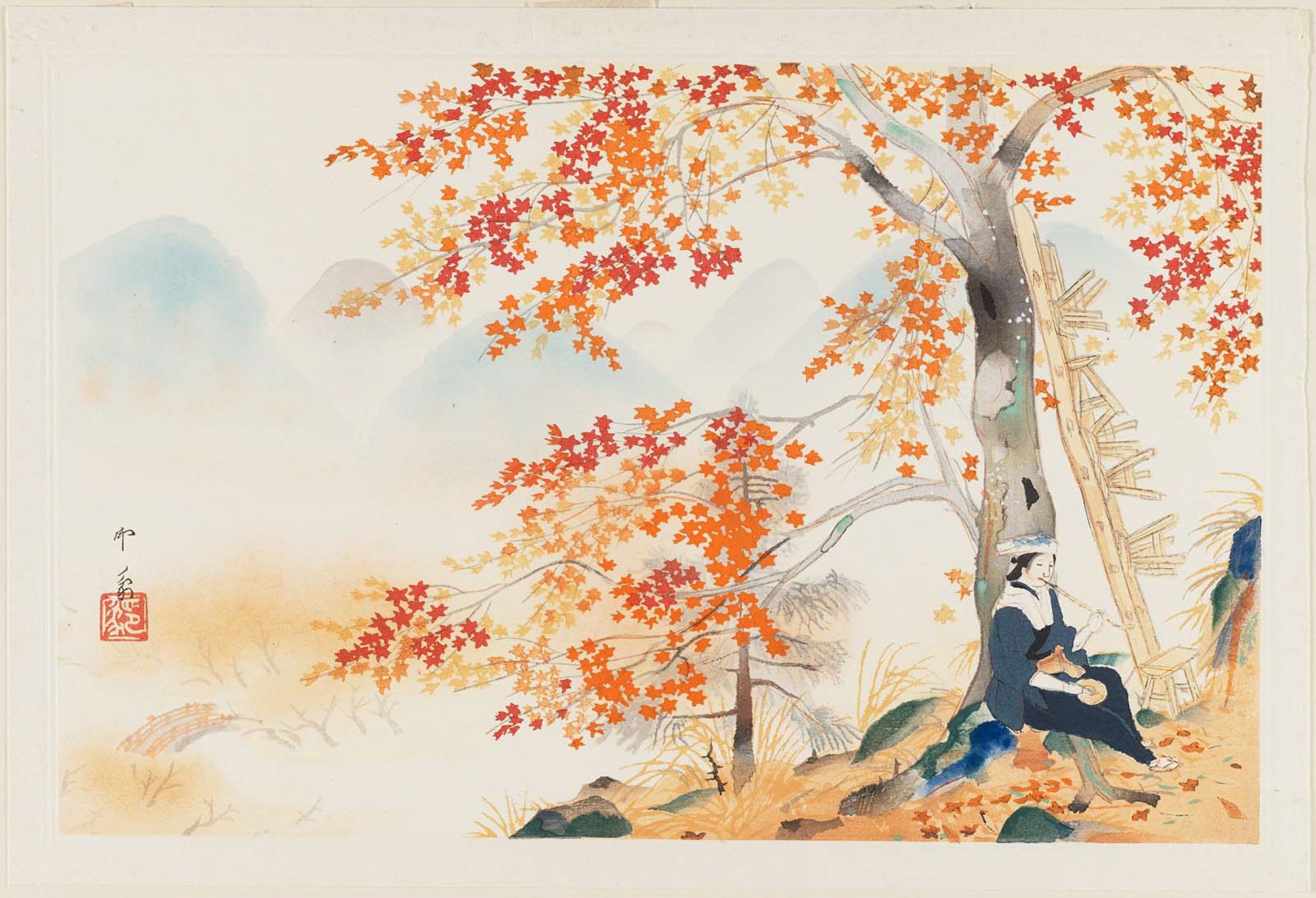
Autumn Maple Leaves at Takao, from the album Eight Views of Kyoto (Kyôto hakkei)
Woodblock print

The Beach at Kaiganji in Sanuki Province (Sanuki Kaiganji no hama), from the series "Collection of Views of Japan II, Kansai Edition (Nihon fukei shu II Kansai hen)"
1934
Color woodblock print; oban

Tea Kettle, section of a sheet from the series "Mirror of Stone Rubbings of Views of the Provinces" (Kohon meihitsu ishizuri kagami)
n.d.
Woodblock print; ishizuri-e, section of harimaze sheet
Featured in Collections
Curated cross-cuts that include this print.
Frequently Asked Questions
The Great Waterfall at Oyama in Sagami Province was created by Utagawa Hiroshige (歌川広重) in 1855.
The Great Waterfall at Oyama in Sagami Province depicts landscapes, waterfalls, and autumn foliage.