
The Hall of Thirty-Three Bays at Fukagawa (Fukagawa Sanjusangendo), from the series "One Hundred Famous Views of Edo (Meisho Edo hyakkei)"
- Series:
- One Hundred Famous Views of Edo (print 69 of 118)
- Medium:
- Color woodblock print
- Source:
- Art Institute of Chicago
Description
The Fukagawa Sanjusangendo was an Edo-period replica of Kyoto's celebrated Sanjusangendo, erected in the Fukagawa district and best known as a venue for the tōshiya, a ceremonial archery competition in which participants shot arrows the full length of the thirty-three-bay veranda. Hiroshige included the site in his series One Hundred Famous Views of Edo (Meisho Edo hyakkei), published between 1856 and 1858 by Uoya Eikichi. The vertical oban format Hiroshige employed throughout the series would frame the extended hall structure—its length emphasized by recession—against a sky rendered in graduated bokashi. The series belongs to the final phase of Hiroshige's career, completed in the two years before his death from cholera in 1858, during which his compositional inventiveness reached its most concentrated expression. The architectural subject, rare in a series dominated by seasonal landscape and urban genre views, reflects the range of Edo sites Hiroshige documented across the one hundred prints.
More Prints by Utagawa Hiroshige


More Landscapes Prints

Lake Kugushi in Wakasa Province (Wakasa Kugushiko), from the series Souvenirs of Travel I (Tabi miyage dai isshu)"
Wakasa Kugushiko
1920
Color woodblock print; oban
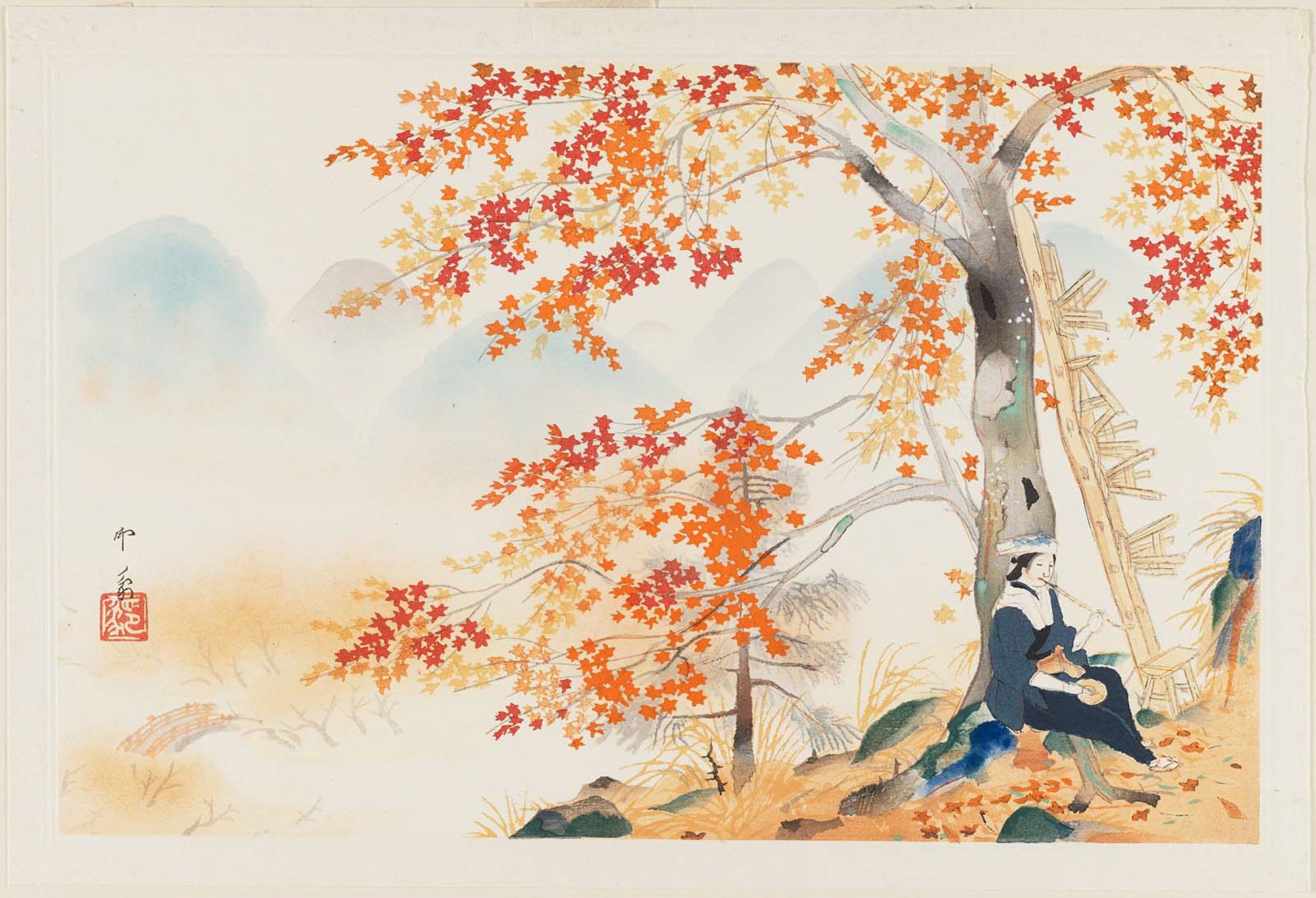
Autumn Maple Leaves at Takao, from the album Eight Views of Kyoto (Kyôto hakkei)
Woodblock print

The Beach at Kaiganji in Sanuki Province (Sanuki Kaiganji no hama), from the series "Collection of Views of Japan II, Kansai Edition (Nihon fukei shu II Kansai hen)"
1934
Color woodblock print; oban

Tea Kettle, section of a sheet from the series "Mirror of Stone Rubbings of Views of the Provinces" (Kohon meihitsu ishizuri kagami)
n.d.
Woodblock print; ishizuri-e, section of harimaze sheet
Featured in Collections
Curated cross-cuts that include this print.
Frequently Asked Questions
The Hall of Thirty-Three Bays at Fukagawa (Fukagawa Sanjusangendo), from the series "One Hundred Famous Views of Edo (Meisho Edo hyakkei)" was created by Utagawa Hiroshige (歌川広重).
Yes — The Hall of Thirty-Three Bays at Fukagawa (Fukagawa Sanjusangendo), from the series "One Hundred Famous Views of Edo (Meisho Edo hyakkei)" is part of the One Hundred Famous Views of Edo series (print 69 of 118) by Utagawa Hiroshige.
The Hall of Thirty-Three Bays at Fukagawa (Fukagawa Sanjusangendo), from the series "One Hundred Famous Views of Edo (Meisho Edo hyakkei)" depicts landscapes, edo & tokyo, and famous places (meisho-e).