
The River of Waterfalls at Oji (Oji Takinogawa), from the series "One Hundred Famous Views of Edo (Meisho Edo hyakkei)"
- Series:
- One Hundred Famous Views of Edo (print 88 of 118)
- Medium:
- Color woodblock print
- Source:
- Art Institute of Chicago
Description
Ōji, in northern Edo, was known for the cascades along the Takinogawa — a small river whose name itself means "river of waterfalls." The site drew Edoites in summer for cool walks beside the rapids and in autumn for maple viewing. Hiroshige's print frames the running water through overhanging foliage and rocky banks, with the cascade rendered in white reserves against saturated greens or reds depending on the season represented. The vertical oban format compresses the viewer between framing trees and the rushing water below. Hiroshige had treated Ōji in earlier landscape series, but the Meisho Edo Hyakkei version carries the abrupt foreground cropping and bokashi-rich color washes that distinguish his final work. The print sits among the natural landscape subjects of the series, contrasting with the dense urban scenes that depict central Edo's bridges, markets, and theatre districts, and showing Hiroshige's continued attention to the cooling and seasonal rituals of the city's outskirts.
More Prints by Utagawa Hiroshige


More Landscapes Prints

Lake Kugushi in Wakasa Province (Wakasa Kugushiko), from the series Souvenirs of Travel I (Tabi miyage dai isshu)"
Wakasa Kugushiko
1920
Color woodblock print; oban
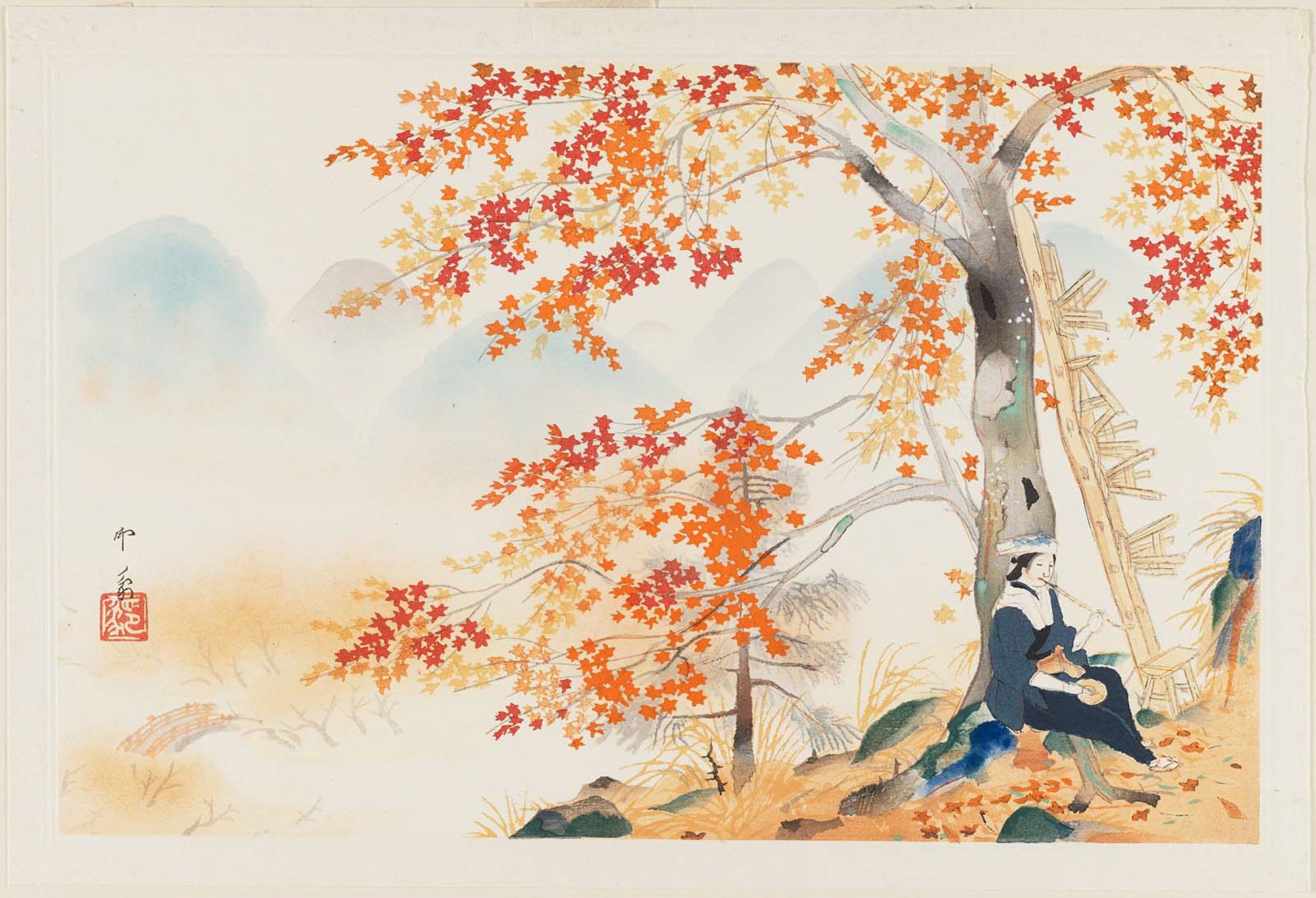
Autumn Maple Leaves at Takao, from the album Eight Views of Kyoto (Kyôto hakkei)
Woodblock print

The Beach at Kaiganji in Sanuki Province (Sanuki Kaiganji no hama), from the series "Collection of Views of Japan II, Kansai Edition (Nihon fukei shu II Kansai hen)"
1934
Color woodblock print; oban

Tea Kettle, section of a sheet from the series "Mirror of Stone Rubbings of Views of the Provinces" (Kohon meihitsu ishizuri kagami)
n.d.
Woodblock print; ishizuri-e, section of harimaze sheet
Featured in Collections
Curated cross-cuts that include this print.
Frequently Asked Questions
The River of Waterfalls at Oji (Oji Takinogawa), from the series "One Hundred Famous Views of Edo (Meisho Edo hyakkei)" was created by Utagawa Hiroshige (歌川広重).
Yes — The River of Waterfalls at Oji (Oji Takinogawa), from the series "One Hundred Famous Views of Edo (Meisho Edo hyakkei)" is part of the One Hundred Famous Views of Edo series (print 88 of 118) by Utagawa Hiroshige.
The River of Waterfalls at Oji (Oji Takinogawa), from the series "One Hundred Famous Views of Edo (Meisho Edo hyakkei)" depicts landscapes, edo & tokyo, and famous places (meisho-e).