THIRTY-SIX VIEWS OF FUJI, "MOTOGUCHIDORI"
- Date:
- 19th century
- Medium:
- Ink on paper
- Source:
- Harvard Art Museums
Description
Motoguchidori, from a Thirty-Six Views of Mount Fuji by Utagawa Hiroshige, joins his late landscape print engagement with the sacred mountain that had also captivated Hokusai. Hiroshige's own Fuji set, issued at the end of his life, paid homage to and competed with Hokusai's earlier Thirty-Six Views, treating Fuji from a wide range of geographic vantages and seasonal moods. Motoguchidori, a place on or near a Fuji approach, gives Hiroshige a vantage that brings together travelers, road, and mountain in a single composition. As Edo ukiyo-e, the print exemplifies the mature Hiroshige idiom: foreground figures with porters and pack horses, a winding road that organizes the middle distance, layered hills under a blue gradient sky, and Fuji itself rising in a clean silhouette against the upper register. The synthetic blue that came into Japanese printmaking in the 1830s is used confidently across the heavens and the snowfields of the cone, and Hiroshige's eye for travel detail gives even the smallest figure narrative weight. The Harvard Art Museums impression preserves the series' careful printing and registration, and it places Hiroshige firmly within the long Edo print tradition of Fuji imagery while also marking his particular contribution: a humane, traveler's view of the mountain, set within a landscape print vocabulary that prefers ease and atmosphere to virtuoso spectacle.
More Prints by Utagawa Hiroshige

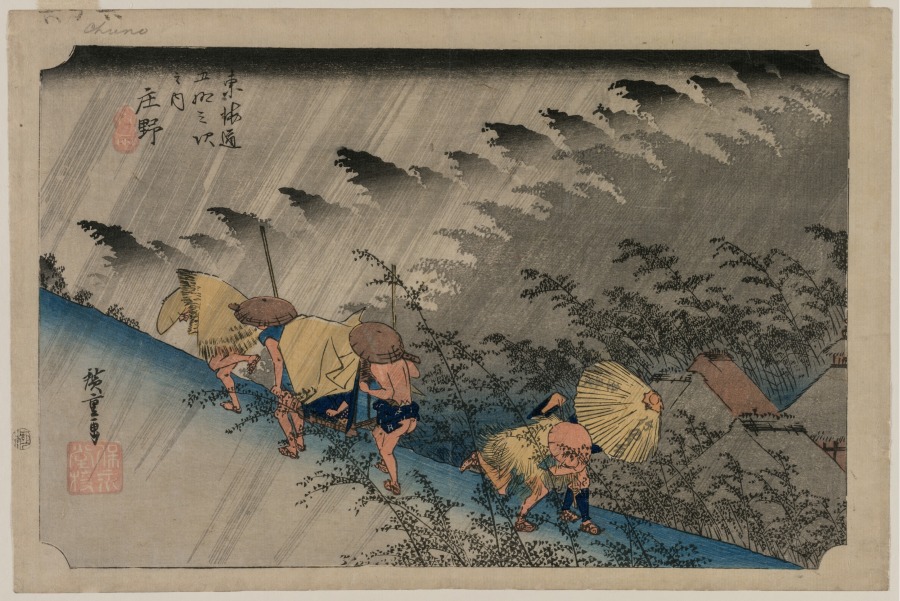
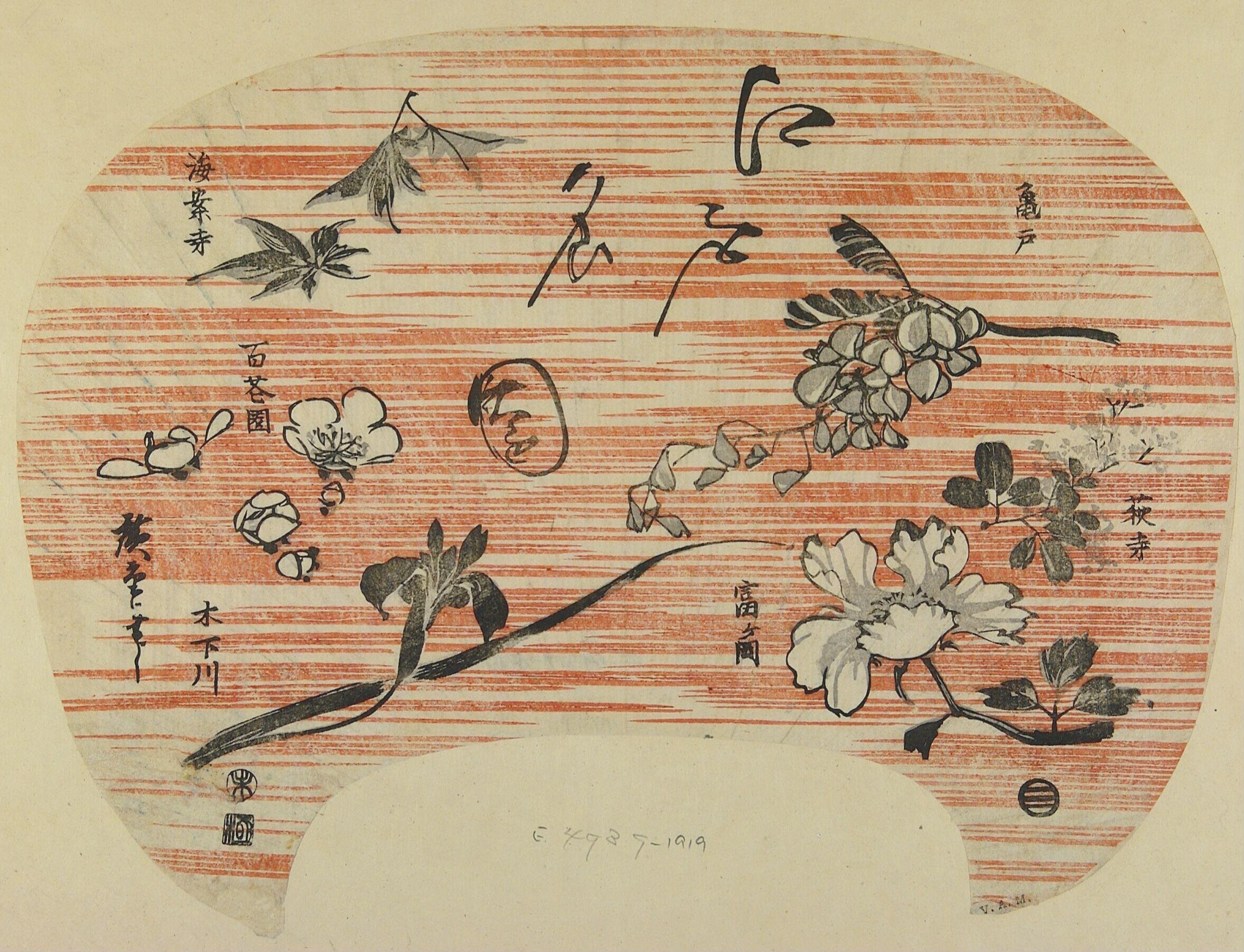

More Landscapes Prints

Lake Kugushi in Wakasa Province (Wakasa Kugushiko), from the series Souvenirs of Travel I (Tabi miyage dai isshu)"
Wakasa Kugushiko
1920
Color woodblock print; oban
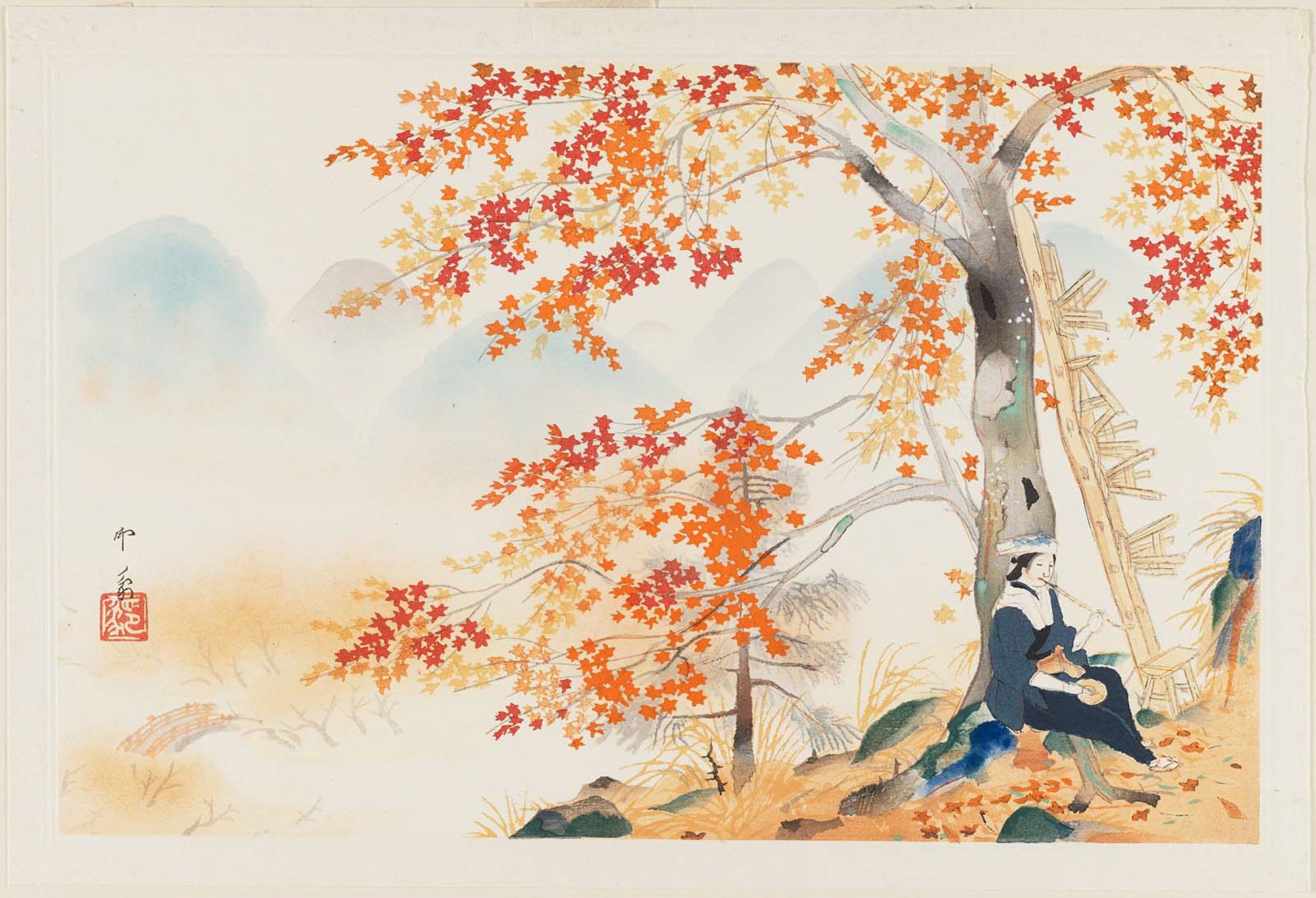
Autumn Maple Leaves at Takao, from the album Eight Views of Kyoto (Kyôto hakkei)
Woodblock print

The Beach at Kaiganji in Sanuki Province (Sanuki Kaiganji no hama), from the series "Collection of Views of Japan II, Kansai Edition (Nihon fukei shu II Kansai hen)"
1934
Color woodblock print; oban

Tea Kettle, section of a sheet from the series "Mirror of Stone Rubbings of Views of the Provinces" (Kohon meihitsu ishizuri kagami)
n.d.
Woodblock print; ishizuri-e, section of harimaze sheet
Featured in Collections
Curated cross-cuts that include this print.
Frequently Asked Questions
THIRTY-SIX VIEWS OF FUJI, "MOTOGUCHIDORI" was created by Utagawa Hiroshige (歌川広重) in 19th century.
THIRTY-SIX VIEWS OF FUJI, "MOTOGUCHIDORI" depicts landscapes and mount fuji.