
Three People Walking in Snow
- Source:
- ukiyo-e.org
Description
Three People Walking in Snow is a landscape print by Utagawa Hiroshige (1797-1858), an artist whose treatment of weather and season helped define the Edo ukiyo-e landscape print and exerted a lasting influence on Western painters such as Whistler and Van Gogh. Hiroshige's snow scenes are among the most admired moments in his oeuvre, ranging from the iconic Kanbara station of his Hoeido Tokaido to the snow-bound shrines and bridges of his Edo and Kisokaido series. In images like this one, three travelers move through a landscape muffled by snowfall, their cloaked figures providing scale and an emotional center for an otherwise white expanse. The medium of woodblock printing was uniquely suited to such scenes: the keyblock outlines could be left strikingly bare against unprinted paper to convey snow on rooftops and branches, while bokashi gradation in the sky and graded ink in the foreground suggested cold air and falling flakes. The result is a landscape print in which negative space functions as substance and silence becomes pictorial. Preserved at ukiyo-e.org, the image illustrates the depth of Hiroshige's lifelong investigation into the visual conditions of Japanese weather, an investigation that broadened the imaginative range of the landscape print and made winter, in particular, one of the great native subjects of nineteenth-century Japanese woodblock art.
More Prints by Utagawa Hiroshige

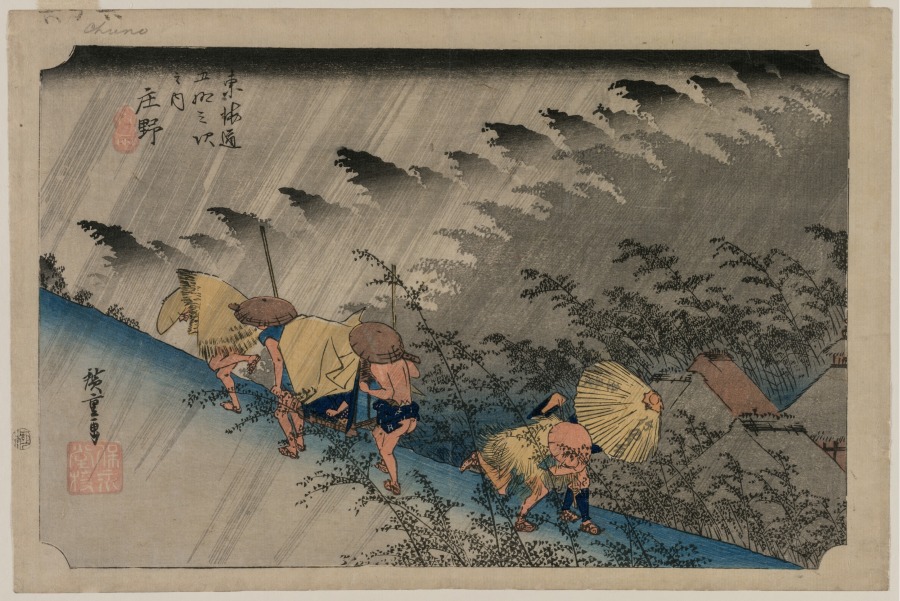
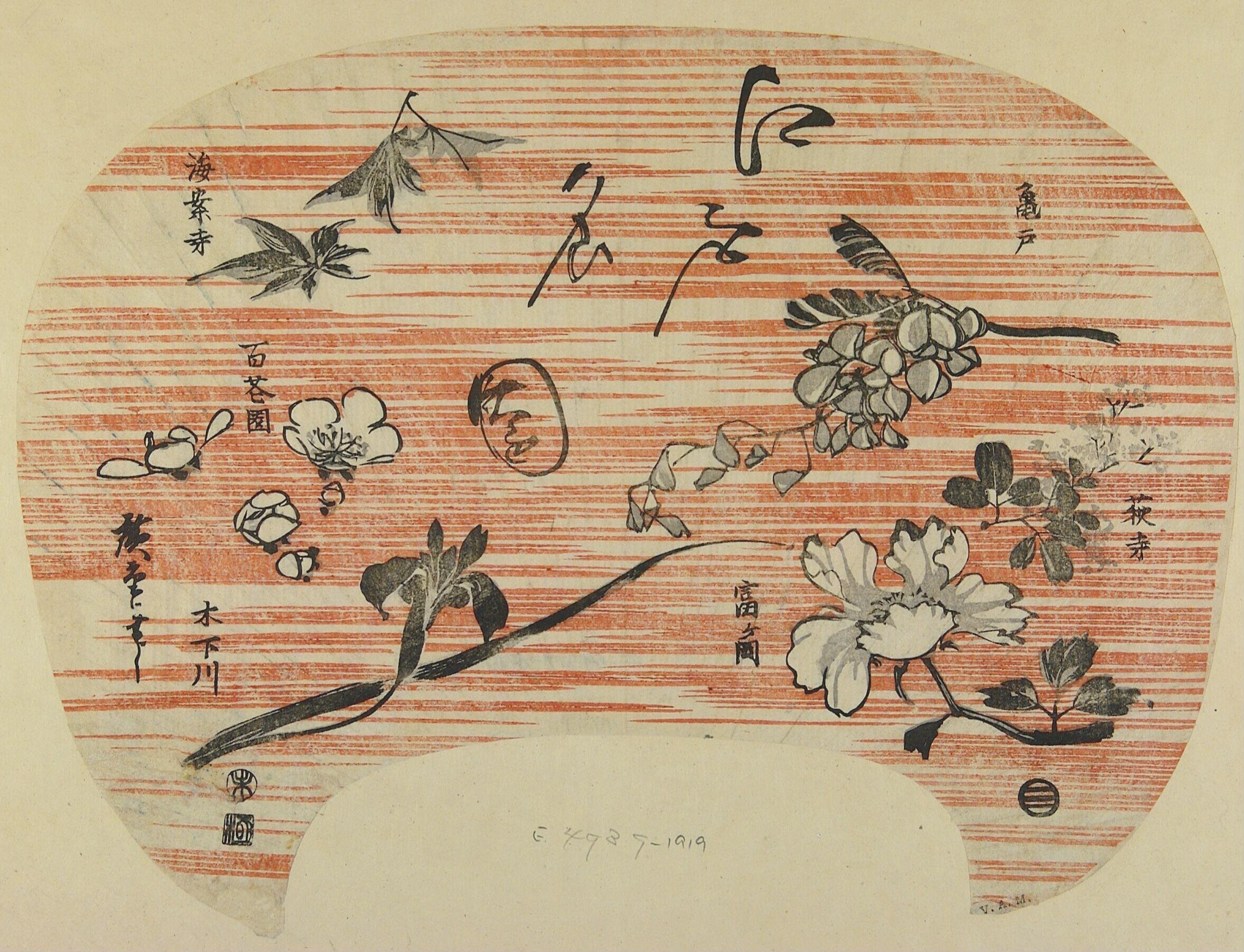

More Landscapes Prints

Lake Kugushi in Wakasa Province (Wakasa Kugushiko), from the series Souvenirs of Travel I (Tabi miyage dai isshu)"
Wakasa Kugushiko
1920
Color woodblock print; oban
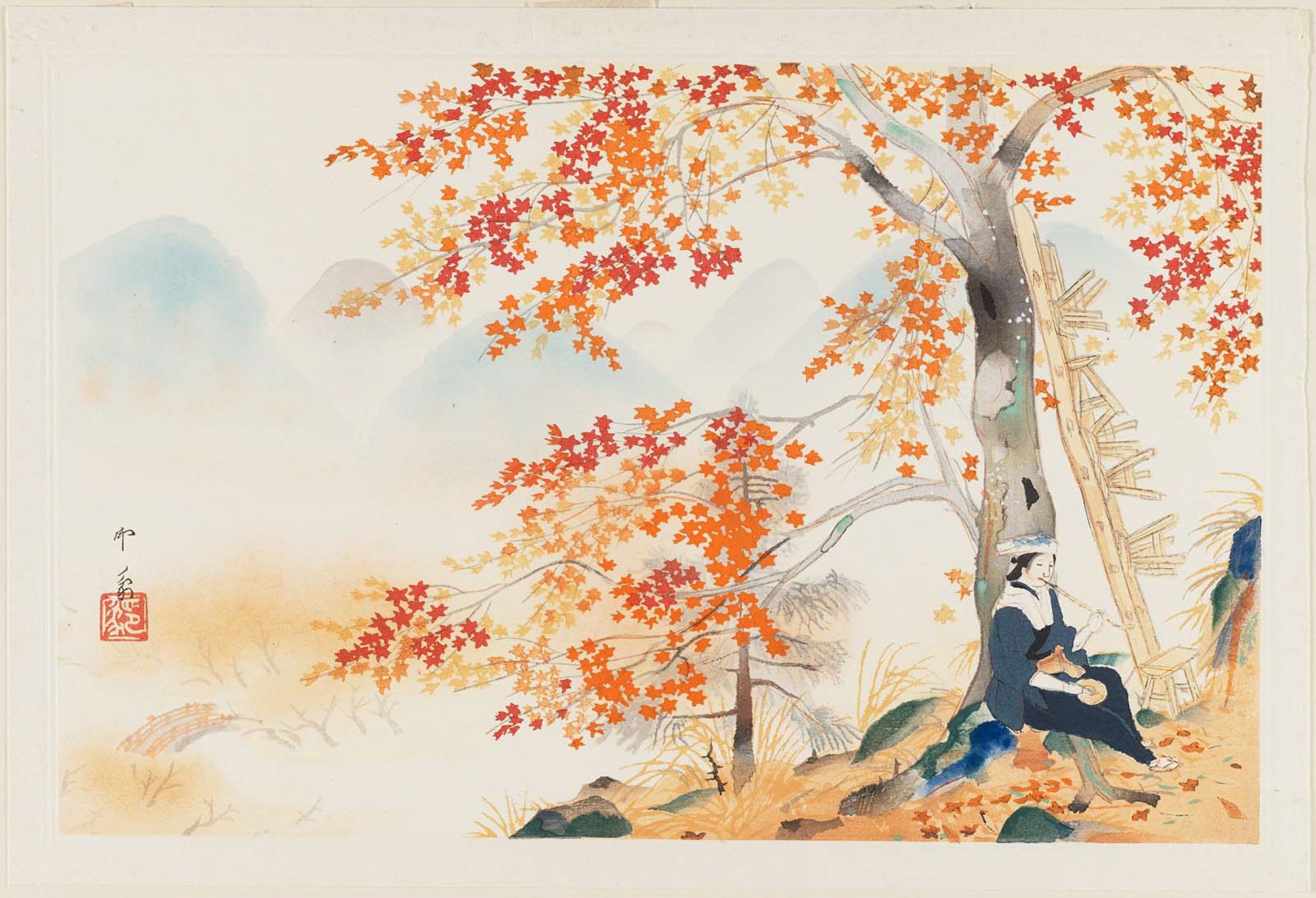
Autumn Maple Leaves at Takao, from the album Eight Views of Kyoto (Kyôto hakkei)
Woodblock print

The Beach at Kaiganji in Sanuki Province (Sanuki Kaiganji no hama), from the series "Collection of Views of Japan II, Kansai Edition (Nihon fukei shu II Kansai hen)"
1934
Color woodblock print; oban

Tea Kettle, section of a sheet from the series "Mirror of Stone Rubbings of Views of the Provinces" (Kohon meihitsu ishizuri kagami)
n.d.
Woodblock print; ishizuri-e, section of harimaze sheet
Featured in Collections
Curated cross-cuts that include this print.
Frequently Asked Questions
Three People Walking in Snow was created by Utagawa Hiroshige (歌川広重).
Three People Walking in Snow depicts landscapes and winter.