View of Asakusa in Snow (Asakusa secchū no zu), from the series Famous Places of Edo (Edo meisho no uchi)
- Date:
- 19th century
- Medium:
- Ukiyo-e woodblock print; ink and color on paper
- Source:
- Harvard Art Museums
Description
View of Asakusa in Snow (Asakusa secchu no zu) belongs to Utagawa Hiroshige's series Famous Places of Edo (Edo meisho no uchi), one of his many surveys of the shogunal capital in the Edo ukiyo-e landscape print idiom. Asakusa, with the great Senso-ji temple, was an obligatory subject for any meisho series, and Hiroshige treated it under different weathers across his career. Here the precincts and approach to the temple lie under fresh snow. The Kaminarimon gate, the long Nakamise approach, and the great roof of the main hall organize the composition into a deep central axis, while pilgrims in winter wraps shuffle through the snow on either side. The bokashi gradations in the sky imply that the snowfall has just paused, and the white surfaces of paper give the entire scene the quietness associated with the city under fresh snow. The Harvard Art Museums sheet is characteristic of Hiroshige's lifelong attention to Asakusa as both religious site and popular gathering ground. His various Asakusa designs across the meisho series form a near-complete pictorial chronicle of the temple's surroundings under different conditions, and a Senso-ji snow scene like this one became one of the canonical winter views of Edo.
More Prints by Utagawa Hiroshige


More Landscapes Prints

Lake Kugushi in Wakasa Province (Wakasa Kugushiko), from the series Souvenirs of Travel I (Tabi miyage dai isshu)"
Wakasa Kugushiko
1920
Color woodblock print; oban
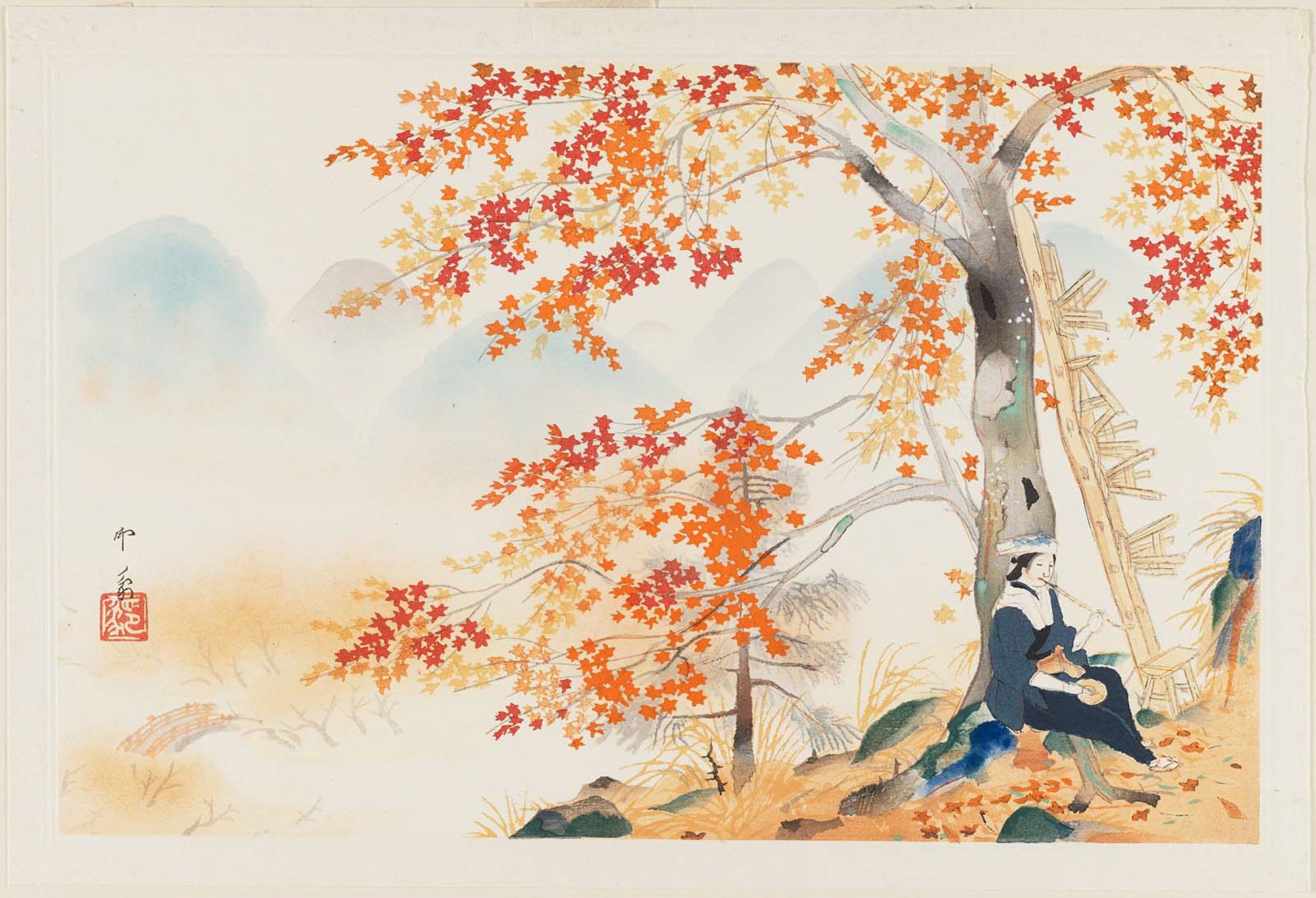
Autumn Maple Leaves at Takao, from the album Eight Views of Kyoto (Kyôto hakkei)
Woodblock print

The Beach at Kaiganji in Sanuki Province (Sanuki Kaiganji no hama), from the series "Collection of Views of Japan II, Kansai Edition (Nihon fukei shu II Kansai hen)"
1934
Color woodblock print; oban

Tea Kettle, section of a sheet from the series "Mirror of Stone Rubbings of Views of the Provinces" (Kohon meihitsu ishizuri kagami)
n.d.
Woodblock print; ishizuri-e, section of harimaze sheet
Featured in Collections
Curated cross-cuts that include this print.
Frequently Asked Questions
View of Asakusa in Snow (Asakusa secchū no zu), from the series Famous Places of Edo (Edo meisho no uchi) was created by Utagawa Hiroshige (歌川広重) in 19th century.
View of Asakusa in Snow (Asakusa secchū no zu), from the series Famous Places of Edo (Edo meisho no uchi) depicts landscapes and winter.