Warbler on Plum Branch
- Medium:
- Ukiyo-e woodblock print; ink and color on paper
- Source:
- Harvard Art Museums
Description
Warbler on Plum Branch is a kacho-ga, or bird-and-flower print, by Utagawa Hiroshige (1797-1858), an artist whose mastery of the format made him one of the most admired interpreters of this genre within Edo ukiyo-e alongside contemporaries such as Hokusai. The pairing of the Japanese bush warbler, the uguisu, with a flowering plum branch is one of the most enduring motifs in East Asian art and poetry, traditionally read as a harbinger of early spring and a symbol of resilient beauty after winter. In Hiroshige's treatment the composition is typically tall and narrow, with the plum branch entering the sheet at a sharply observed angle and the warbler perched at a calibrated balance point in the design. Although the format moves away from the panoramic landscape prints for which he is best known, Hiroshige brings to it the same disciplined eye for natural form, the same restrained color, and the same use of bokashi gradation to soften background space. Held at the Harvard Art Museums, this impression demonstrates the centrality of bird-and-flower print production within his broader oeuvre and contributes to scholarship on the way nineteenth-century Japanese woodblock artists translated centuries of painted and poetic convention into the standardized, widely distributed medium of the commercial print.
More Prints by Utagawa Hiroshige


More Landscapes Prints

Lake Kugushi in Wakasa Province (Wakasa Kugushiko), from the series Souvenirs of Travel I (Tabi miyage dai isshu)"
Wakasa Kugushiko
1920
Color woodblock print; oban
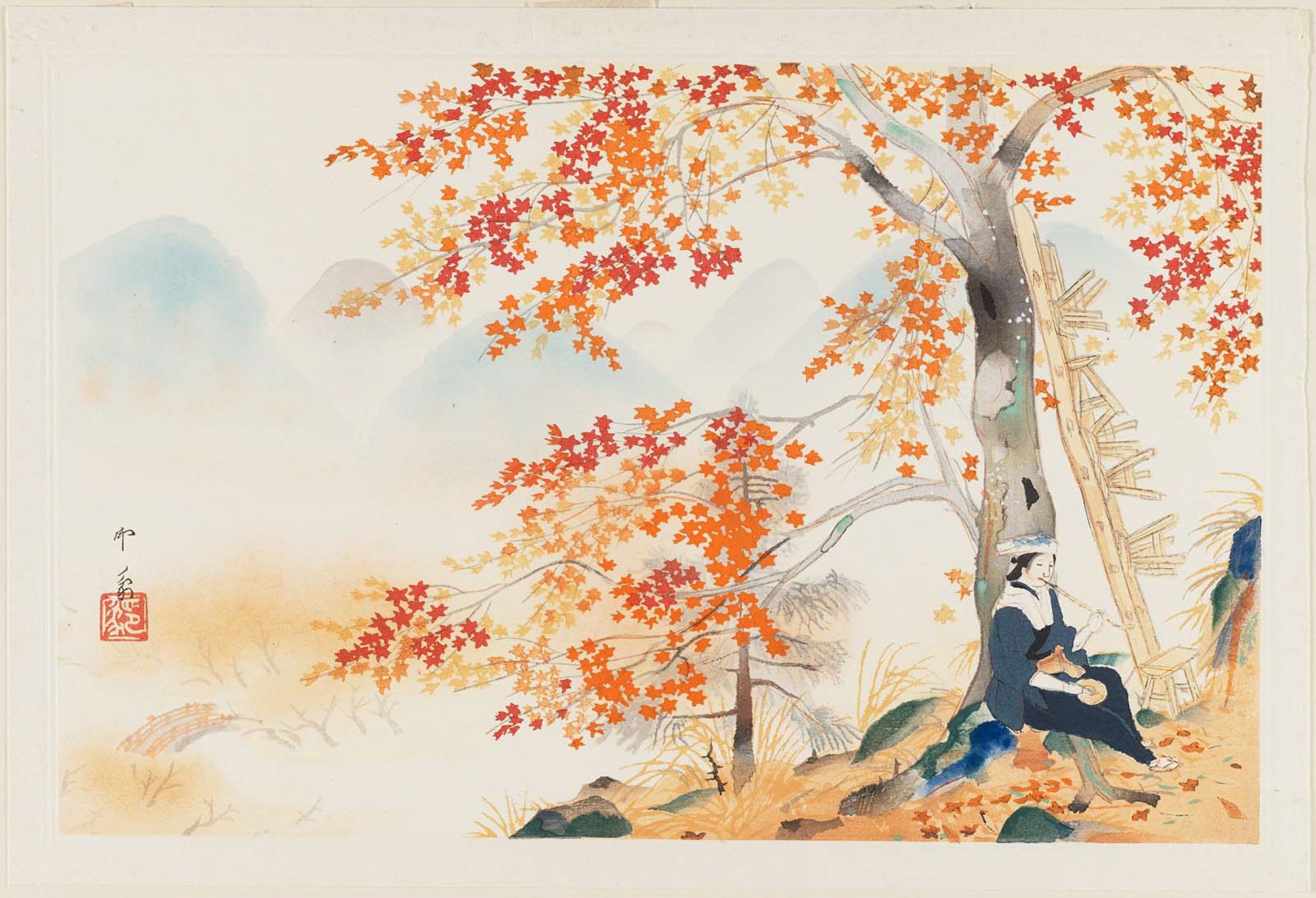
Autumn Maple Leaves at Takao, from the album Eight Views of Kyoto (Kyôto hakkei)
Woodblock print

The Beach at Kaiganji in Sanuki Province (Sanuki Kaiganji no hama), from the series "Collection of Views of Japan II, Kansai Edition (Nihon fukei shu II Kansai hen)"
1934
Color woodblock print; oban

Tea Kettle, section of a sheet from the series "Mirror of Stone Rubbings of Views of the Provinces" (Kohon meihitsu ishizuri kagami)
n.d.
Woodblock print; ishizuri-e, section of harimaze sheet
Featured in Collections
Curated cross-cuts that include this print.
Frequently Asked Questions
Warbler on Plum Branch was created by Utagawa Hiroshige (歌川広重).
Warbler on Plum Branch depicts landscapes.