
Yase no Sato
- Source:
- ukiyo-e.org
Description
Yase no Sato is an Edo ukiyo-e print by Utagawa Hiroshige, recorded in ukiyo-e.org from holdings at the Art Gallery of Greater Victoria. Yase, located in the northeastern outskirts of Kyoto along the route toward Mount Hiei, was historically known for its rural villages and a community of female fuel carriers, the Yase no oharame, who brought firewood and produce into the capital. The design situates the village within a wooded landscape with the surrounding hills suggested in receding washes of color. Hiroshige's typical use of softly graded bokashi for sky and distance, combined with carefully composed groupings of dwellings and figures, brings the scene into the meisho-e tradition as a culturally specific evocation of Kyoto's hinterland. As an Edo ukiyo-e landscape print, Yase no Sato joins his broader Kyoto and surrounding region designs, including the Famous Places in Kyoto series, where he repeatedly turned to suburban villages and sacred groves as subjects worthy of the same care as more famous sites. The ukiyo-e.org record draws on museum documentation associated with the underlying institution and allows researchers to study the image in relation to other Hiroshige depictions of Kyoto's outskirts. For collectors of Utagawa Hiroshige, the design offers a quieter, less spectacular subject that nonetheless illustrates his interest in the lived geography of the imperial capital and its environs. Within his wider career, Yase no Sato confirms that his meisho-e vocabulary embraced rural and semi-rural communities, not only celebrated landmarks, contributing to a layered nineteenth-century visual record of Kyoto and its hinterland that continues to inform research on Edo-period print culture and the visual mapping of place.
More Prints by Utagawa Hiroshige


More Landscapes Prints

Lake Kugushi in Wakasa Province (Wakasa Kugushiko), from the series Souvenirs of Travel I (Tabi miyage dai isshu)"
Wakasa Kugushiko
1920
Color woodblock print; oban
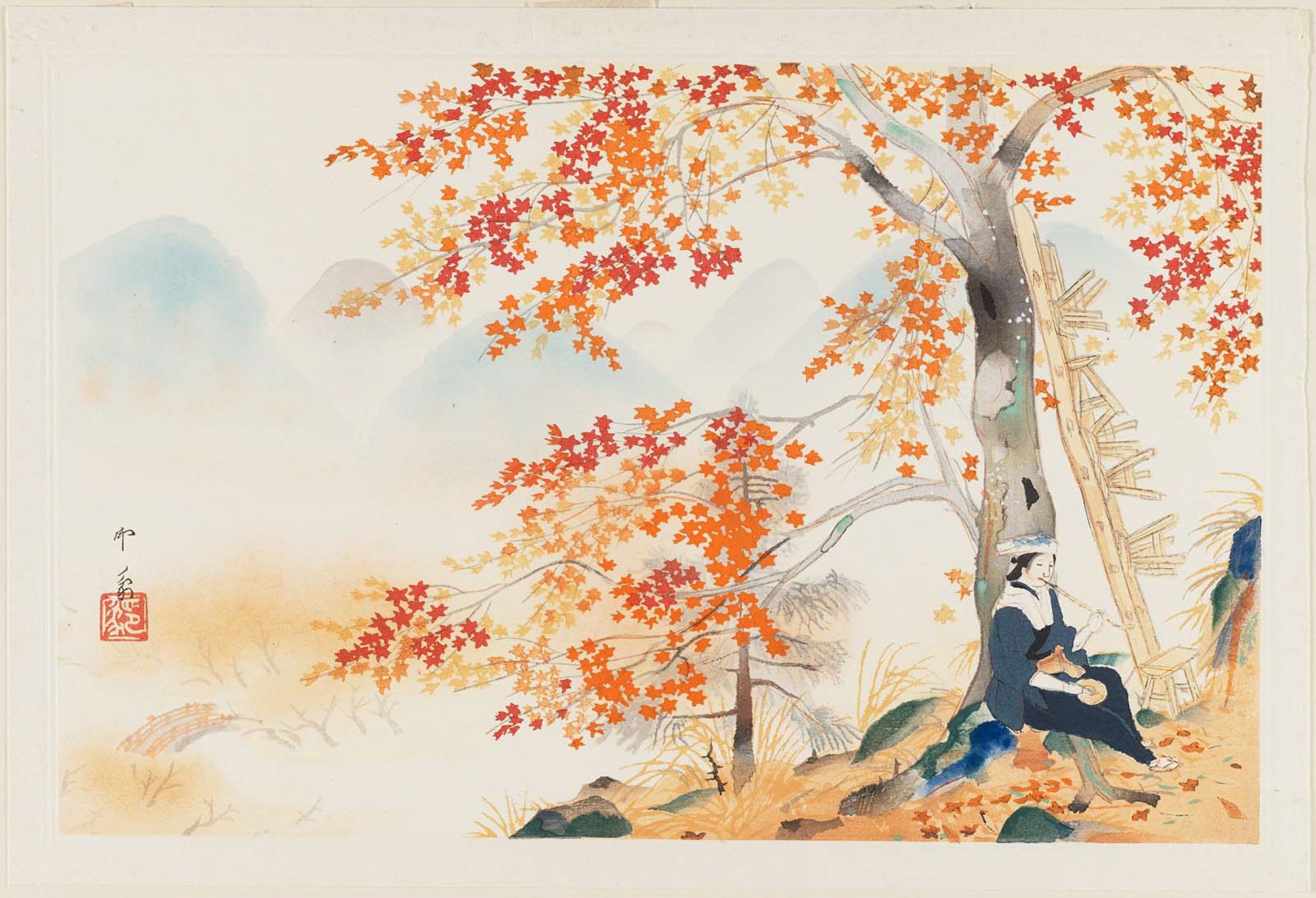
Autumn Maple Leaves at Takao, from the album Eight Views of Kyoto (Kyôto hakkei)
Woodblock print

The Beach at Kaiganji in Sanuki Province (Sanuki Kaiganji no hama), from the series "Collection of Views of Japan II, Kansai Edition (Nihon fukei shu II Kansai hen)"
1934
Color woodblock print; oban

Tea Kettle, section of a sheet from the series "Mirror of Stone Rubbings of Views of the Provinces" (Kohon meihitsu ishizuri kagami)
n.d.
Woodblock print; ishizuri-e, section of harimaze sheet
Featured in Collections
Curated cross-cuts that include this print.
Frequently Asked Questions
Yase no Sato was created by Utagawa Hiroshige (歌川広重).
Yase no Sato depicts landscapes.