
Yoro-Hokwai
- Source:
- ukiyo-e.org
Description
Yoro-Hokwai is a landscape print by Utagawa Hiroshige (1797-1858), one of the supreme masters of Edo ukiyo-e and the artist whose name became virtually synonymous with the meisho-e, or famous-place picture, in nineteenth-century Japan. The title refers to the Yoro Falls in Mino Province, a cascade celebrated in Japanese literature as the site of a filial-piety legend in which sake reportedly flowed from the rocks for a devoted son. Hiroshige treats this storied waterfall as both a topographical record and a meditation on the relationship between human figures and the vertical drama of mountain water, a recurring concern in his landscape work. The composition follows the conventions Hiroshige refined across his long career: a foreground anchored by trees or travelers, a middle ground organized around the falling water, and atmospheric distances tuned by the bokashi gradations his printers had mastered. Working within the woodblock tradition, he combined precise line work from the keyblock with delicately graded color blocks to suggest the moisture and shifting light particular to a forest gorge. The result speaks to the appetite among urban Edo viewers for prints that could substitute for travel they might never undertake, allowing a townsman to contemplate distant provincial wonders from his own quarters. This impression is preserved at ukiyo-e.org, where it is accessible to researchers and collectors interested in tracing Hiroshige's treatment of Japan's most poetically charged landscapes.
More Prints by Utagawa Hiroshige


More Landscapes Prints

Lake Kugushi in Wakasa Province (Wakasa Kugushiko), from the series Souvenirs of Travel I (Tabi miyage dai isshu)"
Wakasa Kugushiko
1920
Color woodblock print; oban
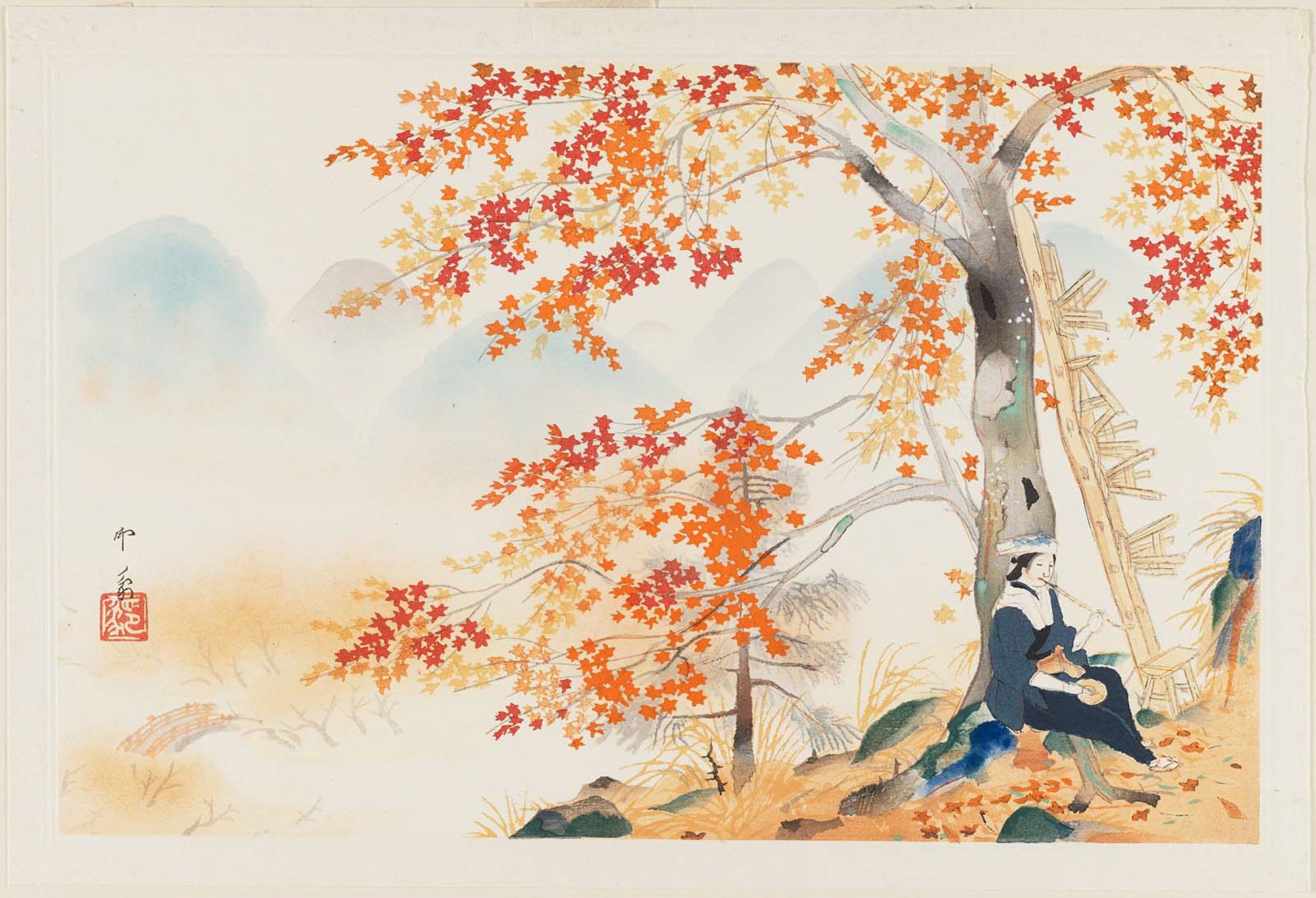
Autumn Maple Leaves at Takao, from the album Eight Views of Kyoto (Kyôto hakkei)
Woodblock print

The Beach at Kaiganji in Sanuki Province (Sanuki Kaiganji no hama), from the series "Collection of Views of Japan II, Kansai Edition (Nihon fukei shu II Kansai hen)"
1934
Color woodblock print; oban

Tea Kettle, section of a sheet from the series "Mirror of Stone Rubbings of Views of the Provinces" (Kohon meihitsu ishizuri kagami)
n.d.
Woodblock print; ishizuri-e, section of harimaze sheet
Featured in Collections
Curated cross-cuts that include this print.
Frequently Asked Questions
Yoro-Hokwai was created by Utagawa Hiroshige (歌川広重).
Yoro-Hokwai depicts landscapes.