
Yoshiwara, Fuji to Left
- Source:
- ukiyo-e.org
Description
Yoshiwara, Fuji to Left is a landscape print by Utagawa Hiroshige (1797 to 1858), depicting one of the fifty-three post stations of the Tokaido road that ran between Edo and Kyoto. The Tokaido was the most important highway of Tokugawa Japan, connecting the shogunal capital with the imperial city and lined with stations that provided lodging, refreshment, and remounts for travelers. Yoshiwara was the fourteenth station, located near the foot of Mount Fuji on the Pacific coast at the head of Suruga Bay. The station was famous in Hiroshige's day for an unusual visual feature: at this point along the road the traveler's view of Fuji was reversed, with the mountain appearing on the left rather than the customary right. Hiroshige treats this topographical curiosity by aligning the composition so that the great peak rises on the left side of the print while travelers and the station's roadside features occupy the right. The image belongs to one of the several Tokaido series Hiroshige designed across his career, the most famous being the Hoeido Tokaido published from 1833. As a landscape print within the broader Edo ukiyo-e tradition, Yoshiwara, Fuji to Left shows Hiroshige's characteristic combination of precise topographical observation with attention to weather, season, and the small narrative incidents of road life. The view also embeds Mount Fuji into the everyday horizon of travel, treating the sacred mountain not as remote icon but as the constant companion of the Tokaido walker. The image is catalogued on ukiyo-e.org, which aggregates impressions held across museums and private collections of Hiroshige's Tokaido series.
More Prints by Utagawa Hiroshige


More Landscapes Prints

Lake Kugushi in Wakasa Province (Wakasa Kugushiko), from the series Souvenirs of Travel I (Tabi miyage dai isshu)"
Wakasa Kugushiko
1920
Color woodblock print; oban
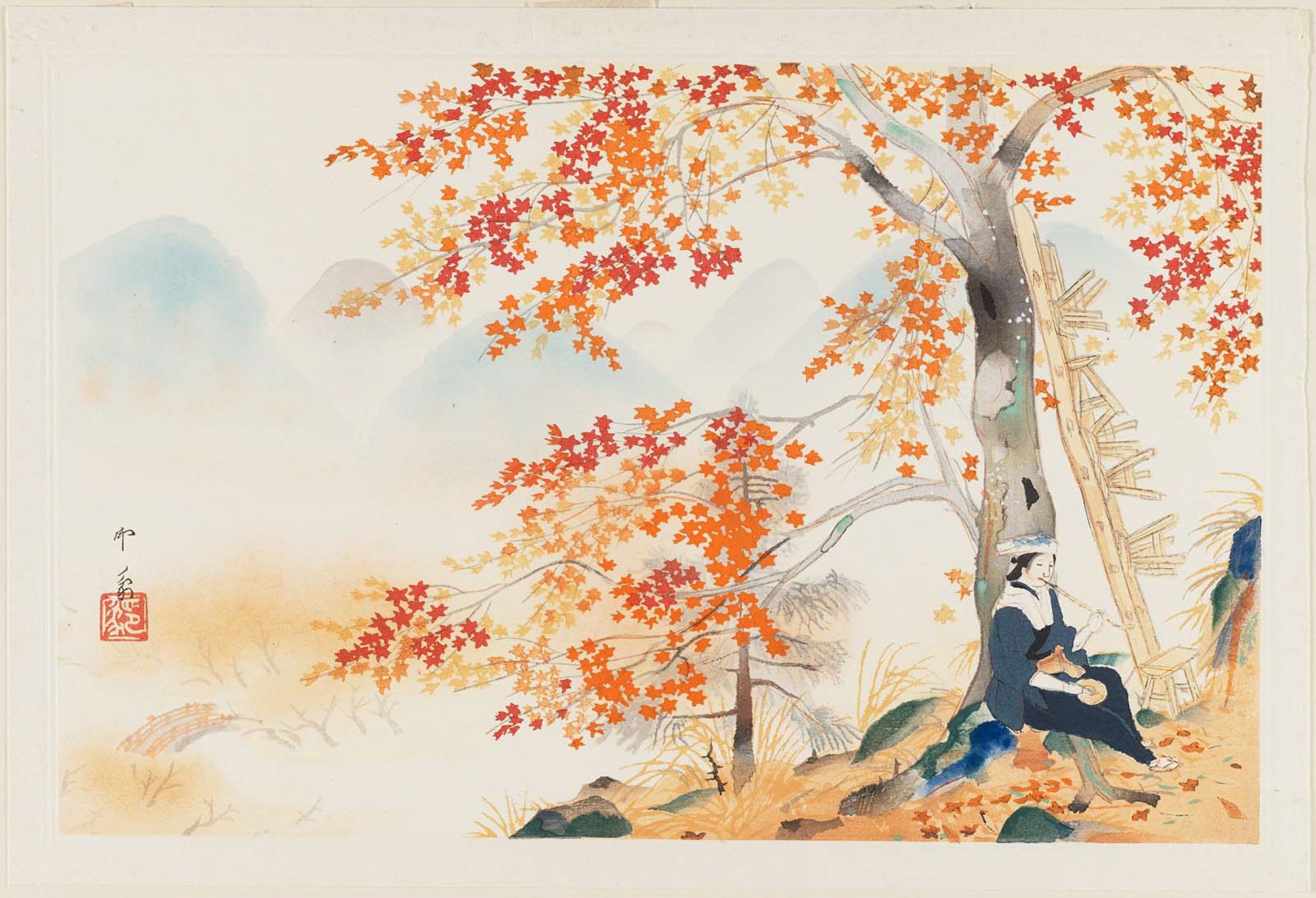
Autumn Maple Leaves at Takao, from the album Eight Views of Kyoto (Kyôto hakkei)
Woodblock print

The Beach at Kaiganji in Sanuki Province (Sanuki Kaiganji no hama), from the series "Collection of Views of Japan II, Kansai Edition (Nihon fukei shu II Kansai hen)"
1934
Color woodblock print; oban

Tea Kettle, section of a sheet from the series "Mirror of Stone Rubbings of Views of the Provinces" (Kohon meihitsu ishizuri kagami)
n.d.
Woodblock print; ishizuri-e, section of harimaze sheet
Featured in Collections
Curated cross-cuts that include this print.
Frequently Asked Questions
Yoshiwara, Fuji to Left was created by Utagawa Hiroshige (歌川広重).
Yoshiwara, Fuji to Left depicts landscapes and mount fuji.