Yushima Tenjin, from the series Famous Places of Edo (Edo meisho)
- Date:
- 19th century
- Medium:
- Ukiyo-e woodblock print; ink and color on paper
- Source:
- Harvard Art Museums
Description
Yushima Tenjin, from Utagawa Hiroshige's series Famous Places of Edo (Edo meisho), depicts the Shinto shrine on Yushima Hill in central Edo, dedicated to the scholar-deity Sugawara no Michizane and famous for its plum blossoms and for the students who visited to pray for success in their studies. The shrine sat on a rise above the moat north of the shogun's castle, with views across the city and a long flight of stone steps that became a recognizable visual motif. In Hiroshige's landscape print the precinct is presented through the conventions of the Edo ukiyo-e famous-place set: a measured arrangement of torii, lanterns, plum trees, and shrine buildings, with worshippers ascending or pausing on the stairs. The light is often that of late winter or early spring, when the plum is in bloom and the air still cold, and the artist's careful color gradation across sky and tree canopy registers the season. The Harvard Art Museums impression is part of Hiroshige's wider topographic project, in which each meisho is a node in a network of sacred and recreational sites that together make up the experiential map of Edo. As a quieter cousin to his more famous Edo and Tokaido series, this sheet shows how thoroughly Hiroshige imagined his city through the printed image, and how reliably he could turn any familiar shrine into an enduring landscape print.
More Prints by Utagawa Hiroshige


More Landscapes Prints

Lake Kugushi in Wakasa Province (Wakasa Kugushiko), from the series Souvenirs of Travel I (Tabi miyage dai isshu)"
Wakasa Kugushiko
1920
Color woodblock print; oban
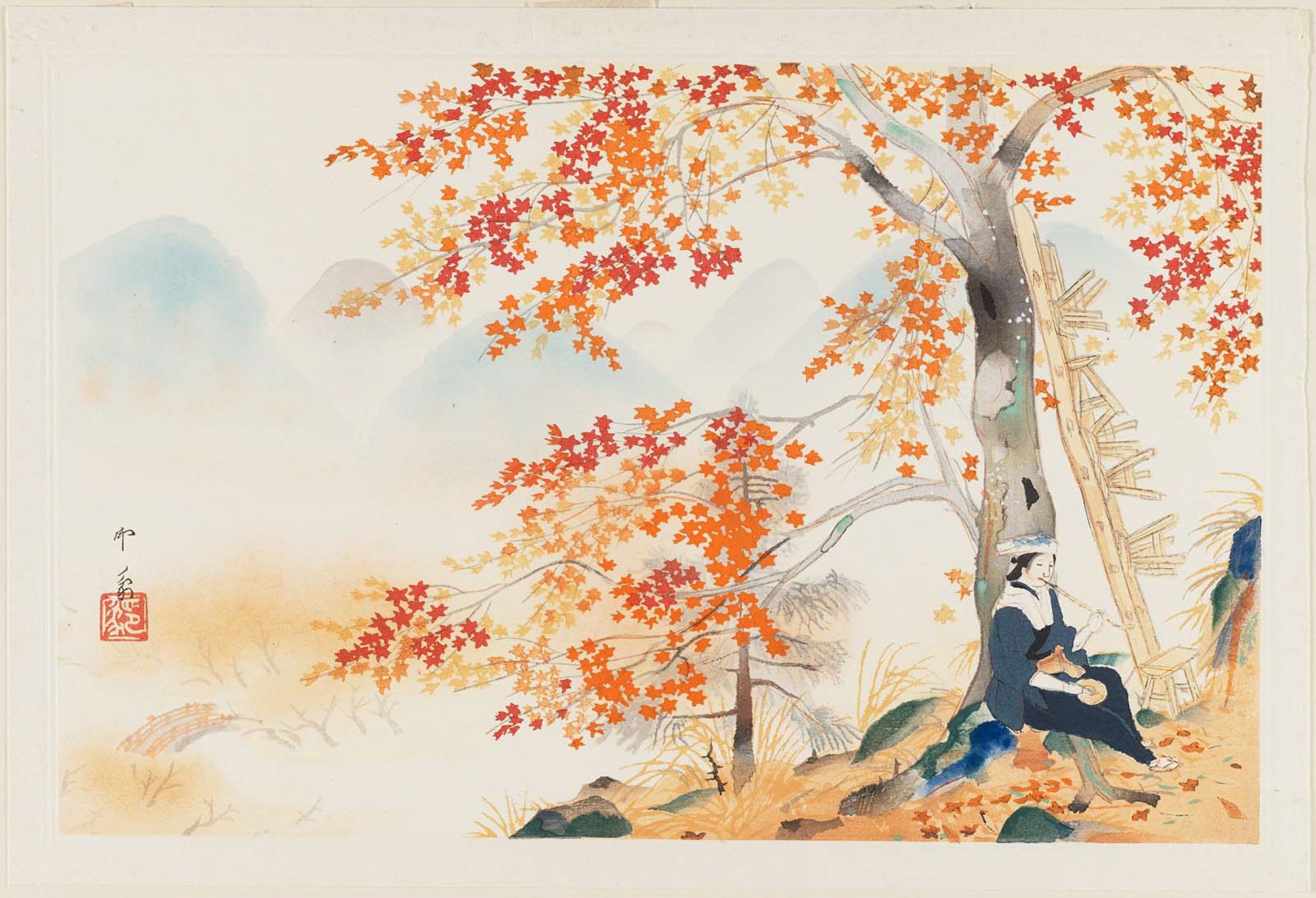
Autumn Maple Leaves at Takao, from the album Eight Views of Kyoto (Kyôto hakkei)
Woodblock print

The Beach at Kaiganji in Sanuki Province (Sanuki Kaiganji no hama), from the series "Collection of Views of Japan II, Kansai Edition (Nihon fukei shu II Kansai hen)"
1934
Color woodblock print; oban

Tea Kettle, section of a sheet from the series "Mirror of Stone Rubbings of Views of the Provinces" (Kohon meihitsu ishizuri kagami)
n.d.
Woodblock print; ishizuri-e, section of harimaze sheet
Featured in Collections
Curated cross-cuts that include this print.
Frequently Asked Questions
Yushima Tenjin, from the series Famous Places of Edo (Edo meisho) was created by Utagawa Hiroshige (歌川広重) in 19th century.
Yushima Tenjin, from the series Famous Places of Edo (Edo meisho) depicts landscapes.