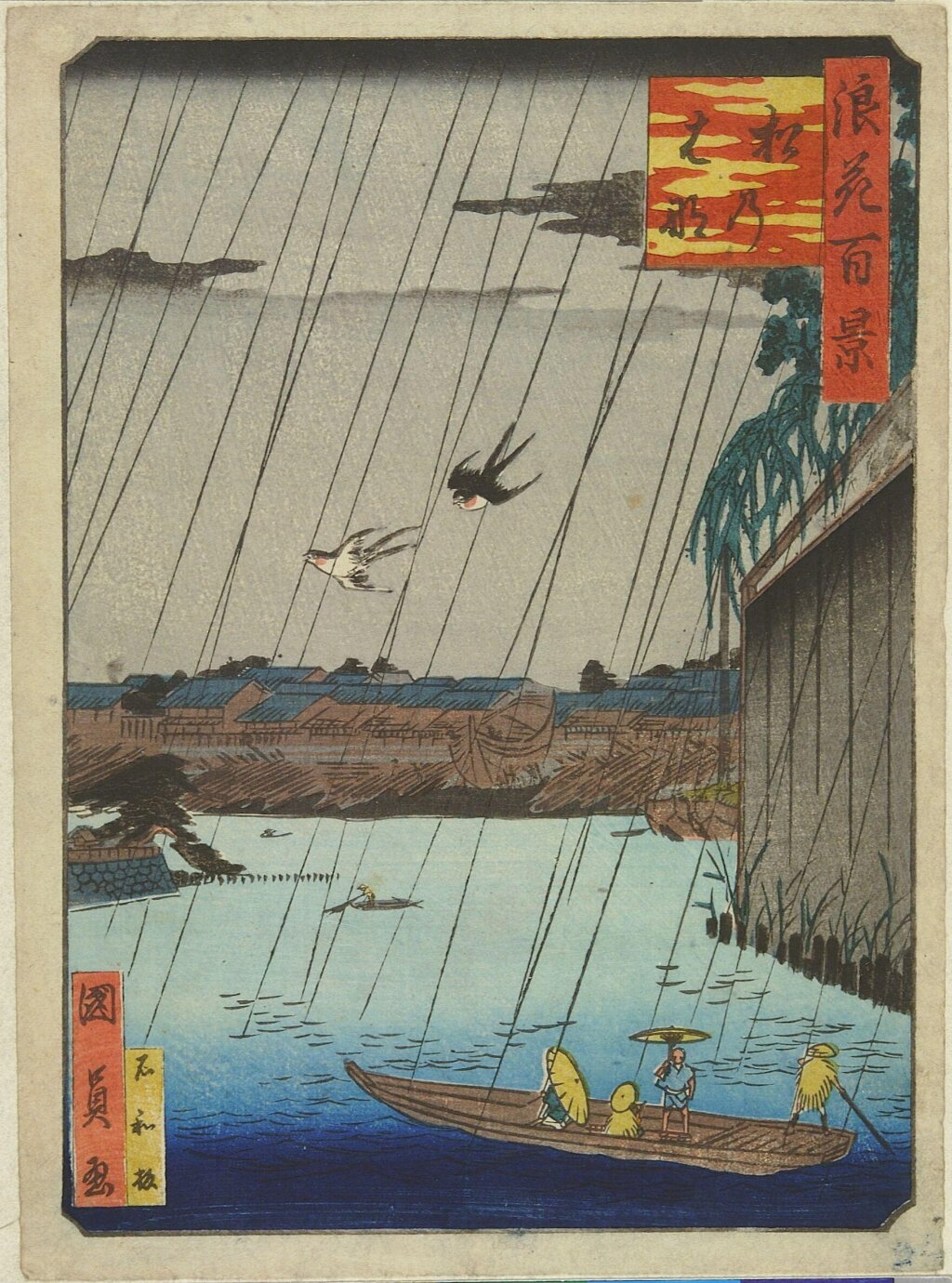
Pine Tree Point (Matsu-no-hana)
松の鼻
- Date:
- 1860
- Medium:
- Color woodblock print
- Source:
- Victoria and Albert Museum
Description
A rain-streaked river scene rendered in heavy diagonal grey lines, with two swallows swooping through the downpour above a broad blue waterway lined by rooftops and a wooded point on the far bank. In the foreground a small boat carries three passengers sheltering under a round umbrella and straw rain capes while a fourth figure poles the craft near a plank embankment, with a lone boatman visible farther out on the water. Muted blues and browns dominate the palette, framed by cartouches of red, yellow, and orange bearing the print's title and series text; this color woodblock print, "Pine Tree Point (Matsu-no-hana)" by Utagawa Kunikazu, dates to 1860.
More Prints by Utagawa Kunikazu
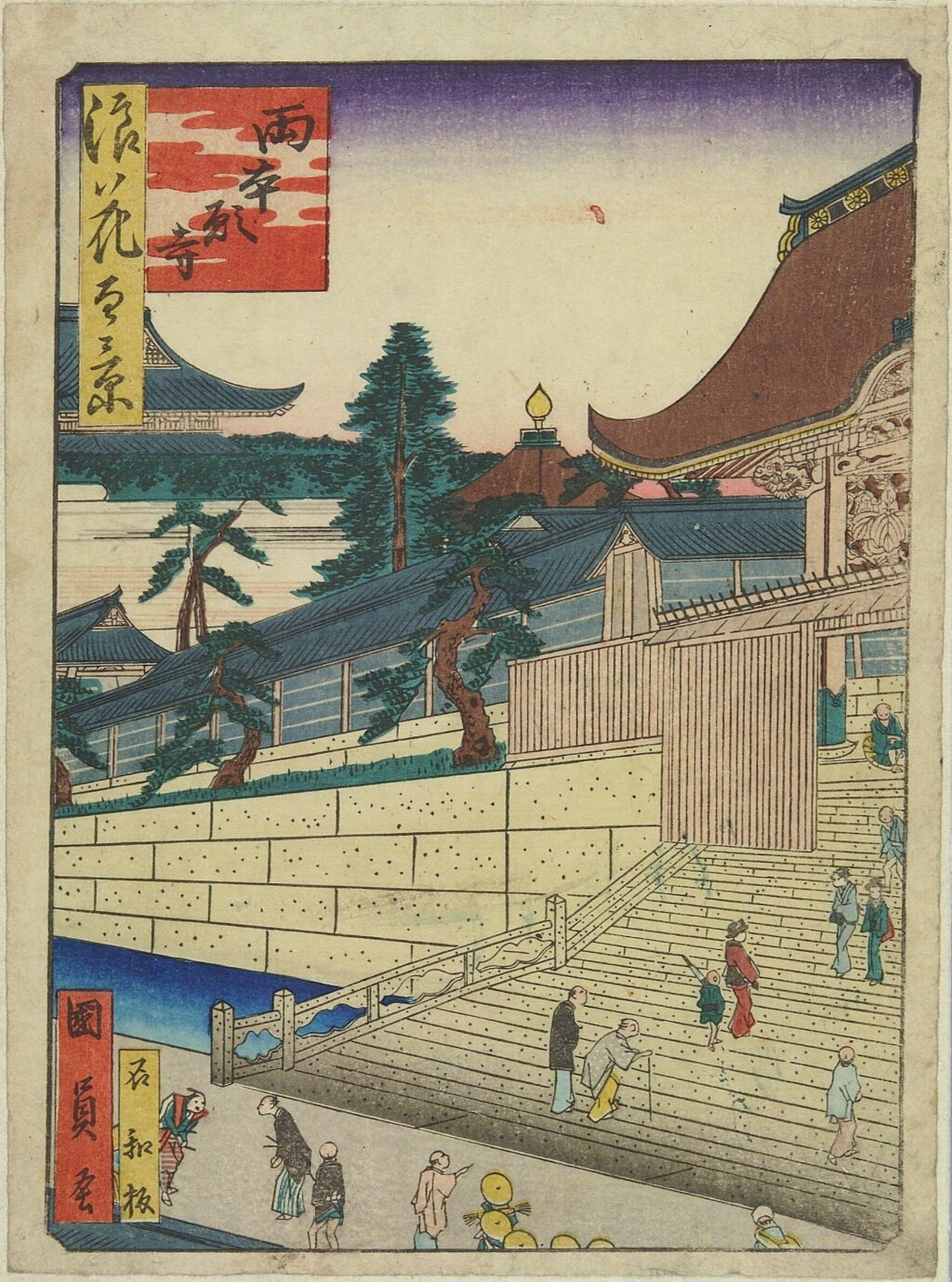
The Two Hongan-ji Temples (Ryō Hongan-ji)
両本願寺
1860
Color woodblock print

Dai Nihon rokujū yo kyō no uchi (One of the Sixty-odd Provinces of Great Japan)
大日本六十余州之内
c. 1862
Color woodblock print
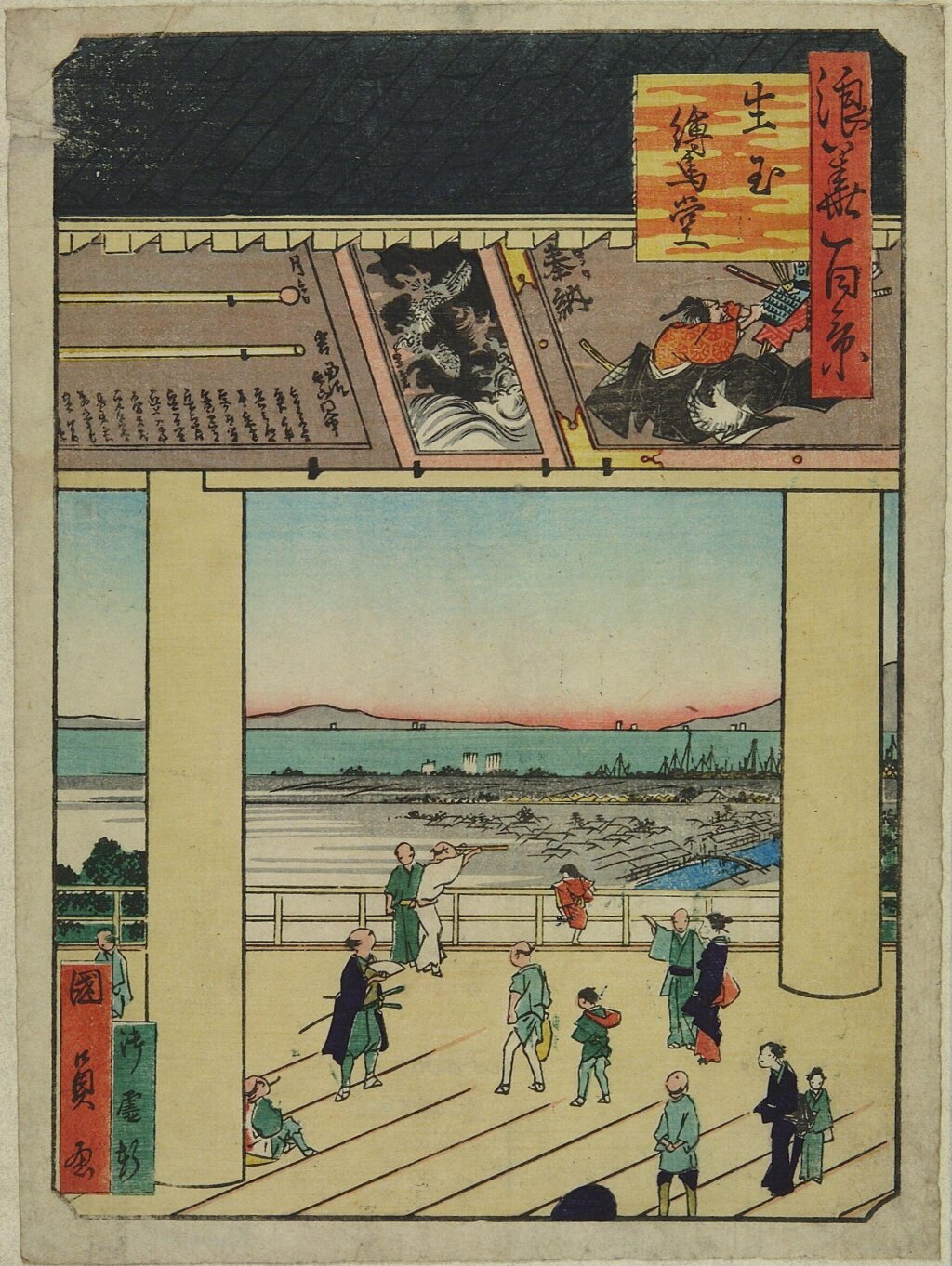
Votive-Picture Hall of the Shrine at Ikutama (Ikutama Ema-dō)
生玉絵馬堂
1860
Color woodblock print
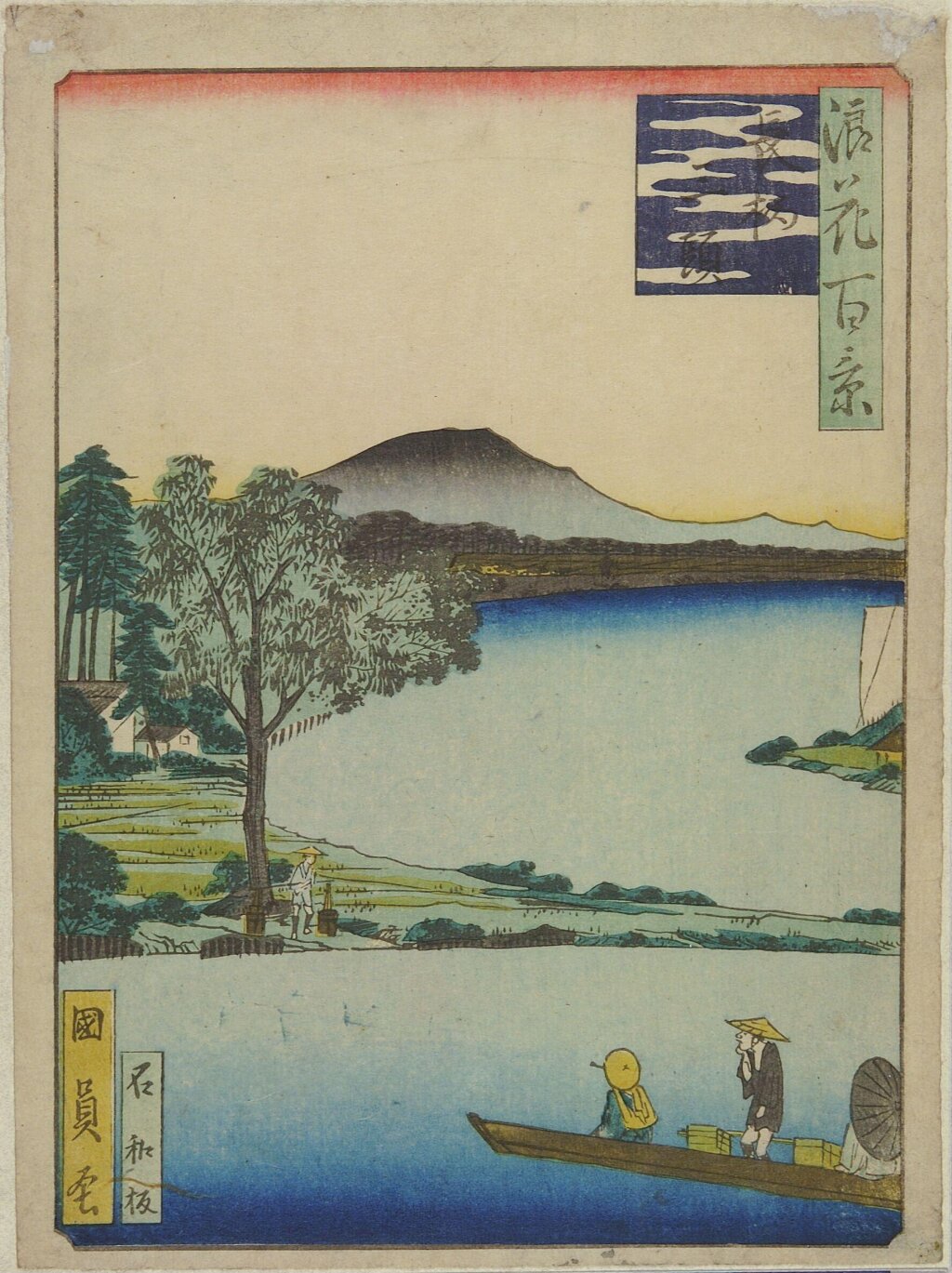
Mitsugashira (Three Heads)
三頭
1860
Color woodblock print
More Landscapes Prints

Lake Kugushi in Wakasa Province (Wakasa Kugushiko), from the series Souvenirs of Travel I (Tabi miyage dai isshu)"
Wakasa Kugushiko
1920
Color woodblock print; oban
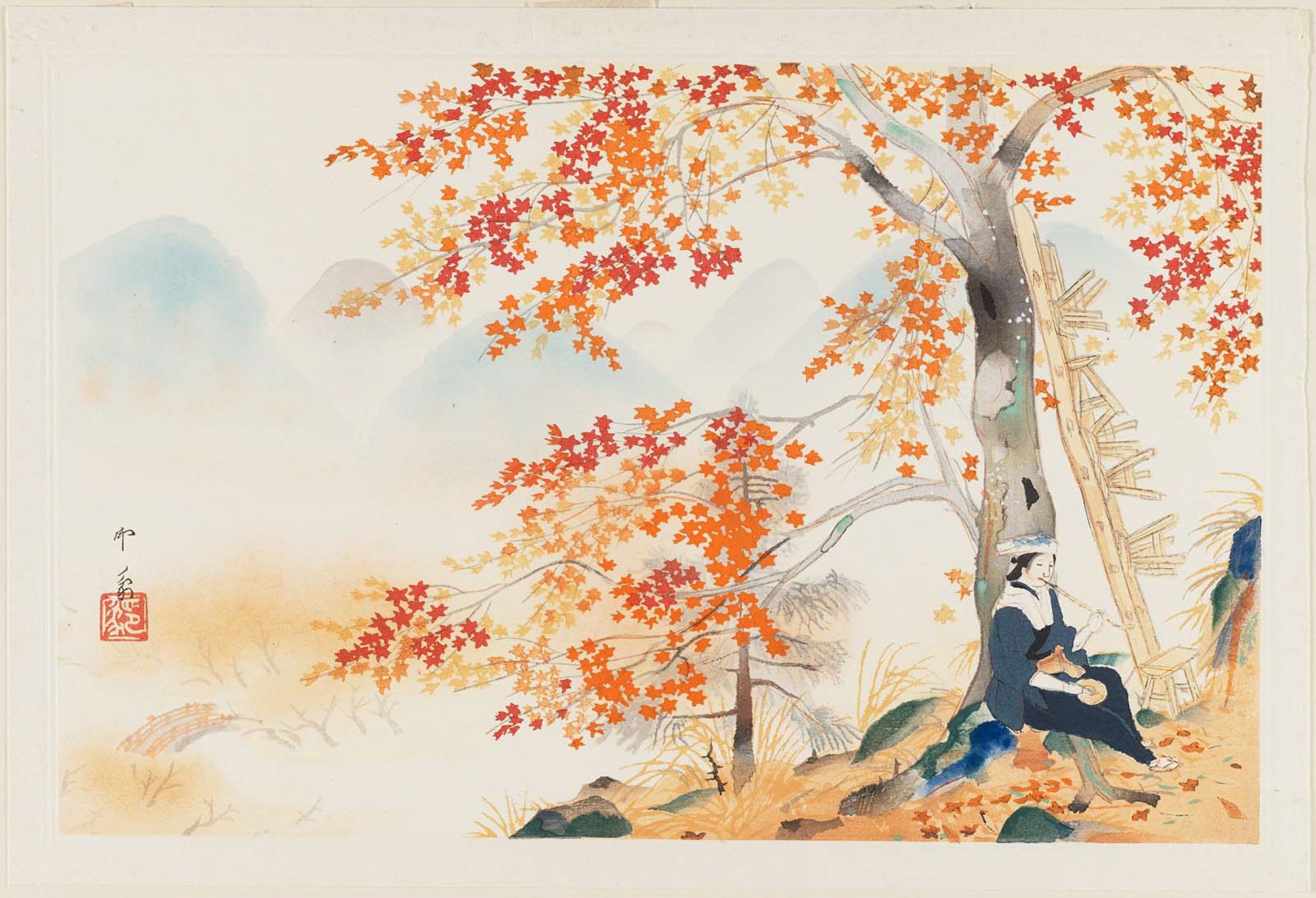
Autumn Maple Leaves at Takao, from the album Eight Views of Kyoto (Kyôto hakkei)
Woodblock print

The Beach at Kaiganji in Sanuki Province (Sanuki Kaiganji no hama), from the series "Collection of Views of Japan II, Kansai Edition (Nihon fukei shu II Kansai hen)"
1934
Color woodblock print; oban

Tea Kettle, section of a sheet from the series "Mirror of Stone Rubbings of Views of the Provinces" (Kohon meihitsu ishizuri kagami)
n.d.
Woodblock print; ishizuri-e, section of harimaze sheet
Featured in Collections
Curated cross-cuts that include this print.
Frequently Asked Questions
Pine Tree Point (Matsu-no-hana) (松の鼻) was created by Utagawa Kunikazu (歌川国員) in 1860.
Pine Tree Point (Matsu-no-hana) depicts landscapes.