Biography
Utagawa Kunikazu (歌川国員, active circa 1848–1868) was one of the most prolific Osaka kamigata-e printmakers of the late Edo period, producing several hundred designs of kabuki actors, Osaka landscapes, and warrior subjects across the final decades of the Tokugawa era. Working within the Osaka publishing system rather than in Edo, where his Utagawa-school namesakes Kunisada and Kuniyoshi dominated, Kunikazu became a leading figure among the later generation of Osaka print designers and a key contributor to the great Osaka topographical project of the early 1860s, the Naniwa hyakkei (One Hundred Views of Naniwa).
His personal name and the dates of his birth and death are unrecorded, a pattern characteristic of Osaka print designers of the period whose biographical particulars went almost entirely undocumented by the formal art-historical apparatus that tracked their Edo contemporaries. Kunikazu signed his prints with the surname Utagawa and the art name Isshusai (一珠斎), marking his affiliation with the Osaka branch of the Utagawa school. His earliest documented work dates from around 1848 and his last from the late 1860s, placing his active period across the final two decades of Tokugawa rule and into the opening years of the Meiji Restoration.
Osaka kamigata-e in the 1850s and 1860s functioned within a publishing economy and aesthetic register distinct from Edo ukiyo-e. Osaka prints were produced in smaller editions, often privately commissioned by fan clubs (renju) and theatrical patrons rather than mass-published by major commercial houses, and they tended toward heavier paper, more lavish printing effects (metallic pigments, mica grounds, embossing), and a restrained but dramatically focused palette. Kunikazu worked within this system as a full-spectrum designer: his yakusha-e portraits documented the leading actors of the late kamigata kabuki stage, and his landscapes and figure prints extended Osaka kamigata-e into subject categories that had been less developed in the school's earlier yakusha-e-dominated practice.
Kunikazu's most significant project was his contribution to the Naniwa hyakkei (One Hundred Views of Naniwa), the major Osaka topographical series produced collaboratively in the early 1860s. The series, comprising roughly one hundred prints, was designed by Kunikazu together with Utagawa Yoshitaki and Utagawa Yoshiyuki, and it constitutes the Osaka counterpart to Hiroshige's Edo meisho landscape tradition. It surveys the temples, bridges, shrines, theater districts, and merchant landmarks of Osaka — including such iconic subjects as the Shitenno-ji temple precincts, the Sumiyoshi shrine, the Doton-bori theater district, and the Tenma and Tamae bridges — with the cartographic precision and atmospheric detail that the kamigata audience demanded of their meisho-e.
His yakusha-e and landscape prints are held in major public and museum collections in Japan, Europe, and the United States, attesting to the international spread of his work among later collectors of Japanese prints.
Kunikazu's historical importance lies in three areas: first, his role as one of the principal designers of the Naniwa hyakkei, the great Osaka topographical project of the late Edo period; second, his documentation of the late kamigata kabuki stage through his many surviving yakusha-e portraits; and third, his maintenance of the Osaka Utagawa school's design tradition through the final decades before the Meiji Restoration. Following the 1868 transition, the Osaka kamigata-e tradition declined as photography, lithography, and the centralization of cultural production in Tokyo eroded the regional print market that had sustained Kunikazu's generation. His career, which falls almost entirely within the Tokugawa publishing economy, thus marks the closing of the kamigata-e tradition as a continuous living practice.
Key Facts
- Nationality
- 🇯🇵Japan
- Movement
- Ukiyo-e
- Subjects
- LandscapesBridges
- Works Indexed
- 17
Frequently Asked Questions
Utagawa Kunikazu (歌川国員, active circa 1848–1868) was one of the most prolific Osaka kamigata-e printmakers of the late Edo period, producing several hundred designs of kabuki actors, Osaka landscapes, and warrior subjects across the final decades of the Tokugawa era. Working within the Osaka publishing system rather than in Edo, where his Utagawa-school namesakes Kunisada and Kuniyoshi dominated, Kunikazu became a leading figure among the later generation of Osaka print designers and a key contributor to the great Osaka topographical project of the early 1860s, the Naniwa hyakkei (One Hundred Views of Naniwa).
Utagawa Kunikazu's work was shaped by the Ukiyo-e tradition in Japanese woodblock printmaking. Ukiyo-e: ## What is ukiyo-e? Ukiyo-e ([浮世絵](/glossary/ukiyo-e)) — literally "pictures of the floating world" — is the Edo-period Japanese print and painting tradition that flourished from roughly 1660 to 1868, depicting the pleasures of urban life in Edo (modern Tokyo): courtesans, kabuki actors, sumo wrestlers, famous landscapes, and seasonal beauties.
Utagawa Kunikazu's prints frequently feature landscapes, bridges.
Original prints by Utagawa Kunikazu can be found in collections including Victoria and Albert Museum, Walters Art Museum, Osaka Municipal Central Library.
Woodblock Prints by Utagawa Kunikazu (17)
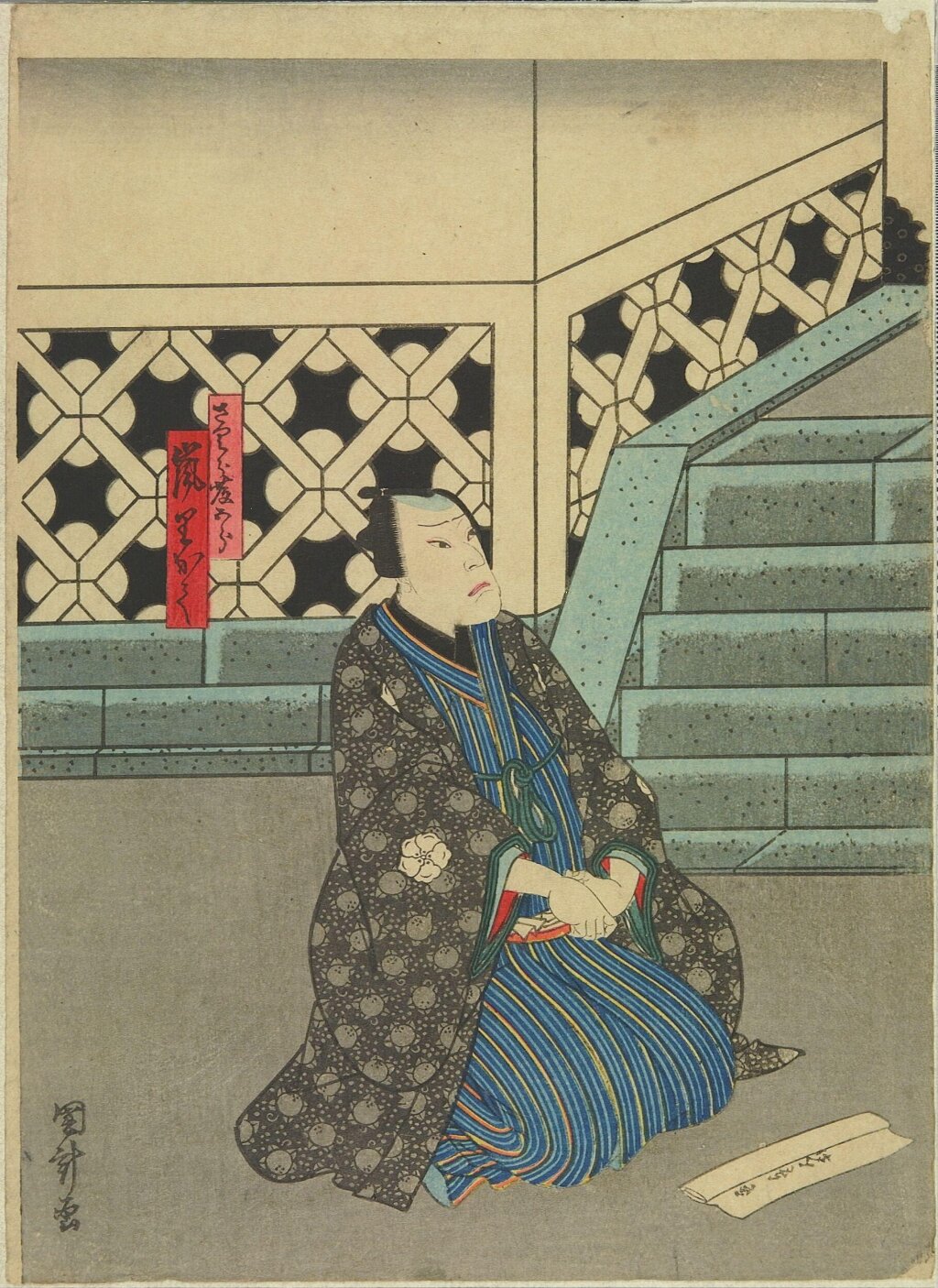
Actor Arashi Rikaku II as Sakura Tōgorō
1856
Color woodblock print
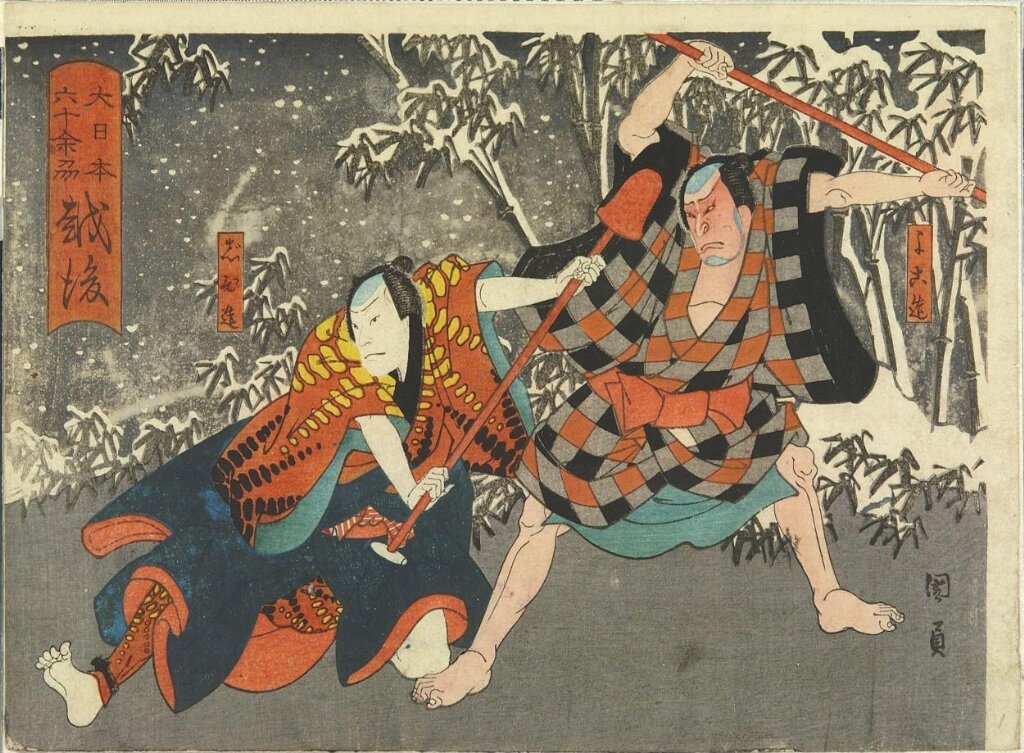
Echigo Province: Actors Ichikawa Ichizō I as Yokozō and Arashi Rikaku II as Jihizō
1857-1861
Color woodblock print
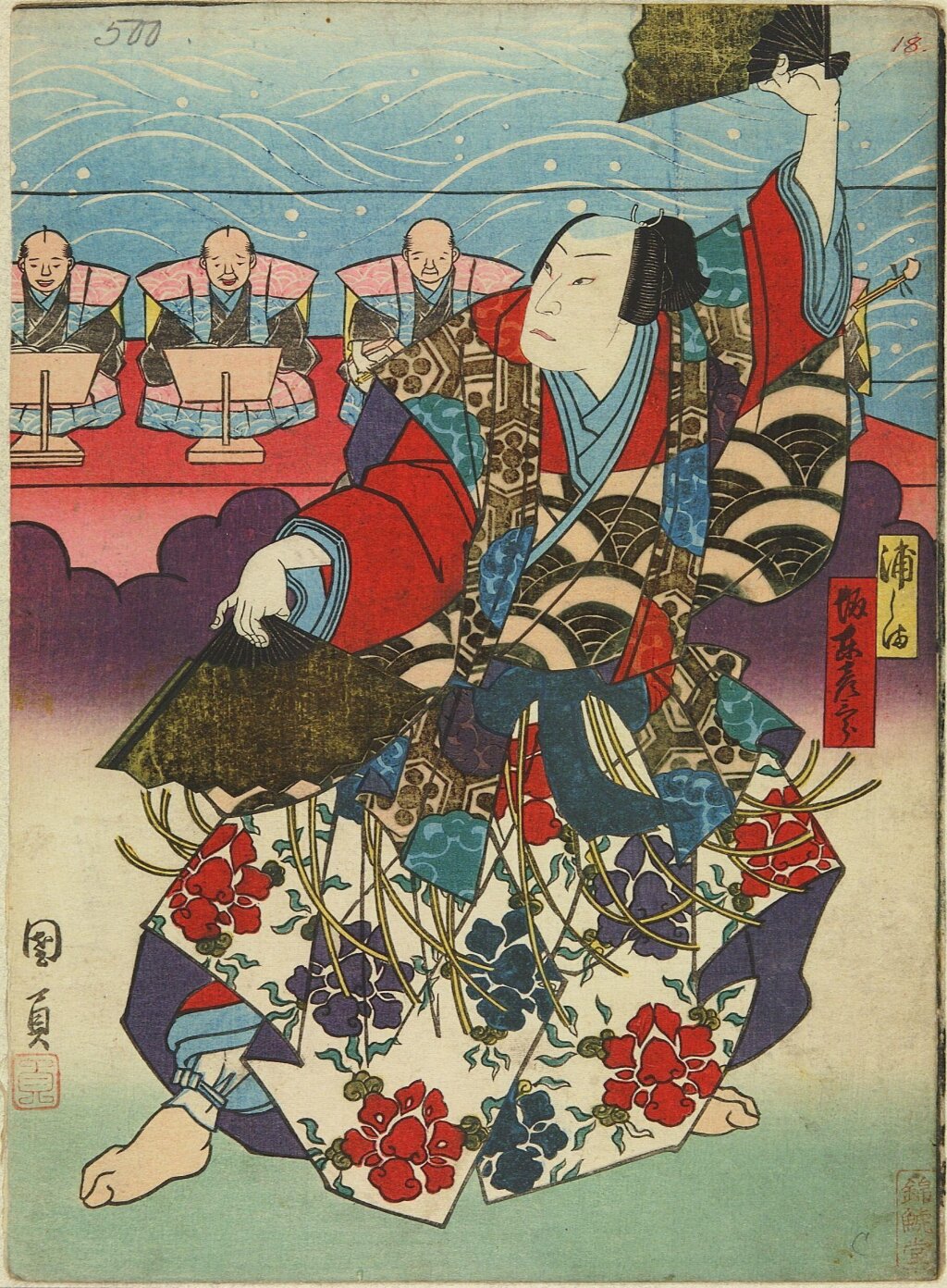
Actor Bandō Hikosaburō as Urashima
1859
Color woodblock print
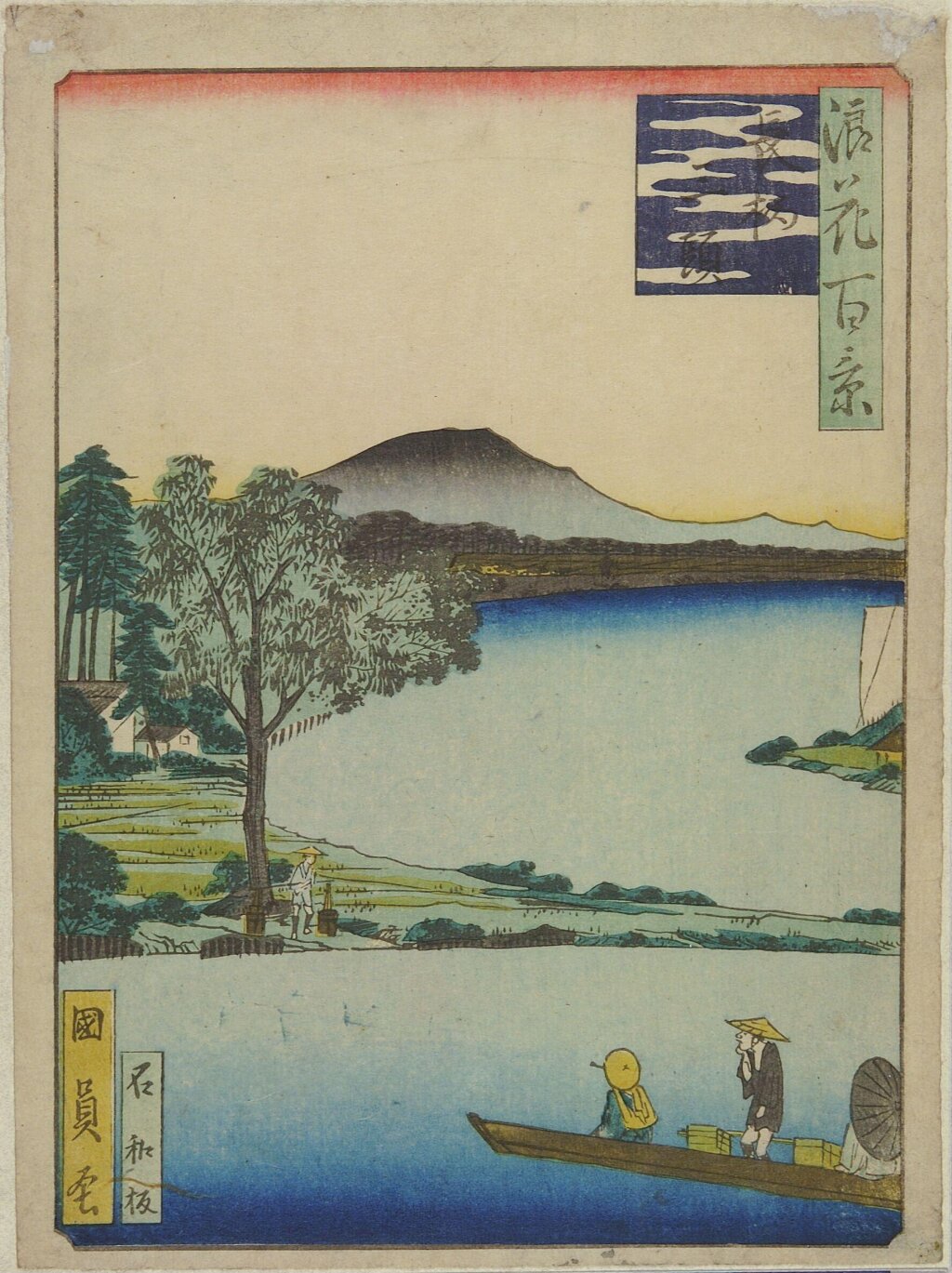
Mitsugashira (Three Heads)
三頭
1860
Color woodblock print

The Actor Arashi Rikan III as Token Jūbei
c. 1860
Color woodblock print

Temple of the Goddess Kishibojin at Hamamura, from One Hundred Views of Naniwa (Naniwa Hyakkei)
浜村鬼子母神(浪花百景)
1860-1861
Color woodblock print
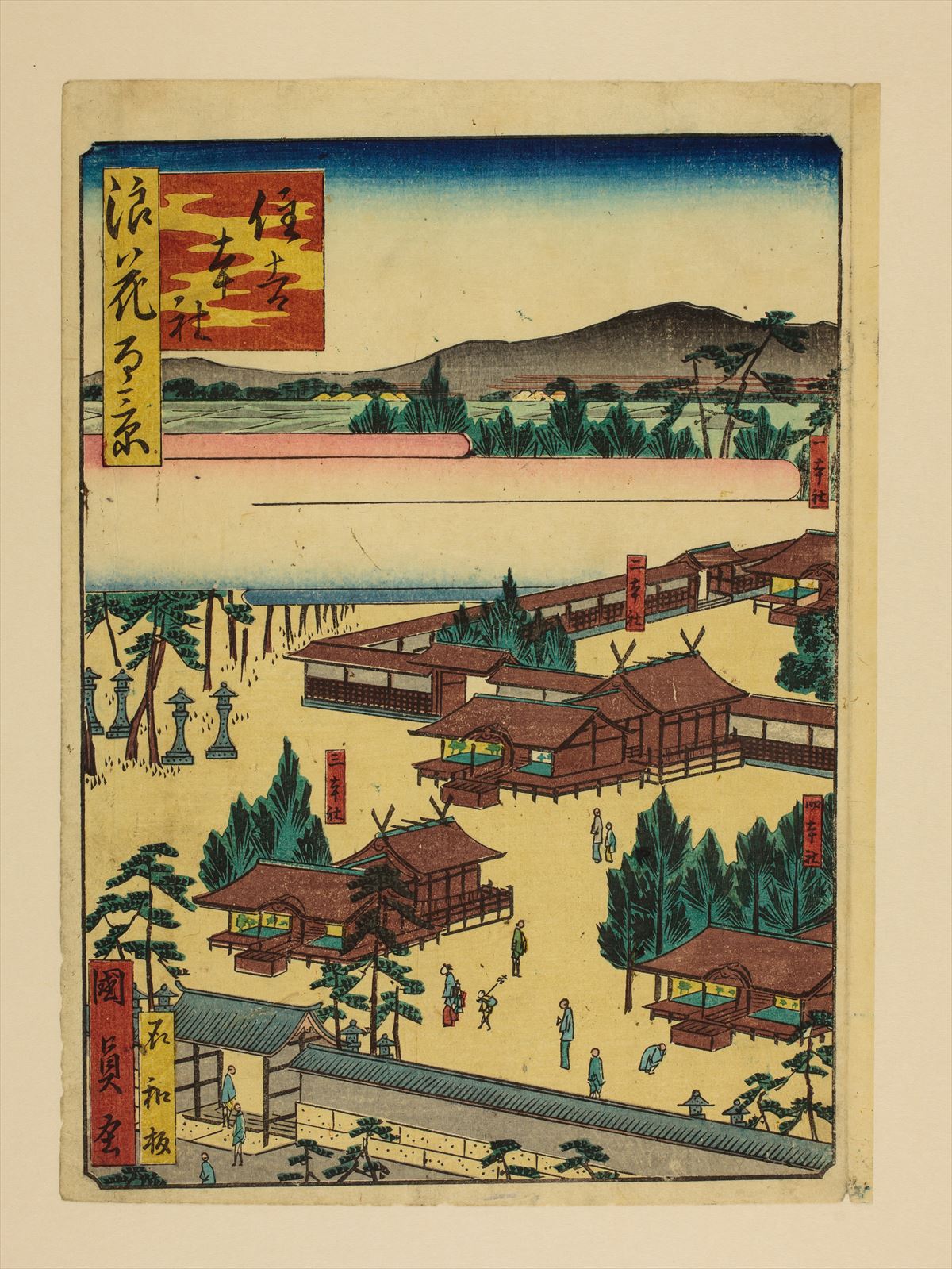
Main Shrine of Sumiyoshi, from One Hundred Views of Naniwa (Naniwa Hyakkei)
住吉本社(浪花百景)
1860-1861
Color woodblock print

View of Tamae-bashi Bridge, from One Hundred Views of Naniwa (Naniwa Hyakkei)
玉江橋景(浪花百景)
1860-1861
Color woodblock print

Kado-za Theater at Dōton-bori, from One Hundred Views of Naniwa (Naniwa Hyakkei)
道頓堀角芝居(浪花百景)
1860-1861
Color woodblock print

Riding Ground of Sōzen-ji Temple, from One Hundred Views of Naniwa (Naniwa Hyakkei)
宗禅寺場々(浪花百景)
1860-1861
Color woodblock print

View of Tenma-bashi Bridge, from One Hundred Views of Naniwa (Naniwa Hyakkei)
天満ばし風景(浪花百景)
1860-1861
Color woodblock print
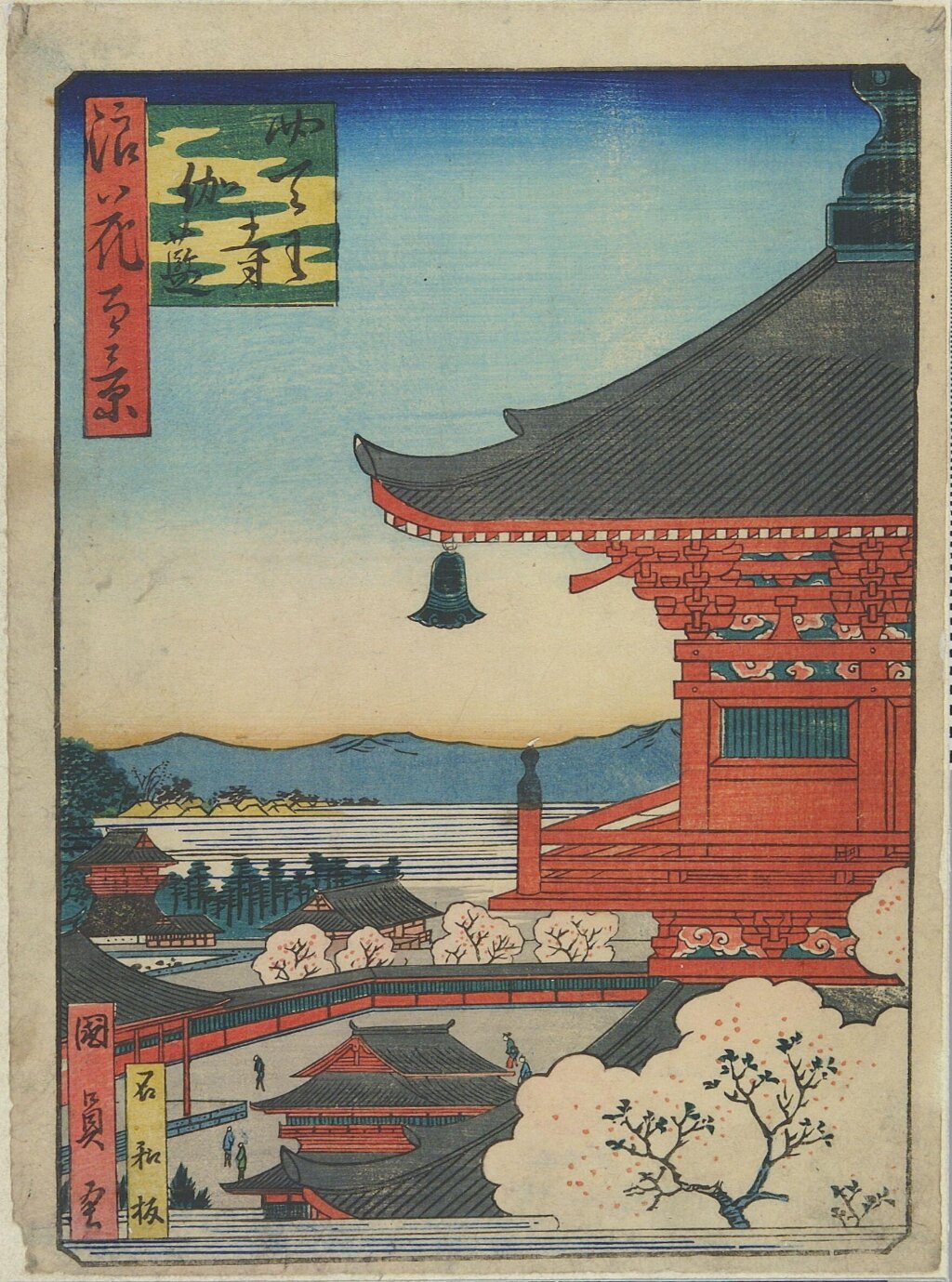
The Precincts of Shitennō-ji Temple (Shitennō-ji garan)
四天王寺伽藍
1860
Color woodblock print

Taiyū-ji Temple in Kitano, from One Hundred Views of Naniwa (Naniwa Hyakkei)
北の大融寺(浪花百景)
1860-1861
Color woodblock print
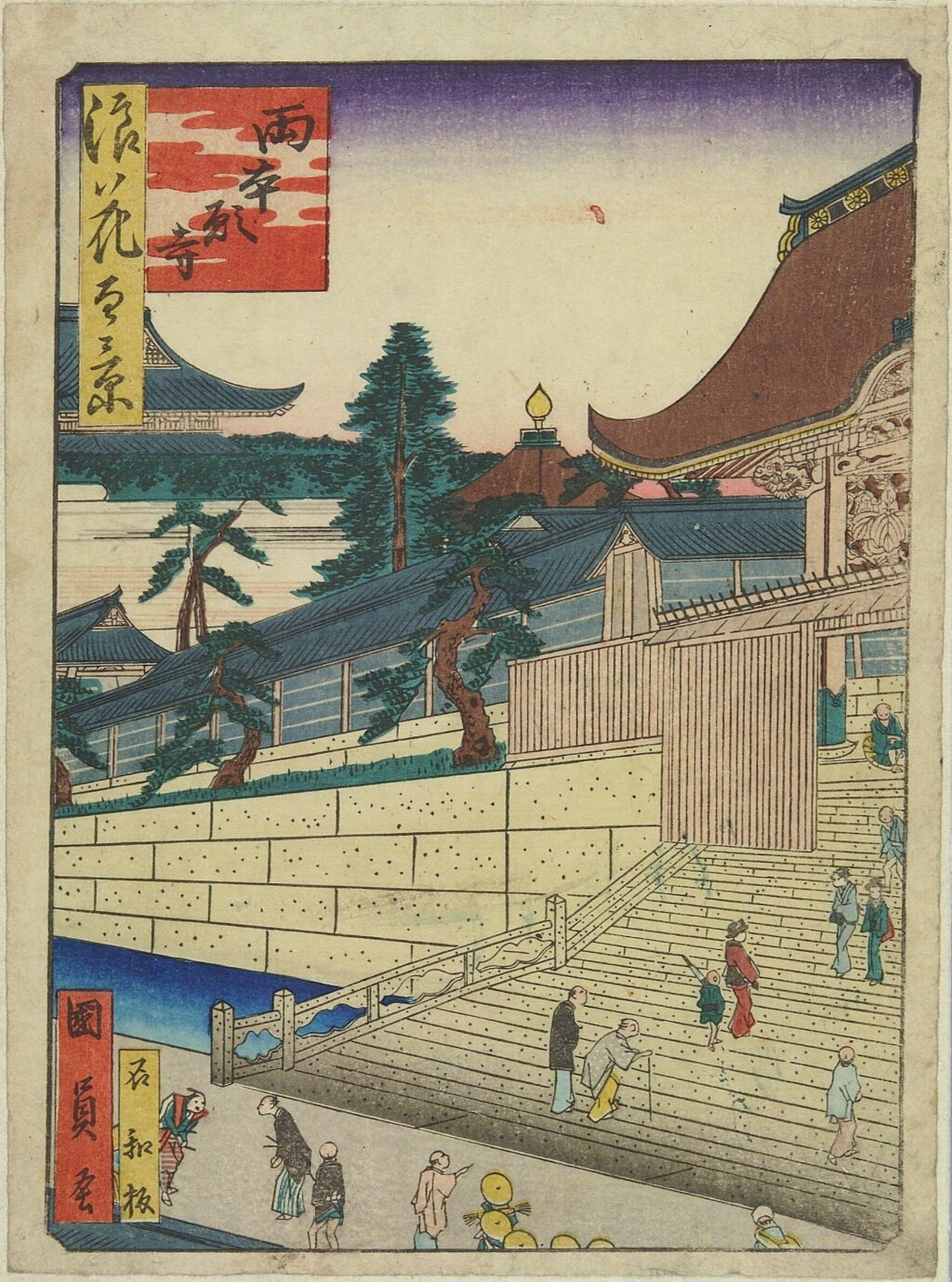
The Two Hongan-ji Temples (Ryō Hongan-ji)
両本願寺
1860
Color woodblock print
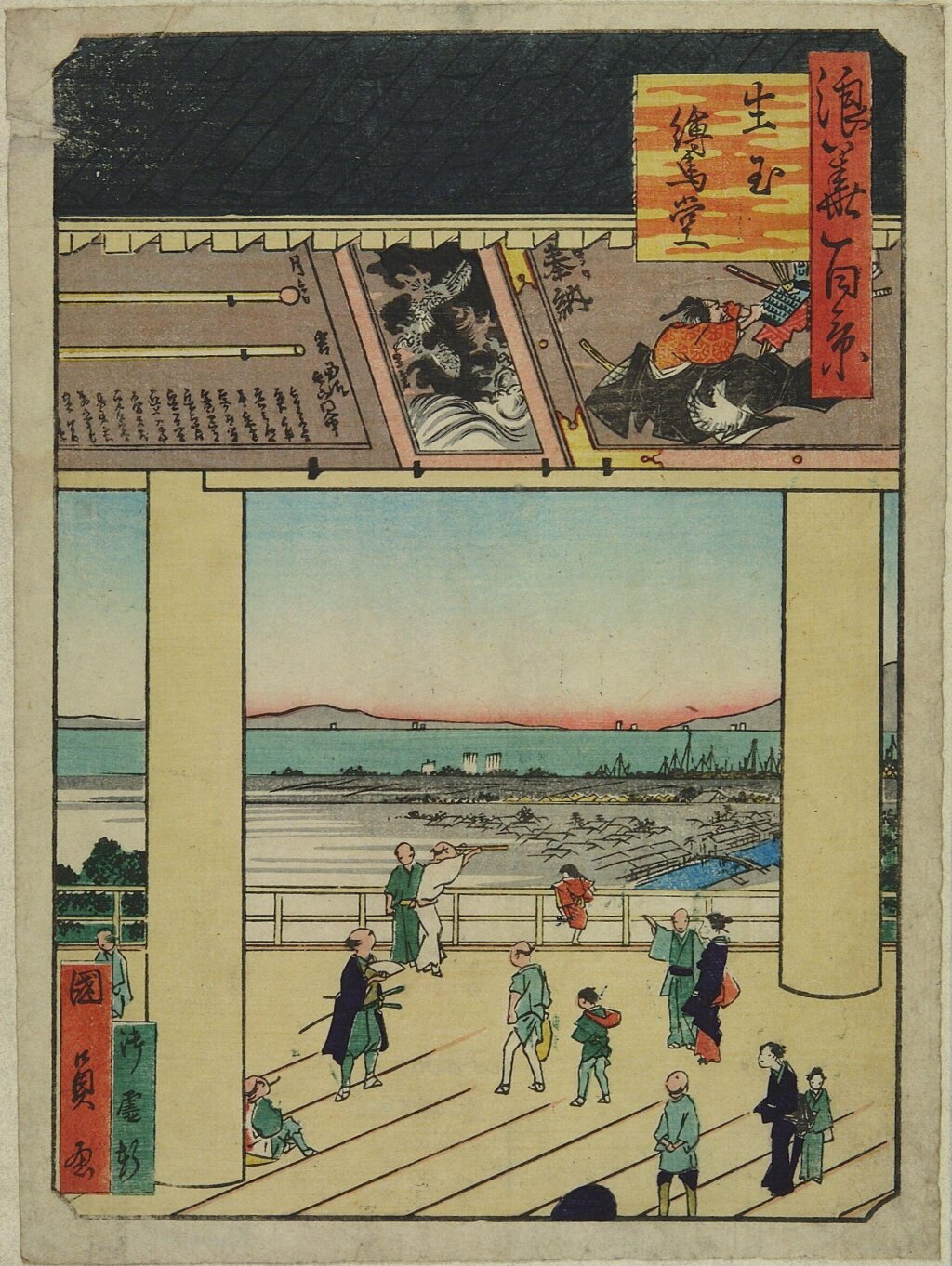
Votive-Picture Hall of the Shrine at Ikutama (Ikutama Ema-dō)
生玉絵馬堂
1860
Color woodblock print
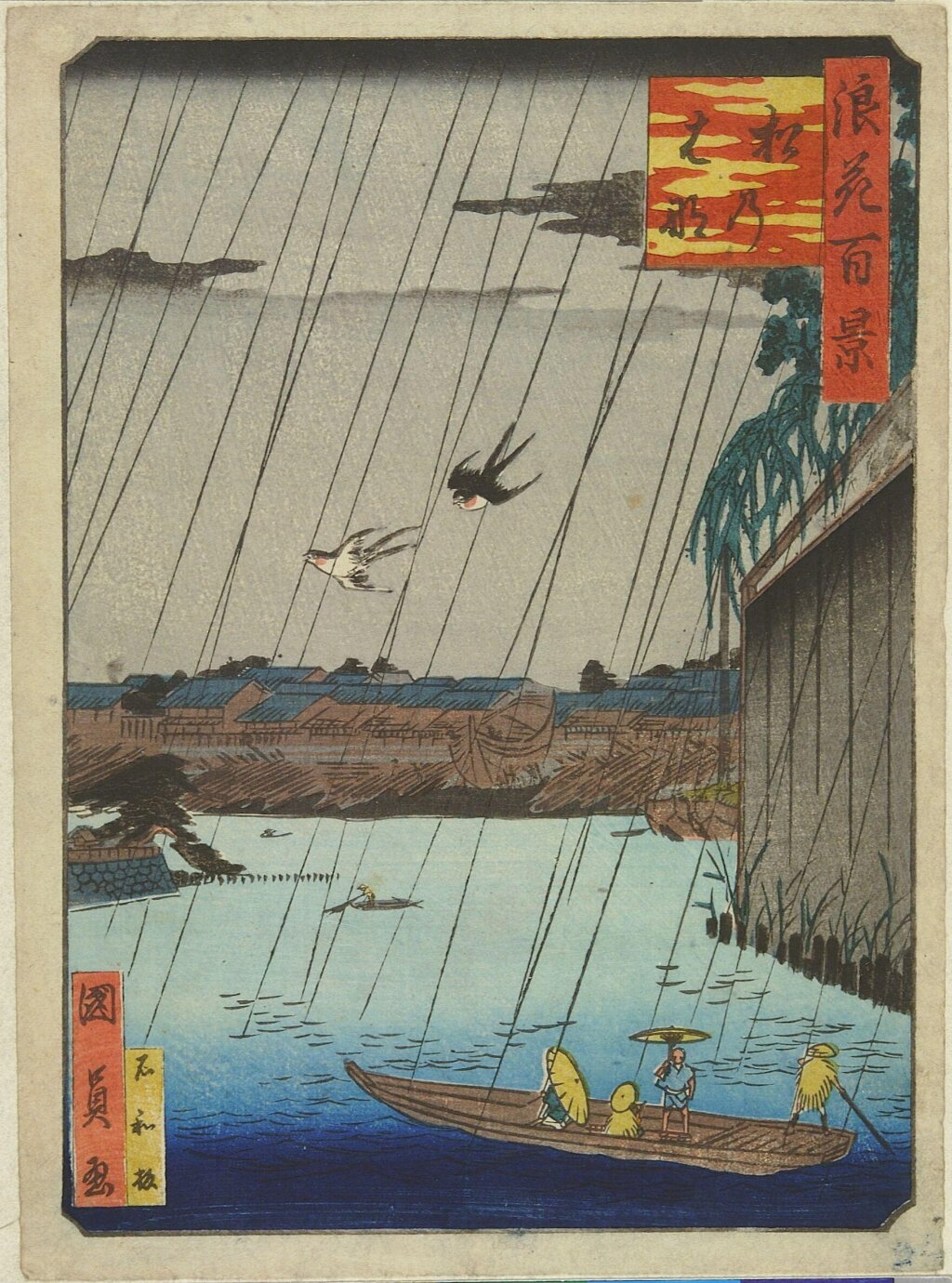
Pine Tree Point (Matsu-no-hana)
松の鼻
1860
Color woodblock print

Dai Nihon rokujū yo kyō no uchi (One of the Sixty-odd Provinces of Great Japan)
大日本六十余州之内
c. 1862
Color woodblock print