
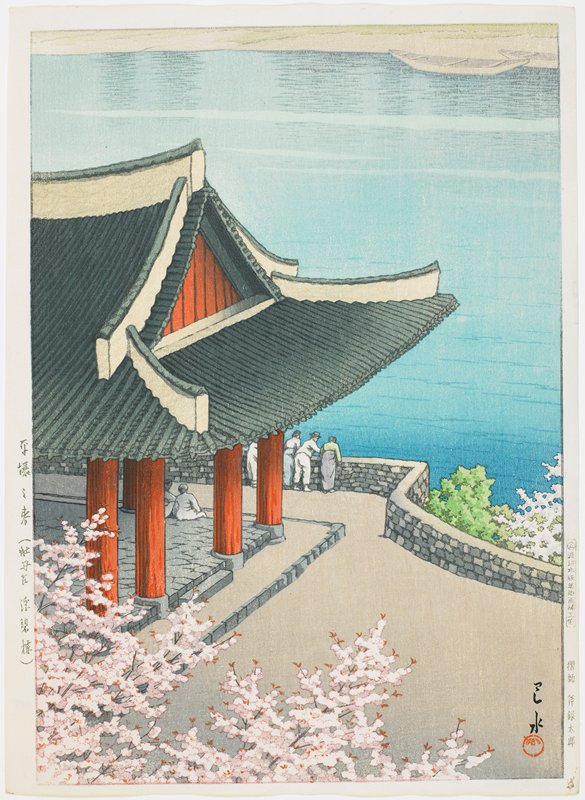
Cherry Blossom Viewing (Shunchaku hana no shizuku)
- Date:
- c. 1833
- Medium:
- Color woodblock prints; oban triptych
- Source:
- Art Institute of Chicago
Description
Cherry Blossom Viewing (Shunchaku hana no shizuku) is an 1842 woodblock print by Utagawa Kunisada belonging to the bijin-ga and seasonal genre that runs parallel to his more famous yakusha-e production. Hanami — the spring outing to admire cherry blossoms — was one of the principal social events of the Edo year, with townspeople traveling to Ueno, Asukayama and the Sumida embankments to picnic under the trees, and the subject was a fixture of late Edo ukiyo-e. The series title's poetic 'dew drops from spring blossoms' announces a literary register that elevates the genre image while still allowing the print to function as a fashion plate. The composition organises a group of women — and possibly an attendant or child — within a cherry landscape, with the blossoms themselves treated as the principal pictorial event through overprinted pinks and whites that depend on the carver and printer's skill with gradation. The figural type is Kunisada's mature bijin: long oval faces, narrow elongated eyes, calligraphic mouths and elongated bodies in patterned spring kimono. The mineral palette balances cherry pinks against indigo and ochre, with the strong black contour holding everything in the picture plane. By 1842 Kunisada was at the height of his commercial dominance, and the Tenpō Reforms then in force pushed designers toward bijin and seasonal subjects as covers for what remained, in many sheets, covert yakusha-e. The Art Institute of Chicago holds the impression and records the precise 1842 date.
More Prints by Utagawa Kunisada

The actors Ichikawa Danjuro VII as Takamoto no kitsune and Segawa Kikunojo V as Izumi no Chieda-gitsune
1818
Color woodblock print; shikishiban, surimono

Basketry Work: By the Craftsman Ichida Shōshichirō of Naniwa (Kagozaiku Naniwa saikunin Ichida Shōshichirō)
1819
Woodblock print; ink and color on paper
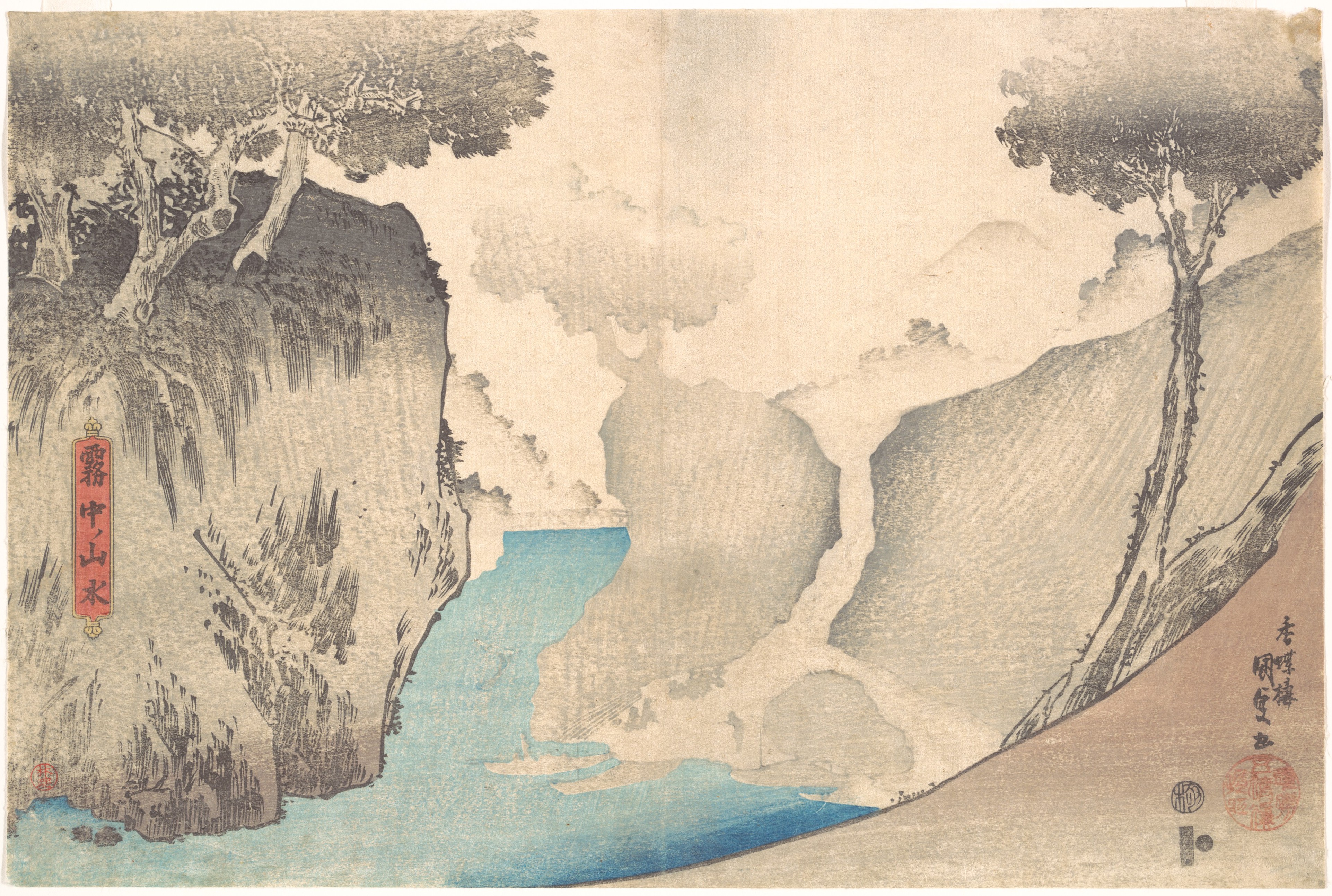
Ochanomizu in the Mist
mid-19th century
Woodblock print; ink and color on paper
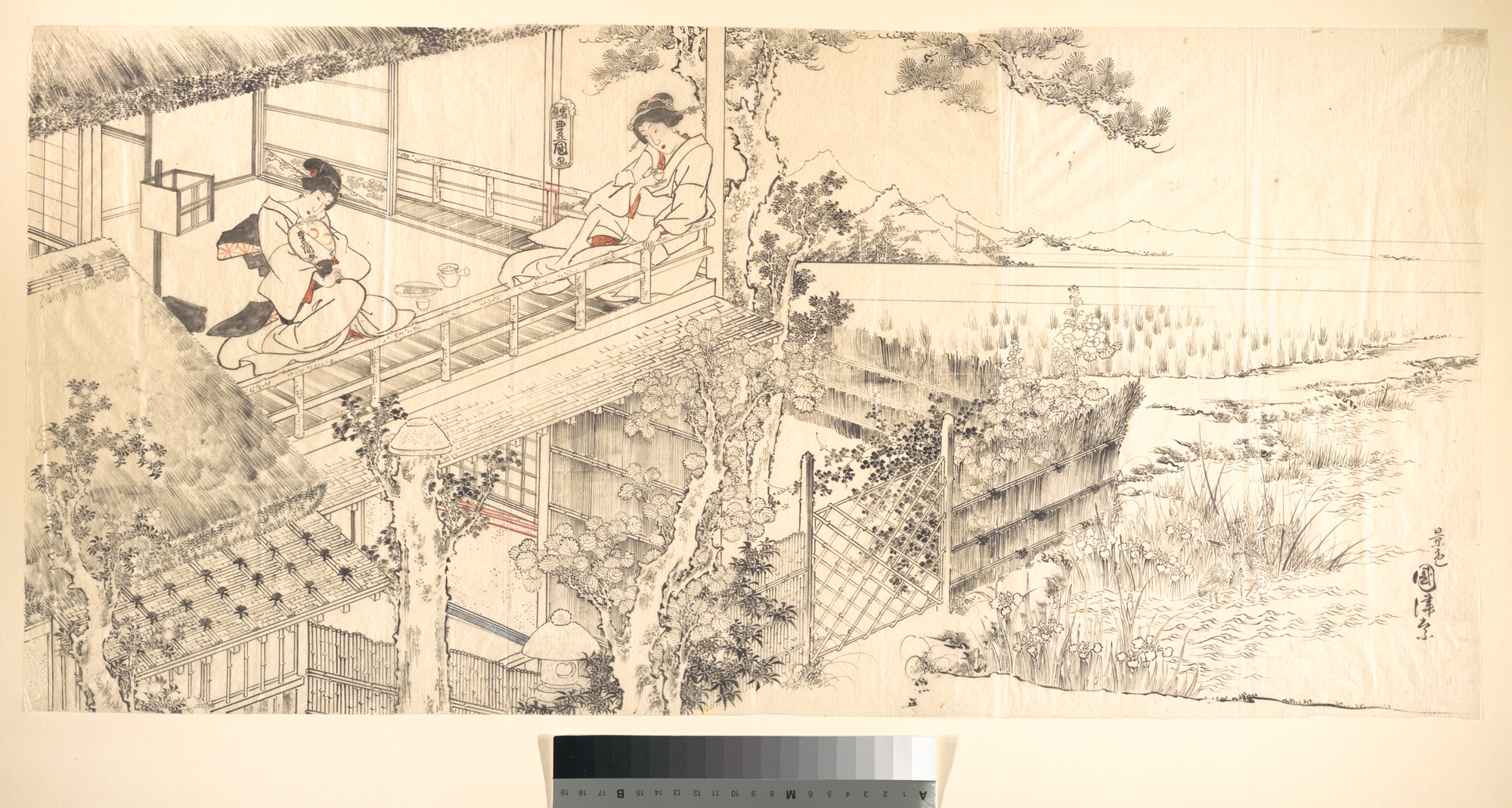
Two Courtesans Enjoying the View from a Teahouse
after 1844
Drawings intended as design for woodblock prints (triptych); ink and color on paper
More Spring Prints

Frequently Asked Questions
Cherry Blossom Viewing (Shunchaku hana no shizuku) was created by Utagawa Kunisada (歌川国貞) in c. 1833.
Cherry Blossom Viewing (Shunchaku hana no shizuku) depicts spring.