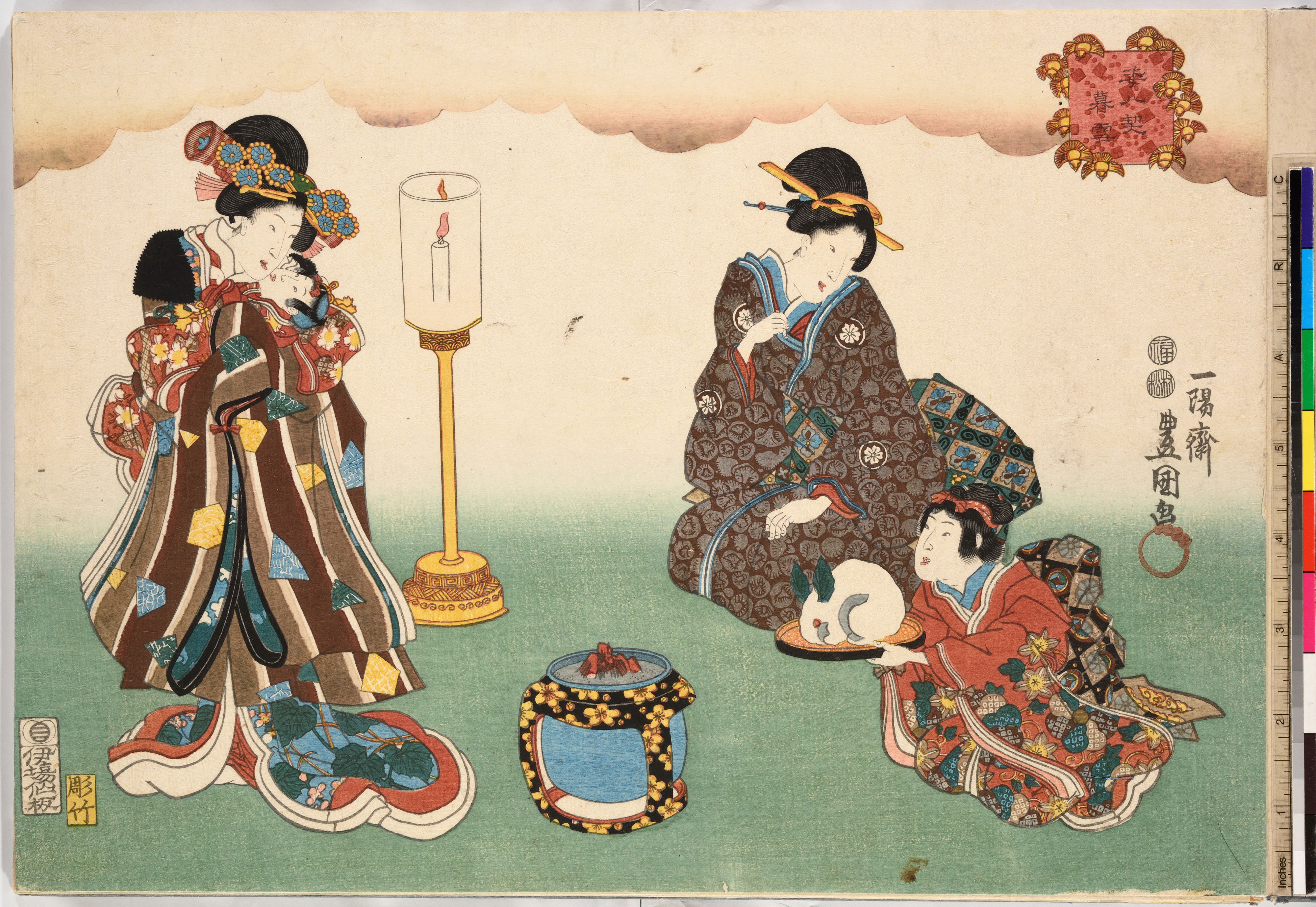
Evening Snow (Bo-setsu), from the series, "Eight Figural Views" (Sugata Hakkei)
- Date:
- ca. 1850
- Medium:
- Polychrome woodblock print
- Source:
- Metropolitan Museum of Art
Description
From Utagawa Kunisada's 1840 series "Eight Figural Views (Sugata Hakkei)," "Evening Snow (Bo-setsu)" represents the artist's elegant reworking of one of the most enduring formulas in Edo ukiyo-e: the Chinese Eight Views of Xiao and Xiang transplanted into a contemporary Japanese figural register. Each sheet in the series pairs one of the canonical eight scenic moments (evening bell, evening snow, autumn moon, descending geese, and so on) with a figure whose pose, costume, and accessories evoke the named scene without literally depicting it. Here, the title "Bo-setsu" calls up the visual world of snow-laden evening: muted palette, drifting flakes, hushed atmosphere. Kunisada's figure, a young woman, perhaps a courtesan or a teahouse beauty, embodies the mood with her shaded robe, her lowered gaze, and her quietly held accessories. The compositional restraint distinguishes this series from the artist's more flamboyant yakusha-e, and demonstrates that his bijinga could move comfortably between brightly festive and contemplatively atmospheric registers. Such mitate transformations of the Eight Views into figural studies were a staple of late Edo ukiyo-e, and Kunisada's contribution stands out for the precision with which costume and gesture register the season and time of day. The Metropolitan Museum of Art preserves this print as part of its substantial Kunisada holdings, where it illuminates the dialogue between Chinese landscape convention and Edo bijinga that underwrote so much of the Utagawa school's mid-nineteenth-century practice.
More Prints by Utagawa Kunisada

The actors Ichikawa Danjuro VII as Takamoto no kitsune and Segawa Kikunojo V as Izumi no Chieda-gitsune
1818
Color woodblock print; shikishiban, surimono

Basketry Work: By the Craftsman Ichida Shōshichirō of Naniwa (Kagozaiku Naniwa saikunin Ichida Shōshichirō)
1819
Woodblock print; ink and color on paper
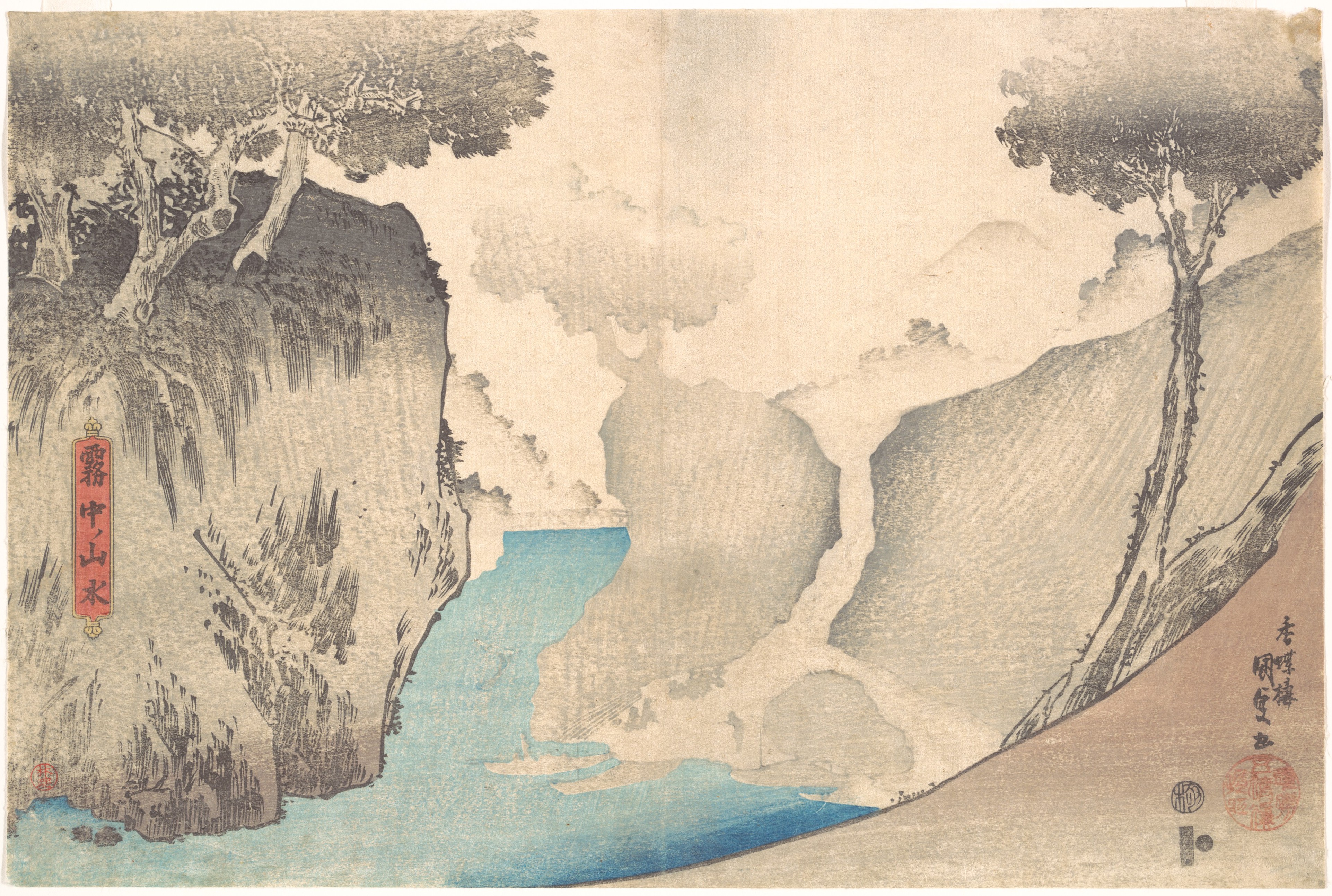
Ochanomizu in the Mist
mid-19th century
Woodblock print; ink and color on paper
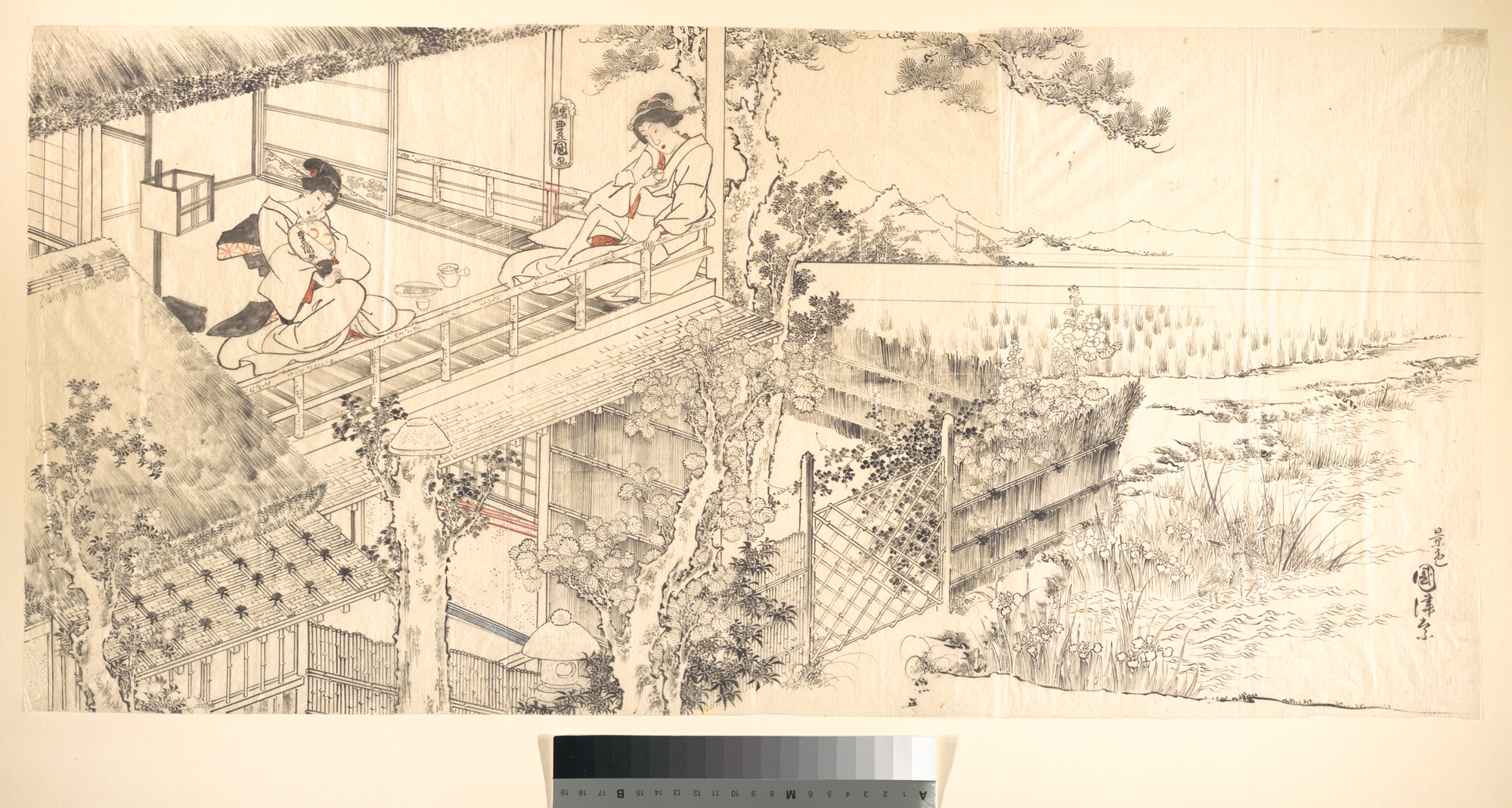
Two Courtesans Enjoying the View from a Teahouse
after 1844
Drawings intended as design for woodblock prints (triptych); ink and color on paper
More Winter Prints
Frequently Asked Questions
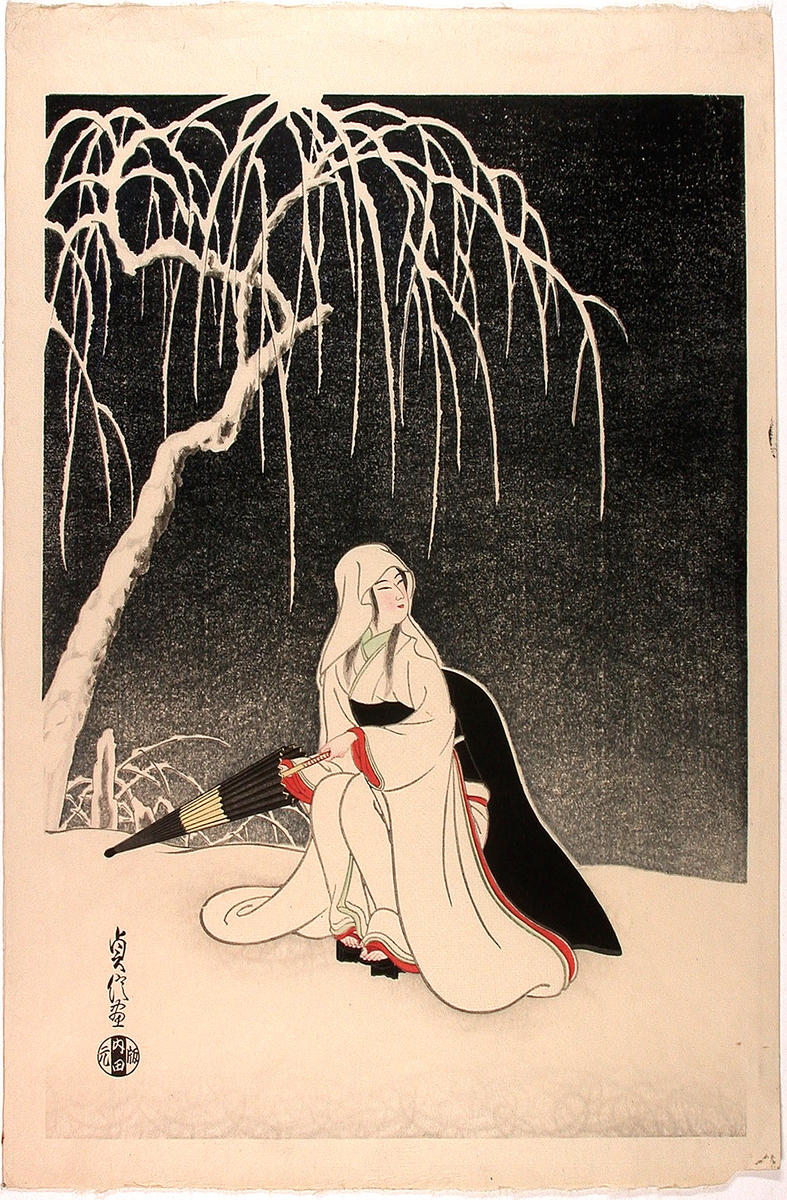
Evening Snow (Bo-setsu), from the series, "Eight Figural Views" (Sugata Hakkei) was created by Utagawa Kunisada (歌川国貞) in ca. 1850.
Evening Snow (Bo-setsu), from the series, "Eight Figural Views" (Sugata Hakkei) depicts winter.