
Parody of Liu Bei (J: Gentoku) Visiting Zhuge Liang (J: Komei) in Wind and Snow (Gentoku fusetsu ni Komei o tazureru)
- Date:
- c. 1844
- Medium:
- Color woodblock print; oban triptych
- Source:
- Art Institute of Chicago
Description
Designed by Utagawa Kunisada in 1839 and preserved at the Art Institute of Chicago, this mitate parody depicts the celebrated Three Kingdoms episode in which Liu Bei, known in Japanese as Gentoku, visits the recluse Zhuge Liang, called Komei, through wind and snow to win him as strategist. Mitate, the practice of overlaying a classical or Chinese story with contemporary Edo figures and costume, was a favorite device of Kunisada and his rivals in the mature decades of Edo ukiyo-e, and here it gives the artist a chance to translate the moral weight of the Chinese source into the visual idiom of his yakusha-e and bijin practice. Liu Bei is rendered as a contemporary figure, while Zhuge Liang's hut becomes a hermit's lodge styled with the textures Edo readers associated with reclusive scholarship. Wind-driven snow streaks the composition in white printed lines, and the figures are wrapped in heavy travelling garments that let Kunisada exploit deep blue and slate-grey pigments to evoke the cold. The artist's command of group composition, the kind of multi-figure stagecraft refined across decades of actor prints, gives this mitate sheet the rhythmic clarity of an opening scene. As is typical for Kunisada in this period, before his assumption of the Toyokuni III name, the parody allowed Edo audiences to enjoy both the Chinese narrative and the contemporary celebrity overtones simultaneously.
More Prints by Utagawa Kunisada

The actors Ichikawa Danjuro VII as Takamoto no kitsune and Segawa Kikunojo V as Izumi no Chieda-gitsune
1818
Color woodblock print; shikishiban, surimono

Basketry Work: By the Craftsman Ichida Shōshichirō of Naniwa (Kagozaiku Naniwa saikunin Ichida Shōshichirō)
1819
Woodblock print; ink and color on paper
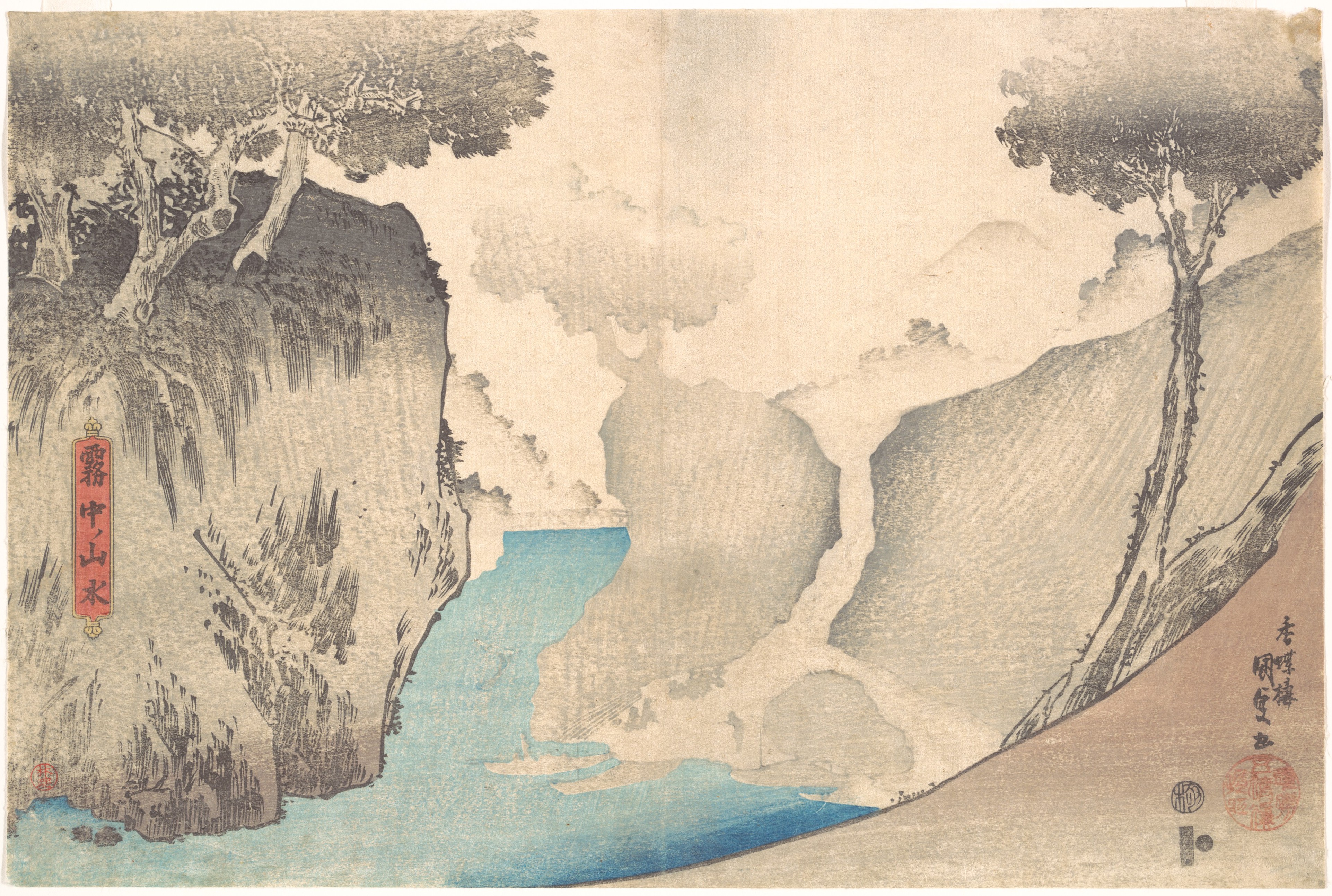
Ochanomizu in the Mist
mid-19th century
Woodblock print; ink and color on paper
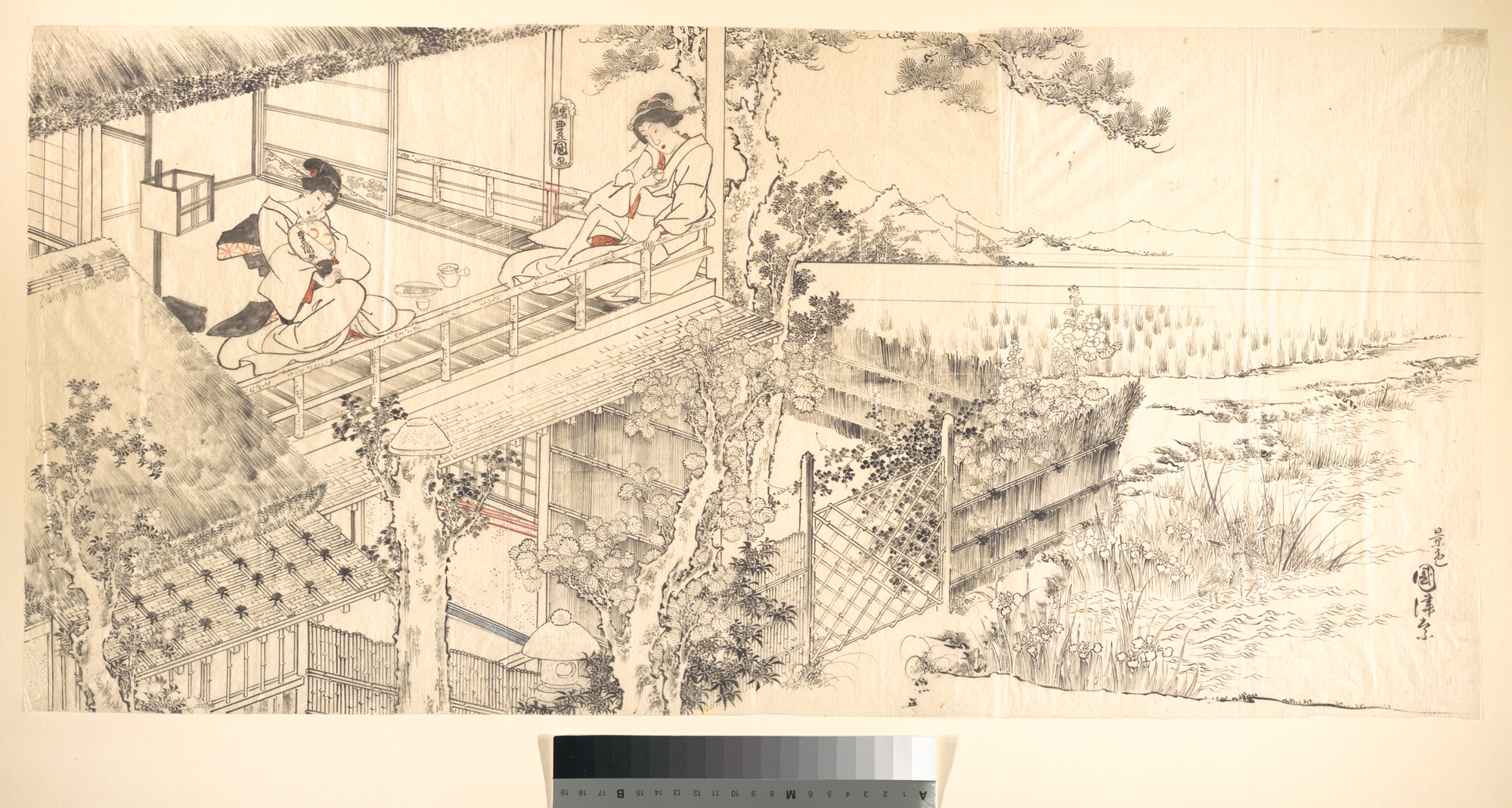
Two Courtesans Enjoying the View from a Teahouse
after 1844
Drawings intended as design for woodblock prints (triptych); ink and color on paper
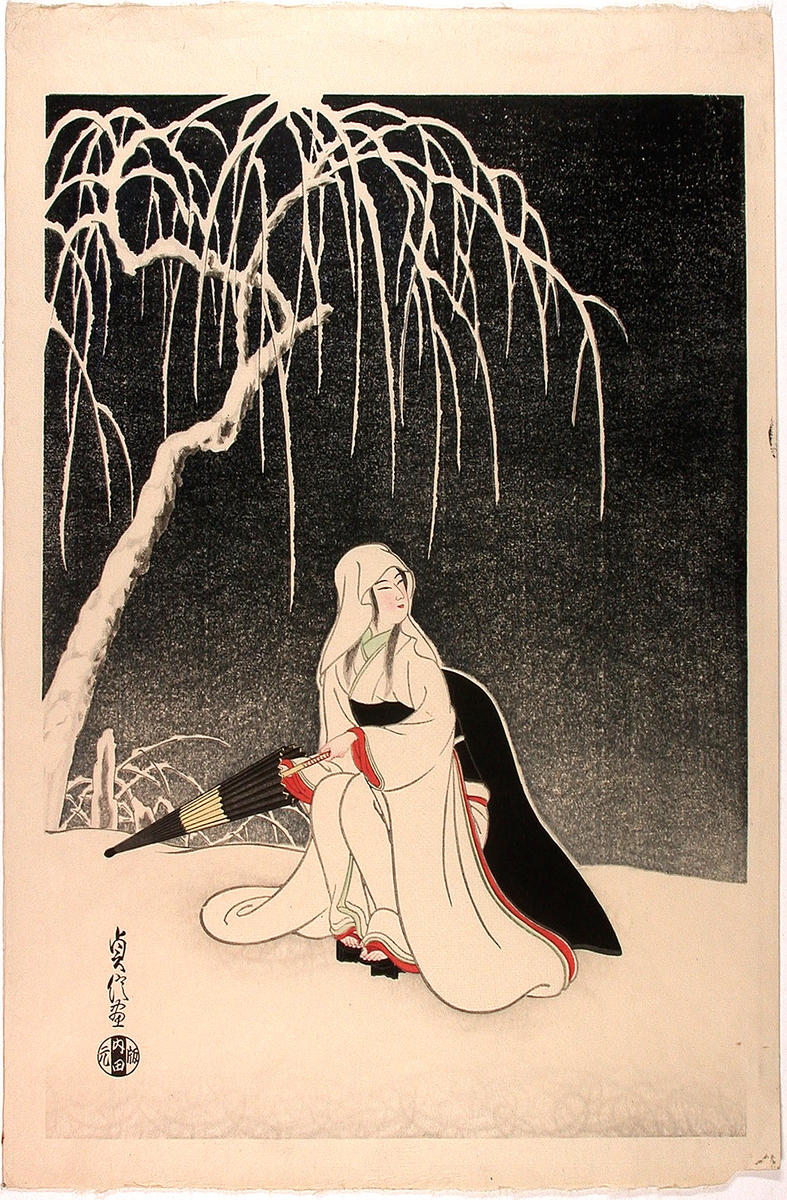
More Winter Prints
Frequently Asked Questions
Parody of Liu Bei (J: Gentoku) Visiting Zhuge Liang (J: Komei) in Wind and Snow (Gentoku fusetsu ni Komei o tazureru) was created by Utagawa Kunisada (歌川国貞) in c. 1844.
Parody of Liu Bei (J: Gentoku) Visiting Zhuge Liang (J: Komei) in Wind and Snow (Gentoku fusetsu ni Komei o tazureru) depicts winter.