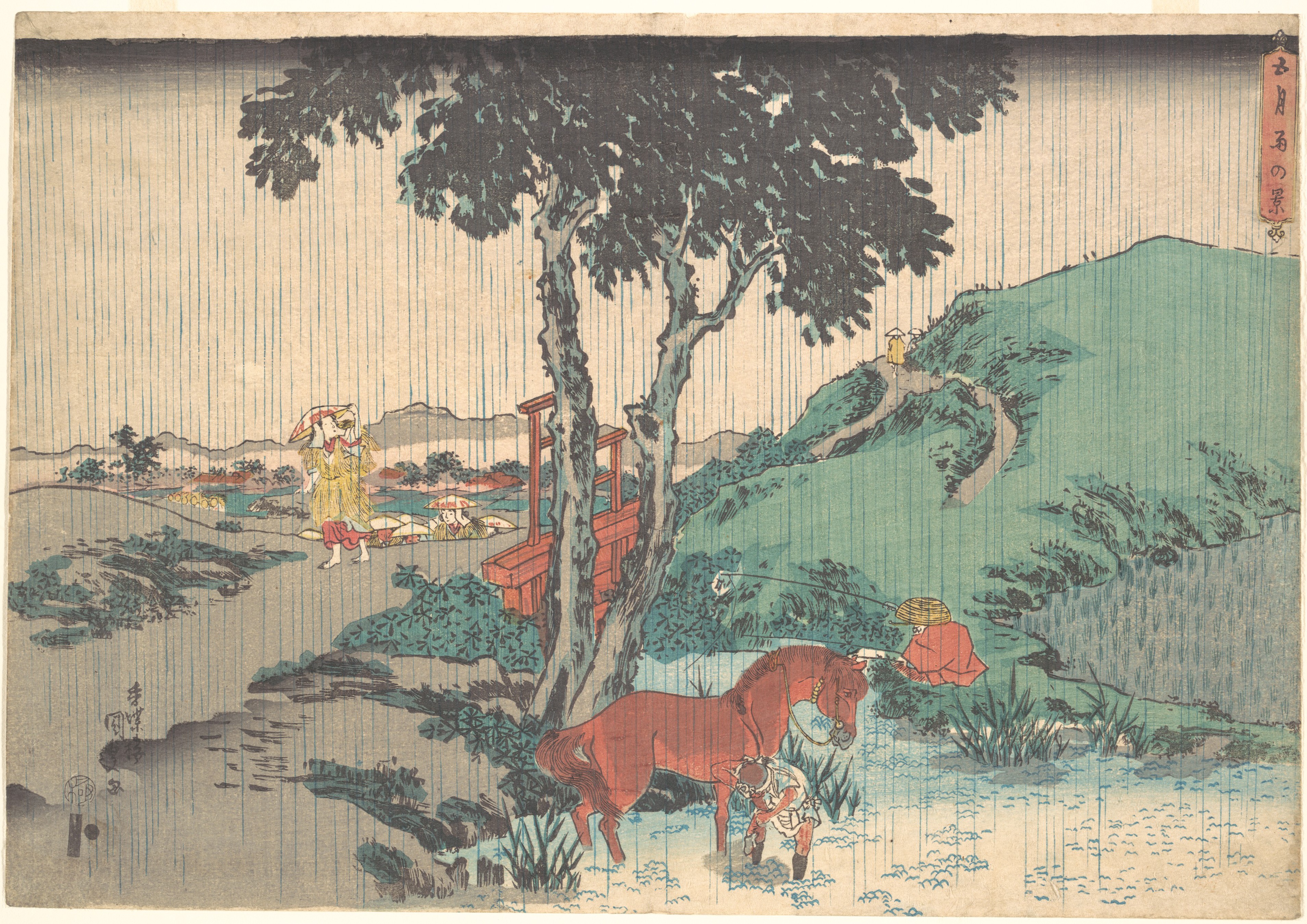
Rain of the Fifth Month (Samidare)
- Date:
- 19th century
- Medium:
- Woodblock print; ink and color on paper
- Source:
- Metropolitan Museum of Art
Description
"Rain of the Fifth Month (Samidare)," held by the Metropolitan Museum of Art (accession 51087) and dated by the Met to 1800, is an early seasonal subject attributed to Utagawa Kunisada. "Samidare," the long early-summer rain of the fifth lunar month, was one of the standard poetic and pictorial seasons in Edo culture, evoked endlessly in waka and haikai and a frequent backdrop for ukiyo-e figures sheltering under umbrellas or peering into rain-washed streets. The 1800 dating is early for Kunisada and may reflect either juvenile work or an approximate cataloging decision; the artist's most prolific decades fell after about 1810. As part of the Utagawa school descending from Toyoharu and Toyokuni I, Kunisada inherited a tradition that treated weather as a structural element of composition - rain lines, fog, and snow used to organize figures and define mood. The Met's impression participates in this broader Edo ukiyo-e seasonal idiom. Even read cautiously around the date, the sheet aligns with Kunisada's lifelong attention to mood and weather in figural prints, complementing the yakusha-e for which he became famous with a softer, atmospheric register.
More Prints by Utagawa Kunisada

The actors Ichikawa Danjuro VII as Takamoto no kitsune and Segawa Kikunojo V as Izumi no Chieda-gitsune
1818
Color woodblock print; shikishiban, surimono

Basketry Work: By the Craftsman Ichida Shōshichirō of Naniwa (Kagozaiku Naniwa saikunin Ichida Shōshichirō)
1819
Woodblock print; ink and color on paper
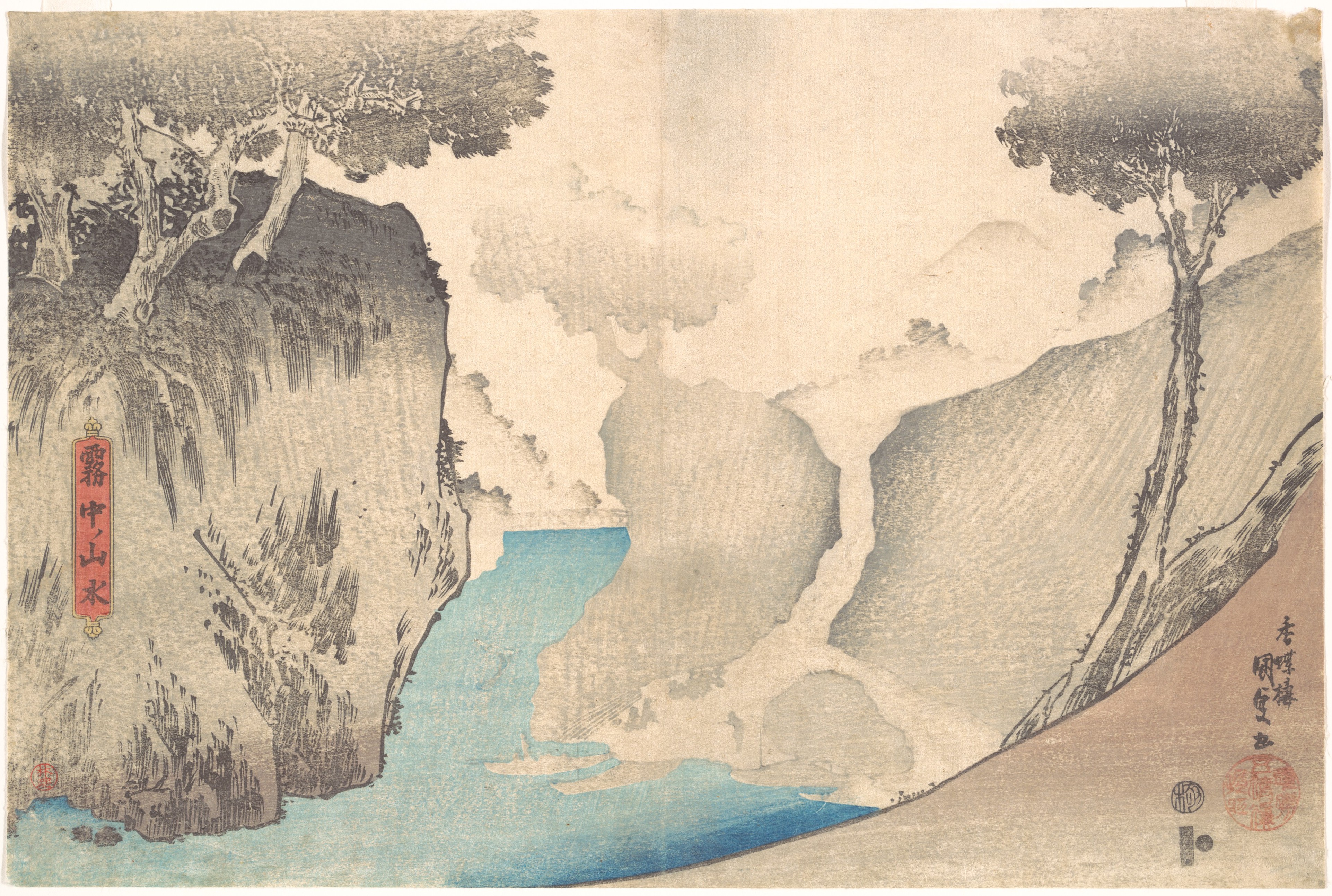
Ochanomizu in the Mist
mid-19th century
Woodblock print; ink and color on paper
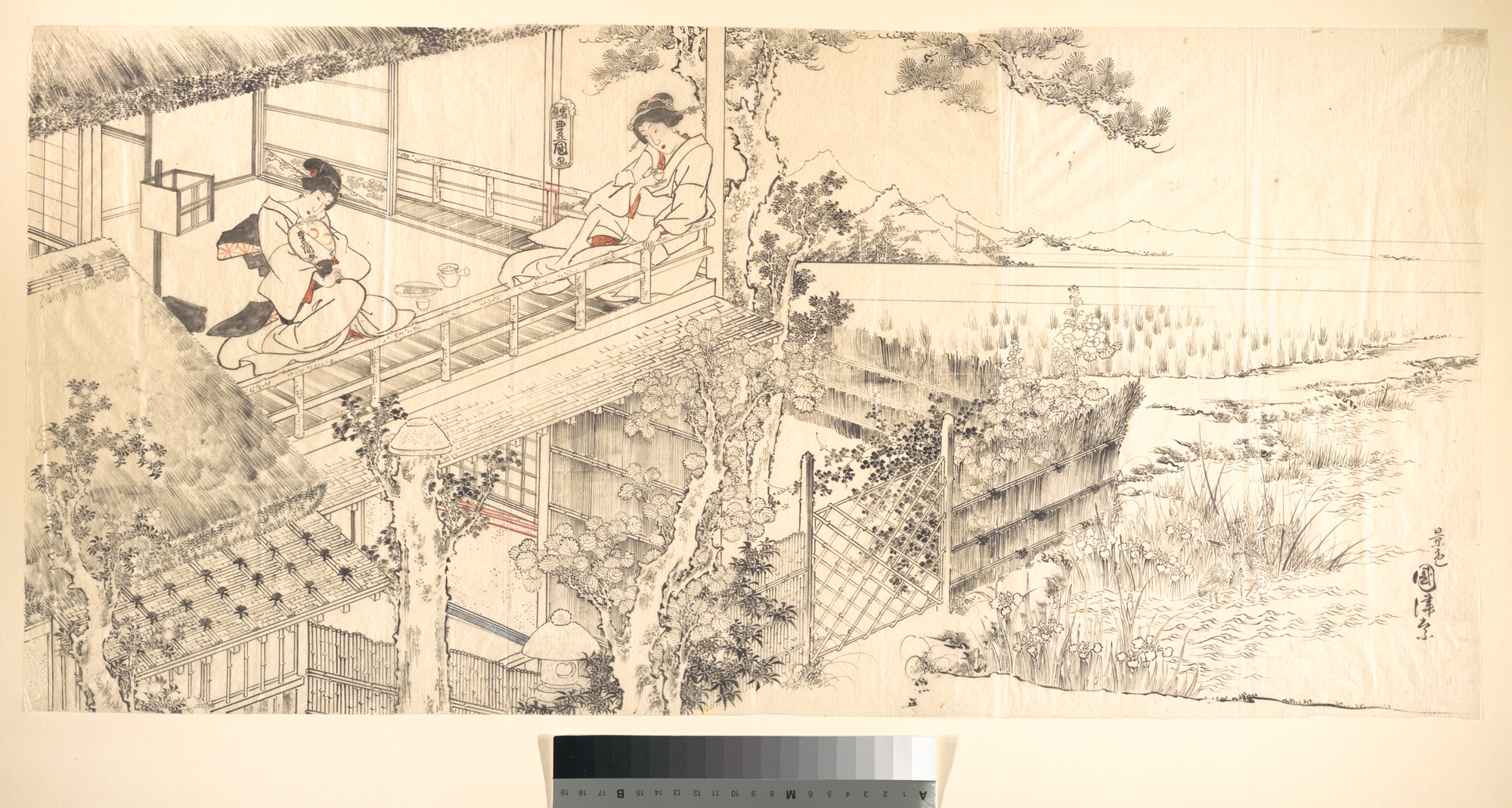
Two Courtesans Enjoying the View from a Teahouse
after 1844
Drawings intended as design for woodblock prints (triptych); ink and color on paper
More Rain Prints

Rain Shower at Shо̄no, from the series Fifty-three Stations of the Tо̄kaidо̄ (Tо̄kaidо̄ gojusan tsugi)
1962
Woodblock print, ink and color on paper

Shōno: Driving Rain (Shōno hakuu), from the series Fifty-three Stations of the Tōkaidō (Tōkaidō gojūsan tsugi no uchi), also known as the First Tōkaidō or Great Tōkaidō
c. 1833-36
Woodblock print (nishiki-e); ink and color on paper

Omiya in Rain (Ame no Omiya)
Ame no Omiya
1930
Color woodblock print; oban

Evening Shower at Teradomari (Teradomari no yau), from the series "Souvenirs of Travel, Second Series (Tabi miyage dai nishu)"
Teradomari no yau
1921
Color woodblock print; oban
Frequently Asked Questions
Rain of the Fifth Month (Samidare) was created by Utagawa Kunisada (歌川国貞) in 19th century.
Rain of the Fifth Month (Samidare) depicts rain.