The Snowy Garden
- Date:
- 1854
- Medium:
- Triptych of color woodblock prints, ink and color on paper
- Source:
- Cleveland Museum of Art
Description
The Snowy Garden, produced by Utagawa Kunisada in 1854, is a late-career work by the most commercially successful designer in nineteenth-century Edo ukiyo-e. The composition depicts figures gathered in a garden blanketed by fresh snow, a subject that allowed Kunisada to exploit the print medium's capacity for tonal contrast: the unprinted paper functions as snow, throwing the inked passages of robes, branches, and architectural detail into crisp relief. By the 1850s Kunisada (also known by his later artist name Toyokuni III) was operating one of the largest studios in Edo, and his designs from this period demonstrate the technical refinement that publishers expected from him. The figures wear richly patterned winter garments that show the carved detail and color registration for which his publishers were known. Although best remembered today for yakusha-e, his prints of kabuki actors, Kunisada produced a steady stream of bijin-ga (images of beautiful women) and seasonal genre scenes like this one throughout his career, and the snow-garden motif sits within a long tradition in Japanese painting and print of celebrating fleeting natural moments. This impression is preserved in the collection of the Cleveland Museum of Art (accession 1940.989), where it can be studied as an example of mid-nineteenth-century commercial color woodblock printing in Edo. The print reflects Kunisada's place at the center of late-Edo popular visual culture, where the boundaries between fashion, theater, poetry, and seasonal observation routinely overlapped in a single sheet.
More Prints by Utagawa Kunisada

The actors Ichikawa Danjuro VII as Takamoto no kitsune and Segawa Kikunojo V as Izumi no Chieda-gitsune
1818
Color woodblock print; shikishiban, surimono

Basketry Work: By the Craftsman Ichida Shōshichirō of Naniwa (Kagozaiku Naniwa saikunin Ichida Shōshichirō)
1819
Woodblock print; ink and color on paper
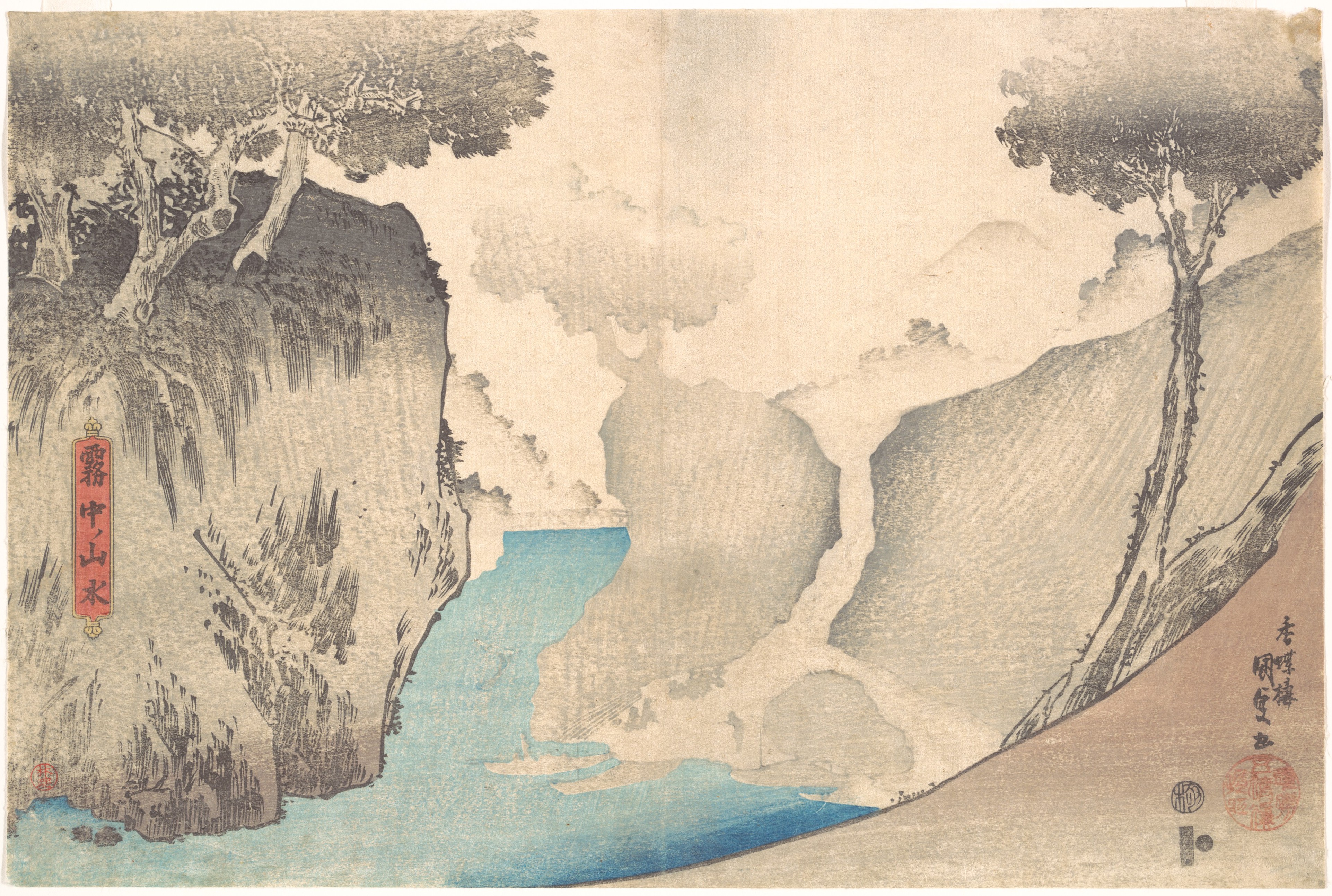
Ochanomizu in the Mist
mid-19th century
Woodblock print; ink and color on paper
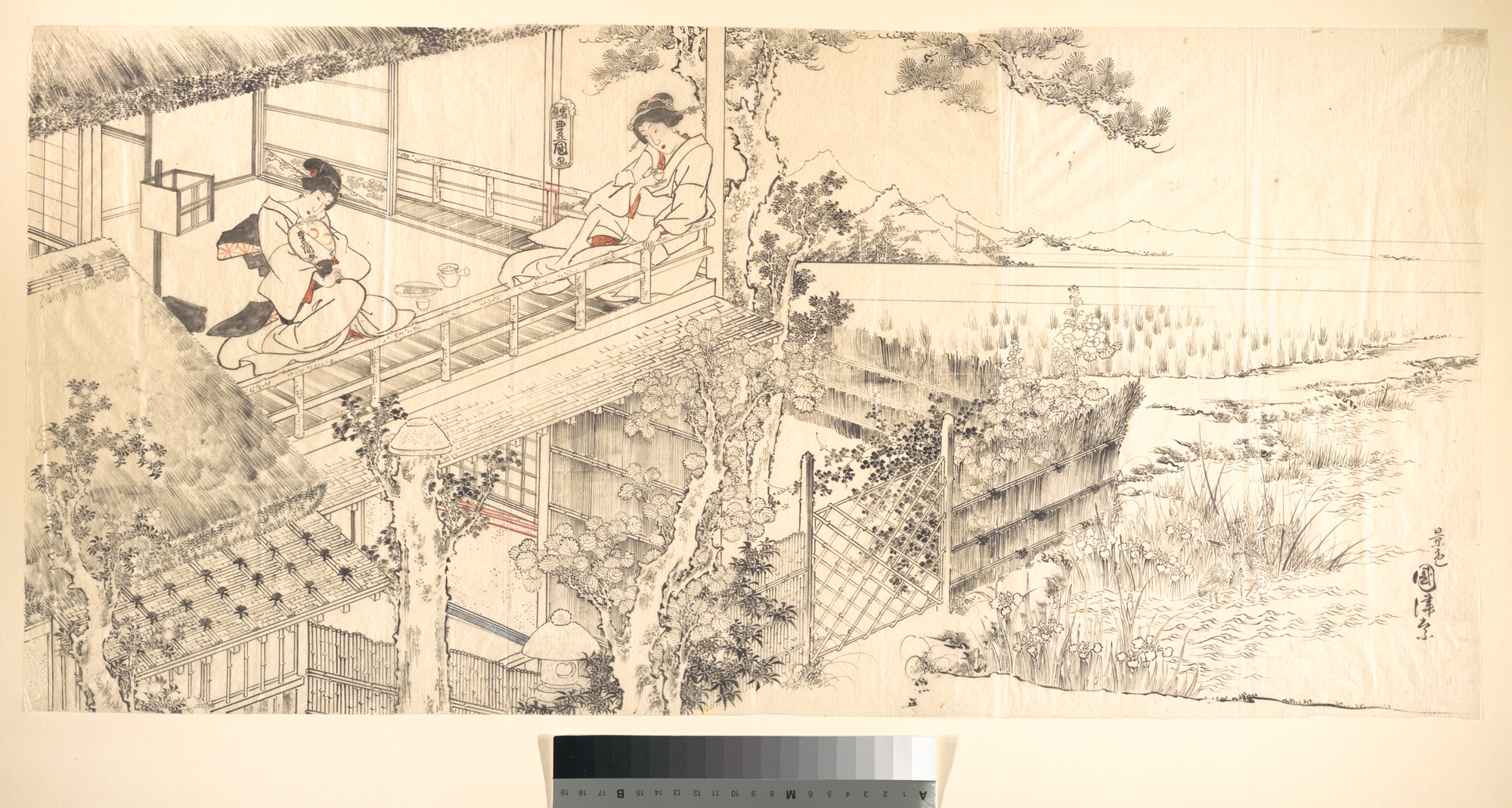
Two Courtesans Enjoying the View from a Teahouse
after 1844
Drawings intended as design for woodblock prints (triptych); ink and color on paper
More Winter Prints
Frequently Asked Questions
The Snowy Garden was created by Utagawa Kunisada (歌川国貞) in 1854.
The Snowy Garden depicts winter.