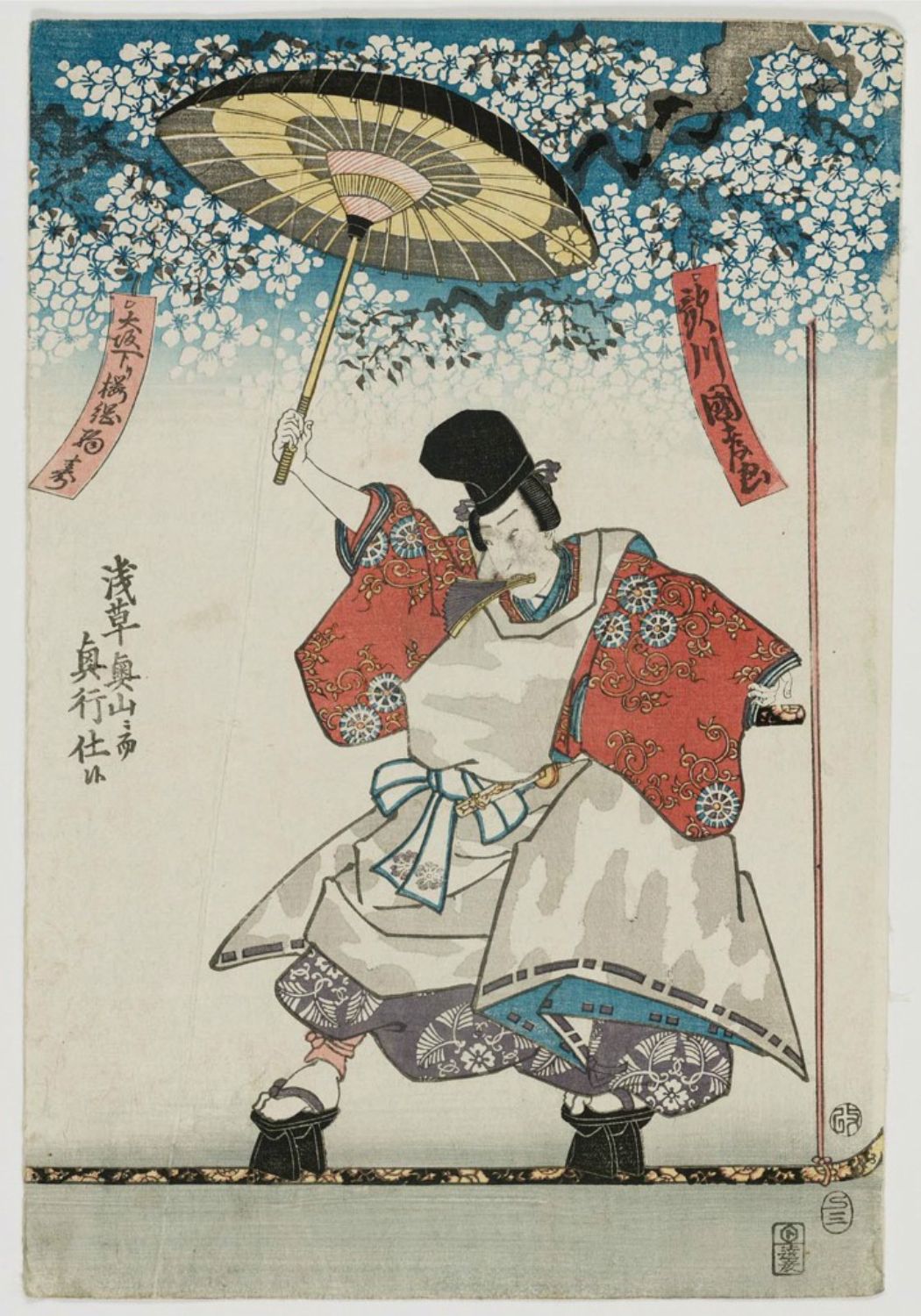
Acrobat from Osaka Performing at Asakusa (second sheet)
- Date:
- Edo period, c. 1854-1868
- Medium:
- Woodblock print (nishiki-e), ink and color on paper
Description
A companion sheet to Kunitaka's first depiction of an Osaka acrobat performing at the Asakusa entertainment district in Edo, held by the Museum of Fine Arts in Boston. Multi-sheet treatments of misemono subjects were common in late-Edo print culture, with publishers issuing pairs or sequences of single sheets that together documented an entire performance as it unfolded across successive moments or as the performer adopted successive postures. Whether the two acrobat prints by Kunitaka in the Museum of Fine Arts represent two sheets of an intended single composition (a diptych) or two independent prints recording successive performances or distinct acrobatic feats by the same Osaka performer is not definitively settled by the catalogue records, but the visual and chronological proximity of the two sheets suggests they belong to a single design moment in Kunitaka's career. The misemono tradition in Asakusa was a fixture of late-Tokugawa popular culture, with the entertainment district behind the Sensō-ji temple drawing performers and audiences from across the country, and Edo print designers documenting the more memorable acts in single-sheet prints sold as souvenirs at the venue itself or distributed through commercial print shops. Kunitaka, as a working Utagawa-school designer in the years 1854 to 1868, supplied the Edo market with prints of this kind alongside his more elaborate triptych compositions on historical-military and ceremonial-political subjects. The print is a representative example of the everyday-spectacle subject matter that constituted the lower-priced single-sheet end of the late-Tokugawa nishiki-e market.
More Prints by Utagawa Kunitaka
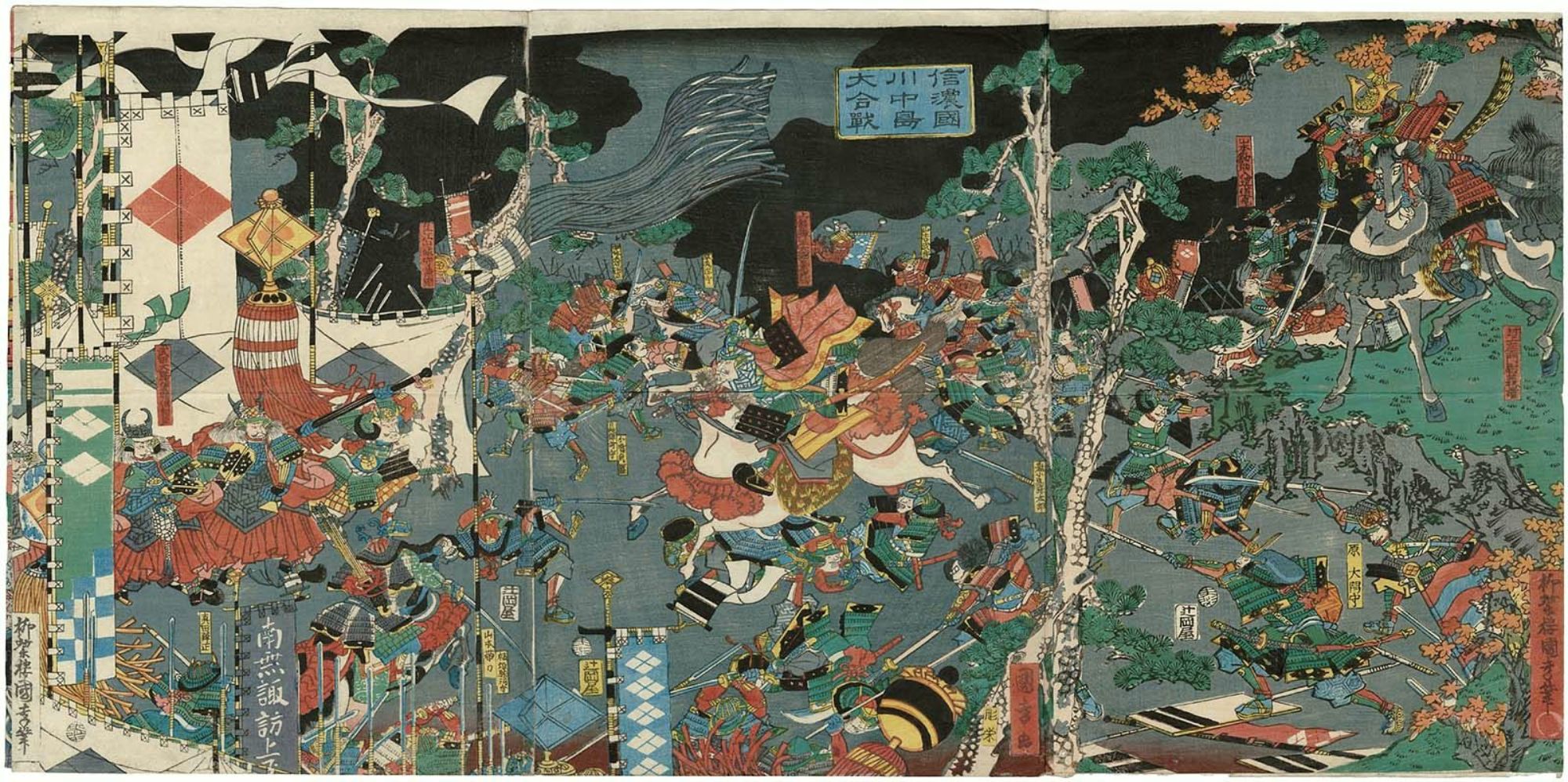
The Great Battle of Kawanakajima in Shinano Province (Shinano no kuni Kawanakajima ōgassen)
信濃国川中島大合戦
1863
Woodblock print (nishiki-e), ink and color on paper; triptych
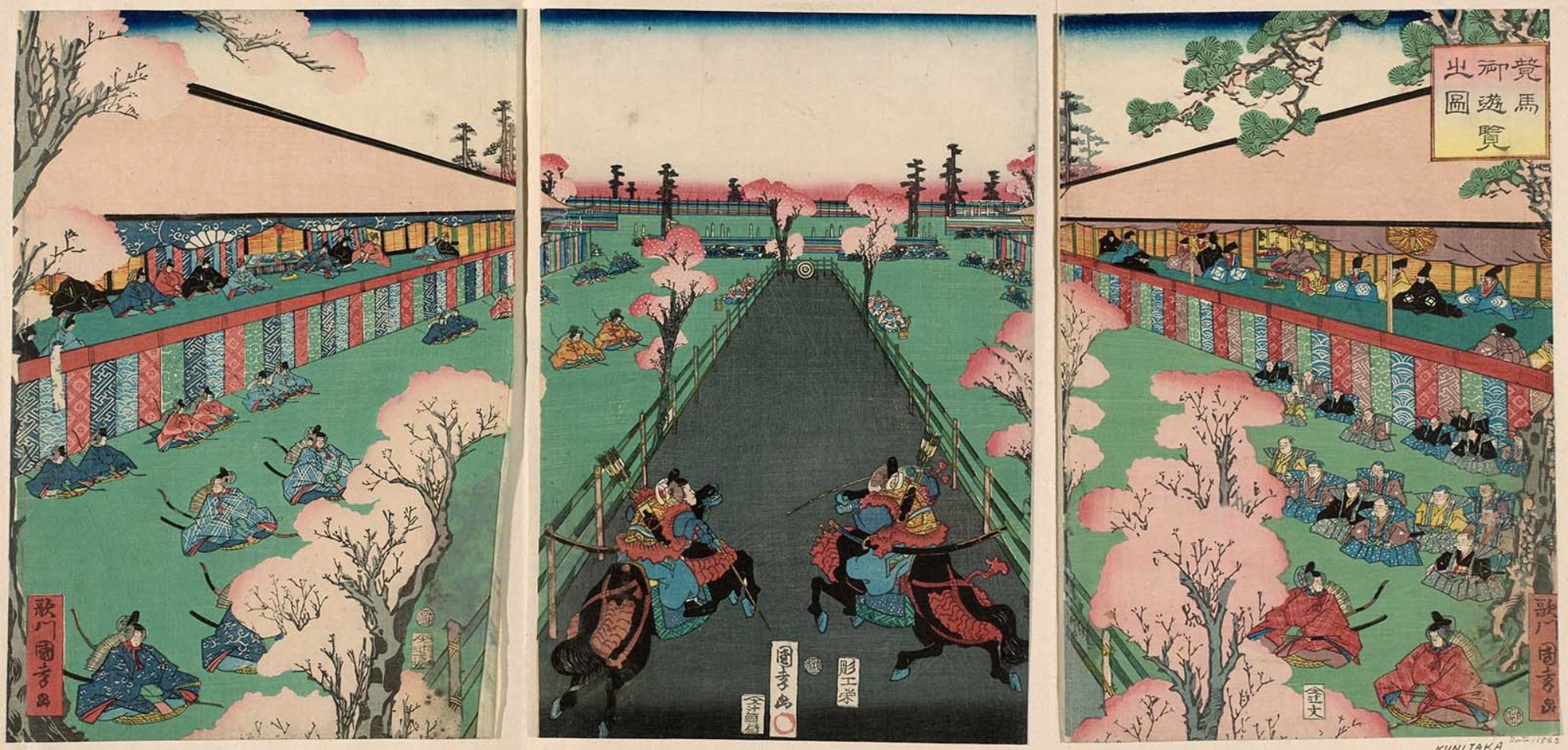
Imperial Visit to a Horse Race (Keiba goyūran no zu)
競馬御遊覧之図
1863
Woodblock print (nishiki-e), ink and color on paper; triptych
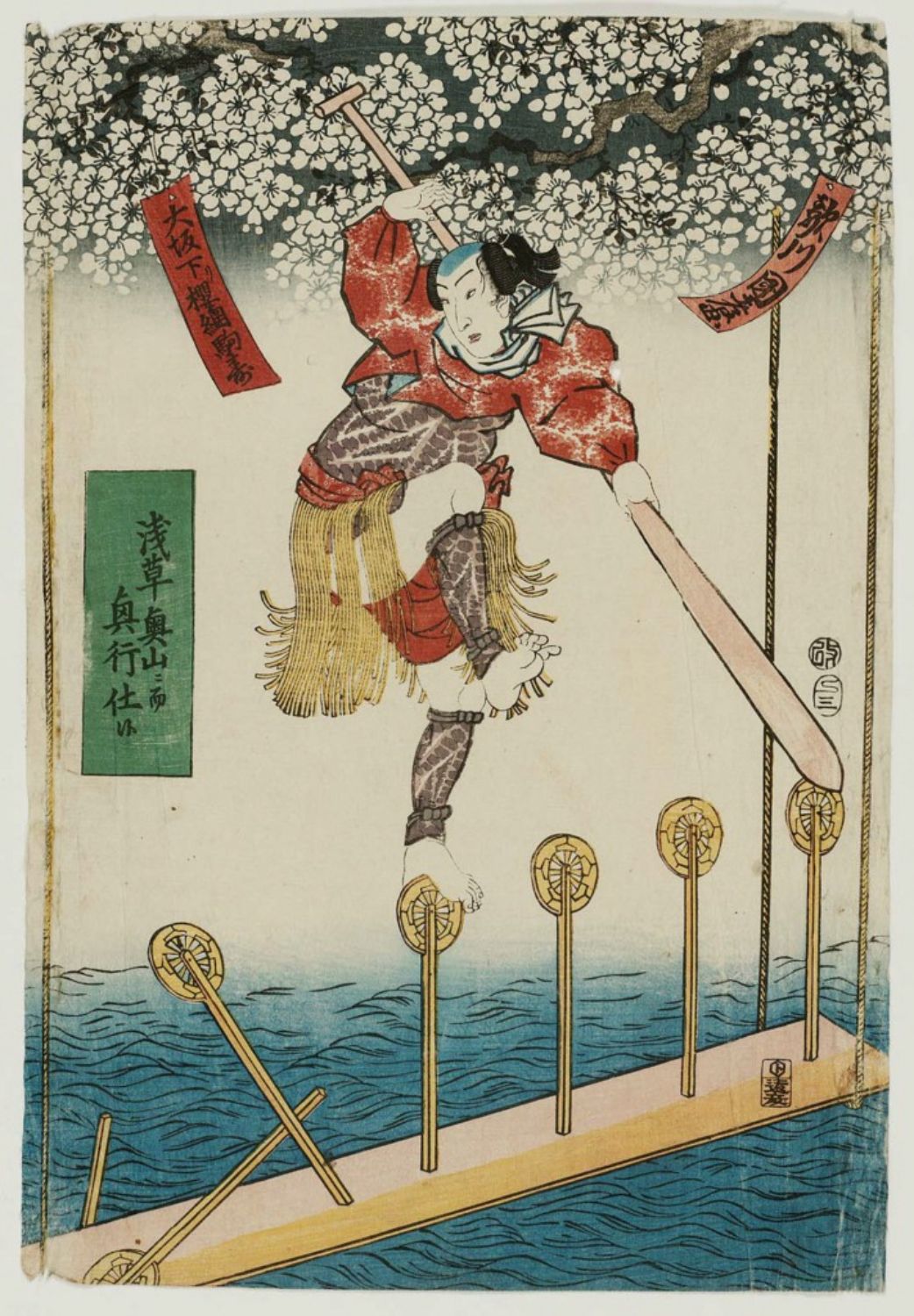
Acrobat from Osaka Performing at Asakusa
Edo period, c. 1854-1868
Woodblock print (nishiki-e), ink and color on paper

Edo Beauties in the Evening
late Edo period, c. 1854-1868
Woodblock print (nishiki-e), ink and color on paper
Frequently Asked Questions
Acrobat from Osaka Performing at Asakusa (second sheet) was created by Utagawa Kunitaka (歌川国孝) in Edo period, c. 1854-1868.