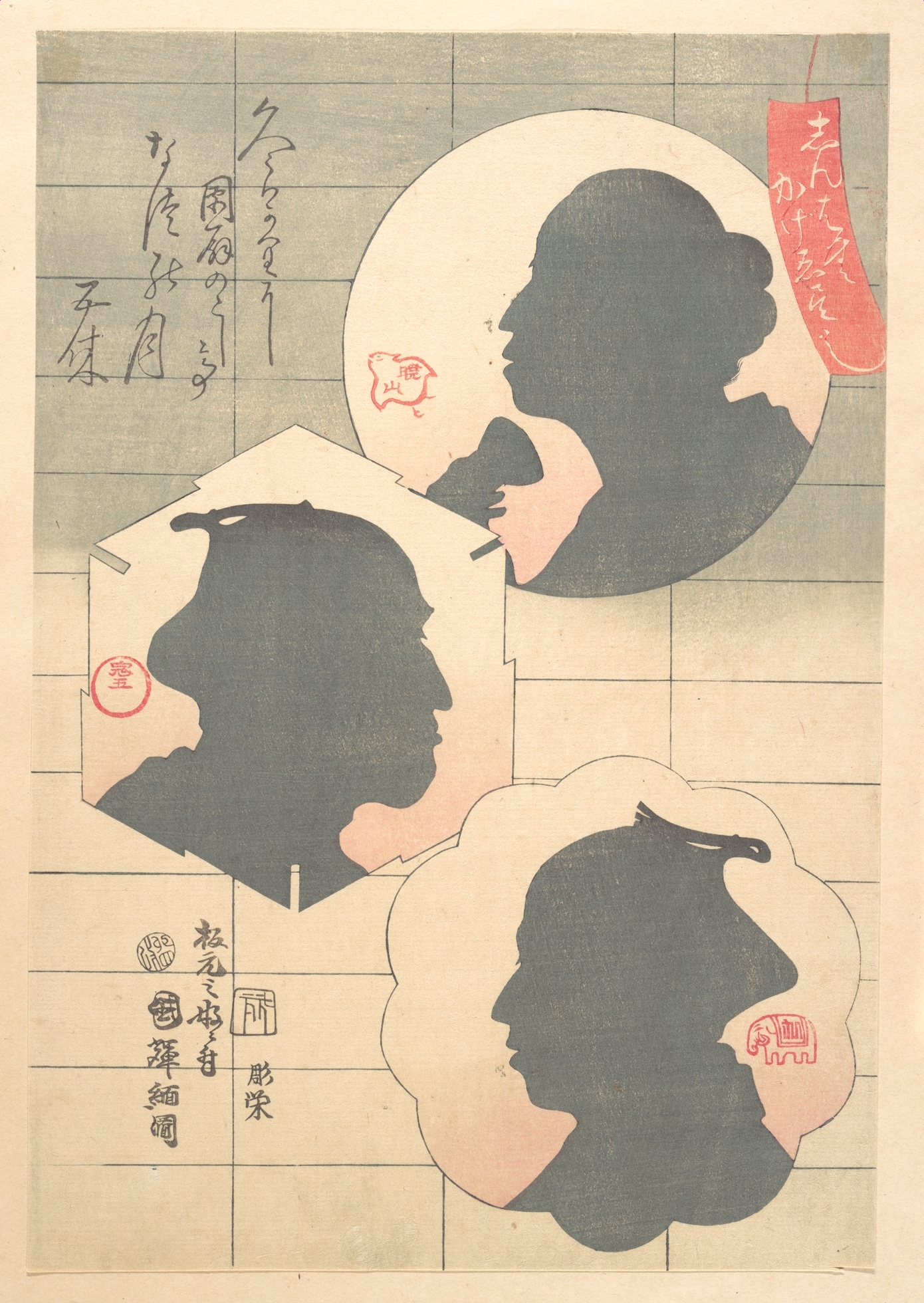
Silhouette Image of a Kabuki Actor
- Date:
- Meiji era, ca. 1869–1874
- Medium:
- Color woodblock print (nishiki-e), ōban
- Source:
- Metropolitan Museum of Art
Description
This ōban color woodblock print by Utagawa Kuniteru II, held by the Metropolitan Museum of Art (accession DP149259), depicts a kabuki actor in the form of a silhouette image — a visual conceit that uses the actor's profile shadow to identify the role rather than the conventional full-color frontal portrait. The technique of the silhouette portrait (kage-e, 'shadow picture') was a recurring genre within Edo-period ukiyo-e that allowed the designer to play on the connoisseurship of theater audiences who would recognize the actor and role from the contour alone, without the diagnostic facial features and costume that defined the standard yakusha-e tradition.
The Metropolitan Museum's dating of the work as 'nineteenth century' suggests that no precise publication date can be assigned from the print's surface markings, though the kage-e conceit and the compositional style place the work within Kuniteru II's late-Edo to early-Meiji productive years. Kuniteru II inherited from his teacher Utagawa Kunisada I the latter's deep engagement with the yakusha-e tradition, and his actor prints from across his career document the persistence of the Edo theater world through the political and economic transformations of the Bakumatsu and early Meiji periods.
The silhouette technique gave Edo and early-Meiji designers an opportunity to demonstrate technical control over line and composition: the entire image rested on the legibility of the actor's profile and the deployment of bold positive-and-negative-space contrast that distinguished the kage-e from the more familiar polychrome portrait. Kuniteru II's print belongs to the broader Utagawa school exploration of this conceit alongside contemporary kage-e by Kunisada I, Toyokuni III, and other school designers.
More Prints by Utagawa Kuniteru II

At Nihonbashi, Starting the Ōyama Pilgrimage (Nihonbashi Ōyama mōde no zu)
日本橋大山詣之図
mid-Meiji, ca. 1872
Color woodblock print (nishiki-e), ōban triptych
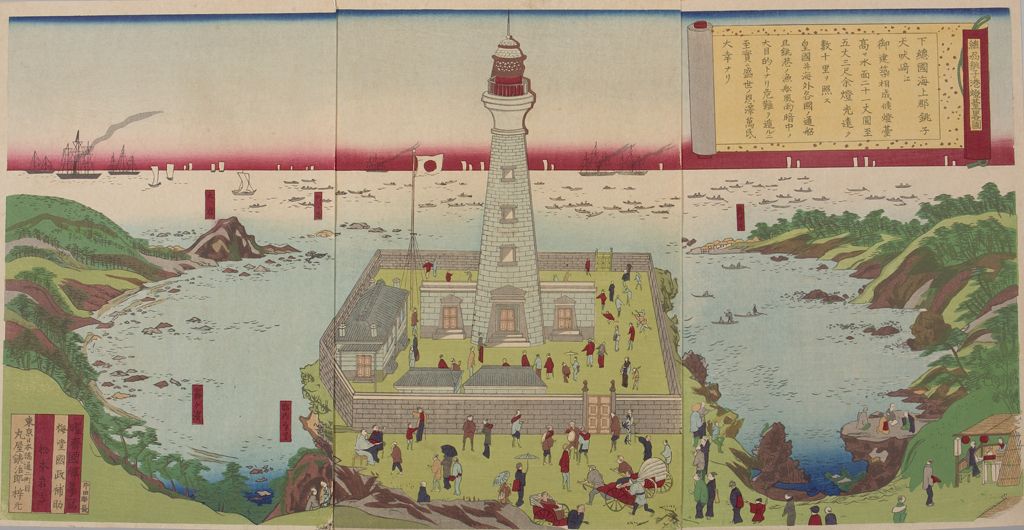
Harbor with Lighthouse and American Men and Ships
Meiji period, late 19th century
Color woodblock print (nishiki-e), ōban triptych
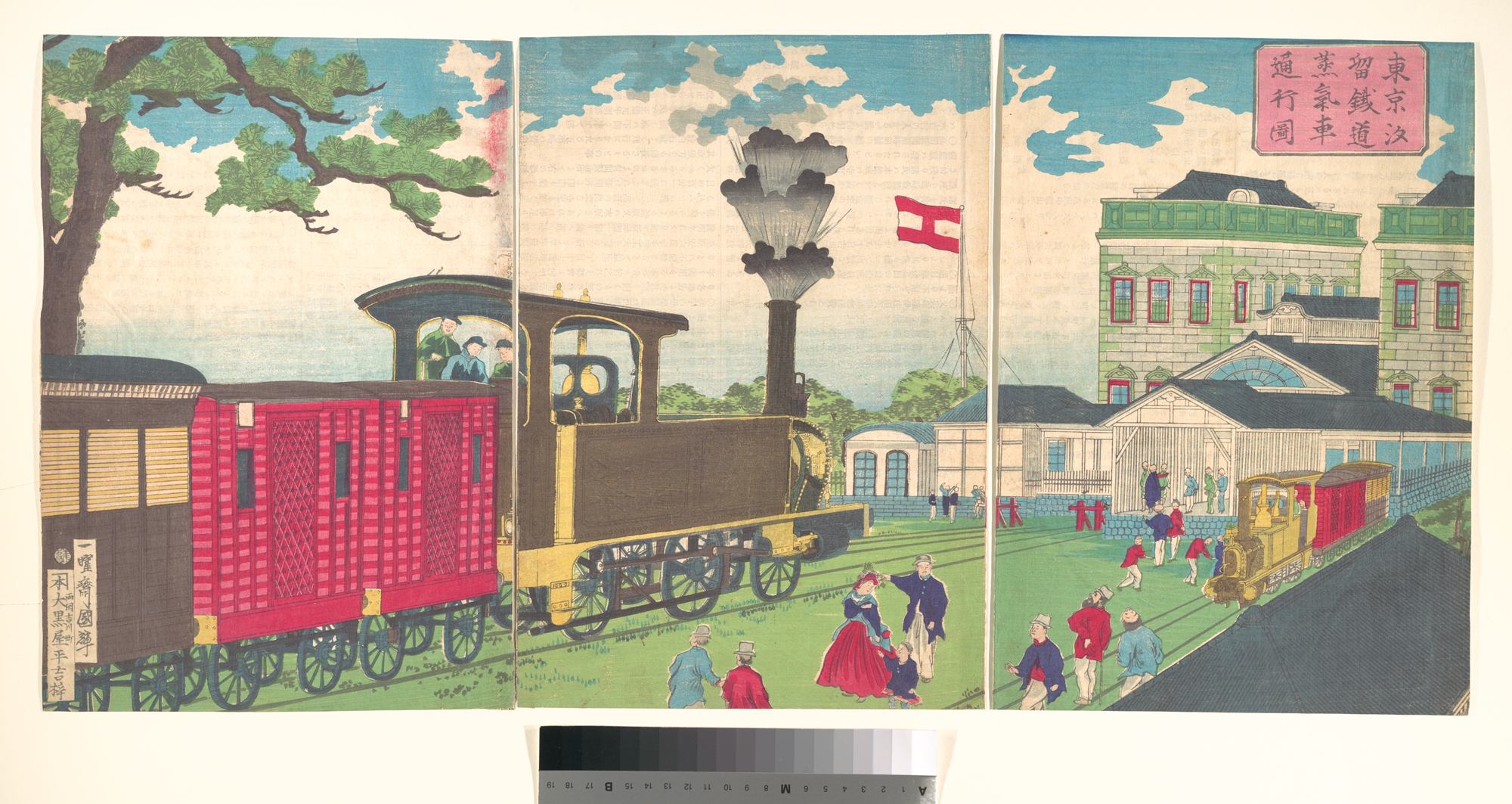
Steam Train Passing Shiodome in Tokyo (Tōkyō Shiodome o tōru jōki kikansha)
東京汐留を通る蒸気機関車
1872
Color woodblock print (nishiki-e), ōban triptych
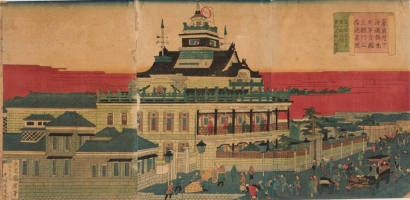
True Picture of a Five-Story Building at Kaiun Bridge (Mitsui House), First National Bank of Japan
海運橋三井組ハウス第一国立銀行真景之図
1872
Color woodblock print (nishiki-e), ōban triptych
Frequently Asked Questions
Silhouette Image of a Kabuki Actor was created by Utagawa Kuniteru II (二代歌川国輝) in Meiji era, ca. 1869–1874.