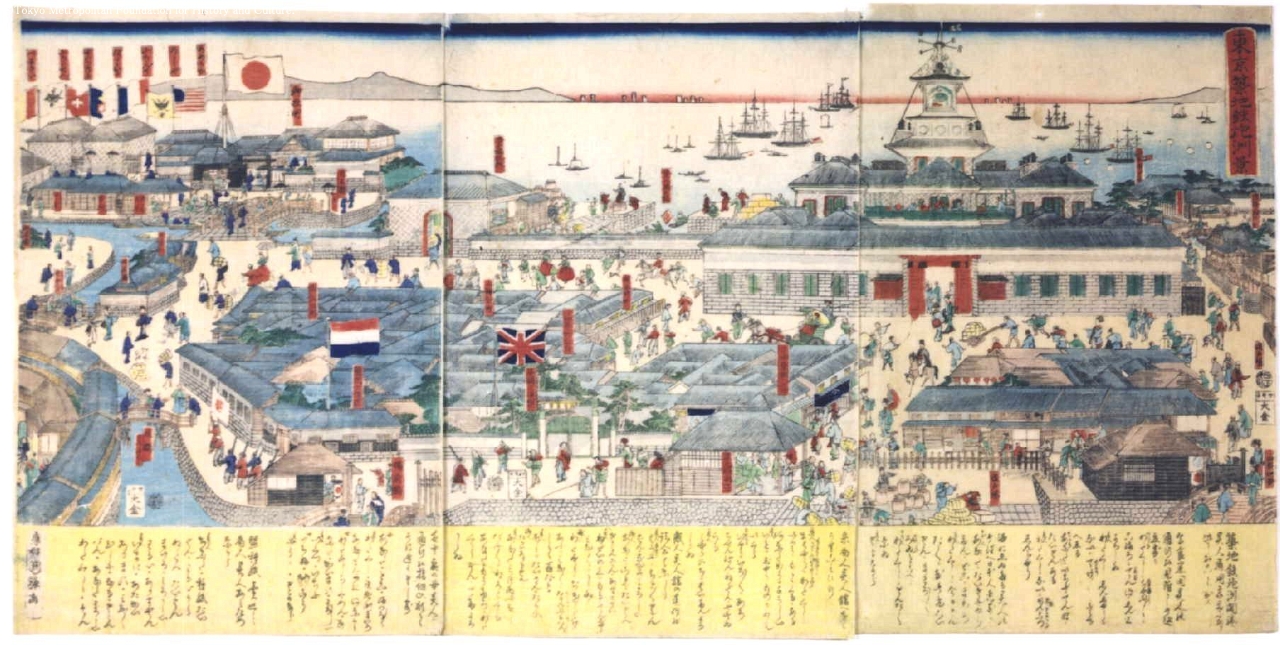
View of Teppōzu and Tsukiji, Tokyo (Tōkyō Teppōzu Tsukiji no zu)
東京鉄砲洲築地之図
- Date:
- ca. 1869–1872
- Medium:
- Color woodblock print (nishiki-e), ōban
- Source:
- Edo-Tokyo Museum
Description
This early-Meiji color woodblock print by Utagawa Kuniteru II, held by the Edo-Tokyo Museum (accession 0188206038), depicts a view of Teppōzu and Tsukiji in Tokyo. The Teppōzu and Tsukiji districts, on the east bank of the Sumida River near the mouth of the Hatchōbori Canal, had served in the Edo period as a low-lying mixed neighborhood of warehouses, fish markets, and the residences of daimyo and military families whose duties brought them to the southern reaches of the city.
Following the Meiji Restoration, the Tsukiji district was designated as one of the foreign-settlement quarters in which Western diplomats, merchants, and missionaries were permitted to reside under the unequal treaties imposed at the end of the Edo period. The Tsukiji foreign settlement housed the legations of European powers in the first years of the Meiji period, until the diplomatic functions were transferred to the Kasumigaseki and Akasaka districts later in the nineteenth century. The Teppōzu district, immediately adjacent, became the site of the Catholic St. Mary's Church (Tsukiji Cathedral) and other early-Meiji foreign institutions.
Kuniteru II's view documents the appearance of these districts in the first years after the foreign settlement was established, with the conventional ōban composition recording the visual mixture of Edo-era warehouses, the new Western-style buildings of the foreign settlement, and the bustling maritime traffic on the canals and river that defined the area's character. The print belongs to the broader genre of Meiji-era meisho-e of the new Tokyo that emerged as the early Meiji print industry adapted the older Edo meisho-e tradition to record the transforming city.
More Prints by Utagawa Kuniteru II

At Nihonbashi, Starting the Ōyama Pilgrimage (Nihonbashi Ōyama mōde no zu)
日本橋大山詣之図
mid-Meiji, ca. 1872
Color woodblock print (nishiki-e), ōban triptych
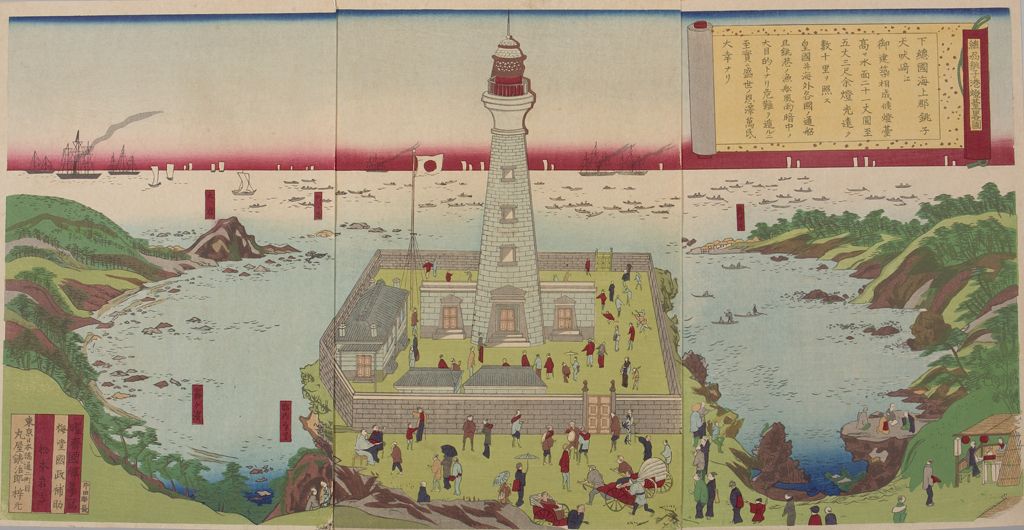
Harbor with Lighthouse and American Men and Ships
Meiji period, late 19th century
Color woodblock print (nishiki-e), ōban triptych
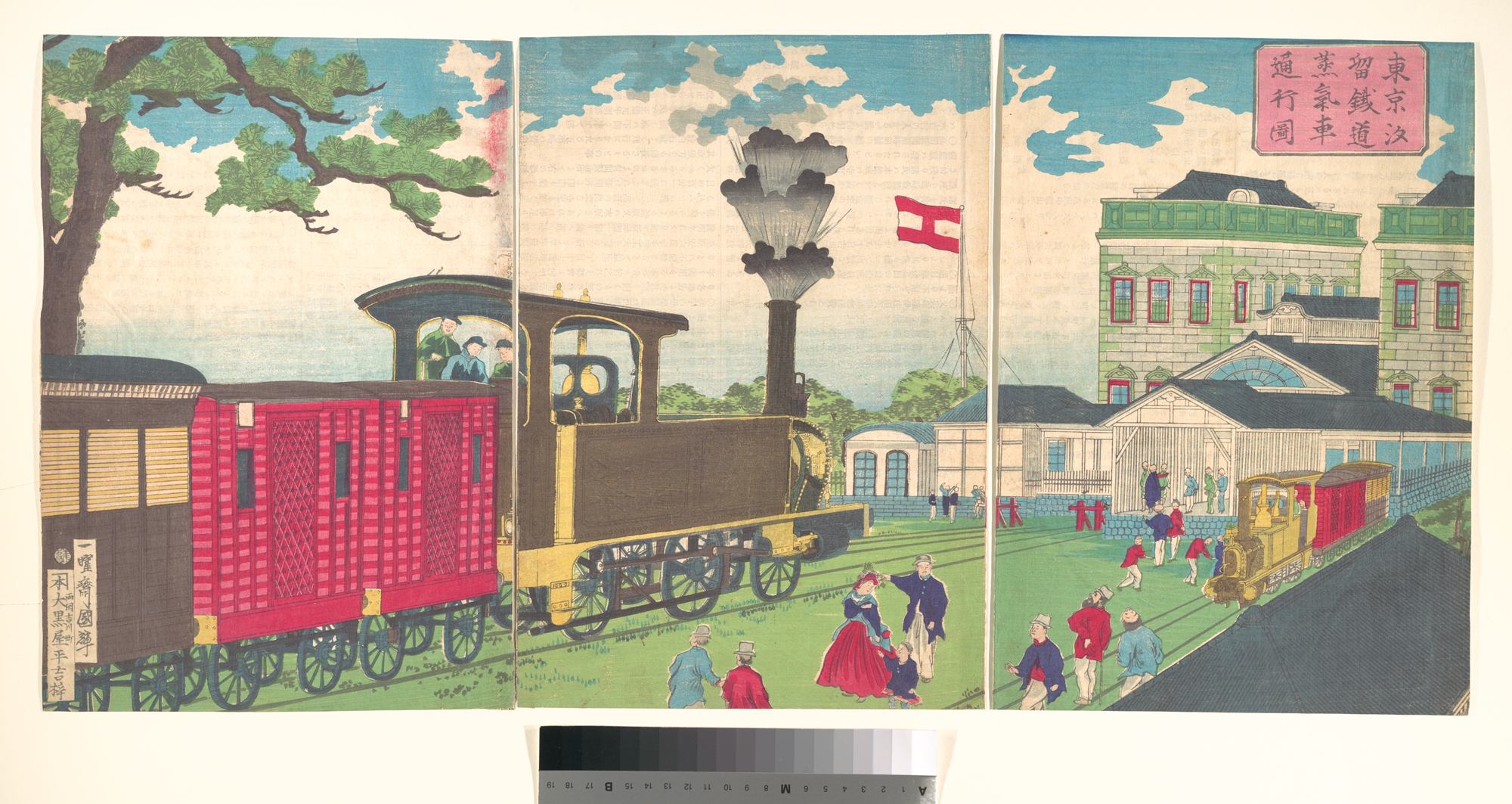
Steam Train Passing Shiodome in Tokyo (Tōkyō Shiodome o tōru jōki kikansha)
東京汐留を通る蒸気機関車
1872
Color woodblock print (nishiki-e), ōban triptych
True Picture of a Five-Story Building at Kaiun Bridge (Mitsui House), First National Bank of Japan
海運橋三井組ハウス第一国立銀行真景之図
1872
Color woodblock print (nishiki-e), ōban triptych
Frequently Asked Questions
View of Teppōzu and Tsukiji, Tokyo (Tōkyō Teppōzu Tsukiji no zu) (東京鉄砲洲築地之図) was created by Utagawa Kuniteru II (二代歌川国輝) in ca. 1869–1872.