
Evening Snow on Mount Fuji, Complete View of the Inner and Middle Shrines at Shimo Sengen (Fuji bosetsu, Shimo Sengen atomiya nakamiya zenzu), from the series "Eight VIews of Famous Places (Meisho hakkei)"
- Date:
- c. 1833/34
- Medium:
- Color woodblock print; oban
- Source:
- Art Institute of Chicago
Description
Published in 1828 and held by the Art Institute of Chicago, this print by Utagawa Toyokuni is part of his series Eight Views of Famous Places, here depicting evening snow on Mount Fuji with a complete view of the inner and middle shrines at Shimo Sengen. The Japanese title locates the scene precisely at Fuji bosetsu, Shimo Sengen atomiya nakamiya zenzu. The hakkei or eight views format had a long East Asian pictorial pedigree, originally applied to scenic sites along the Xiao and Xiang rivers in China and then adapted endlessly to Japanese topography. Toyokuni's intervention in the genre is notable because his core reputation rested on Edo ukiyo-e yakusha-e rather than landscape, and his decision to design an eight-views series in 1828 reflects the dramatic expansion of the landscape print market in those years. Here he handles the snowy approach to Fuji with restrained color and careful spatial layering, framing the shrine complex within a broader topographic sweep. The composition uses the eight-views convention of evening snow to justify a tonal palette dominated by whites, pale blues, and warm browns. As a record of pilgrimage geography and as a piece of the late-1820s ukiyo-e landscape boom, the print extends our understanding of Toyokuni's range and places his late work in conversation with the better-known landscape series of his Utagawa school peers.
More Prints by Utagawa Toyokuni I

Segawa Kikunojō III as the Shop Boy Chōkichi
1796
Woodblock print (nishiki-e), ink and color on paper
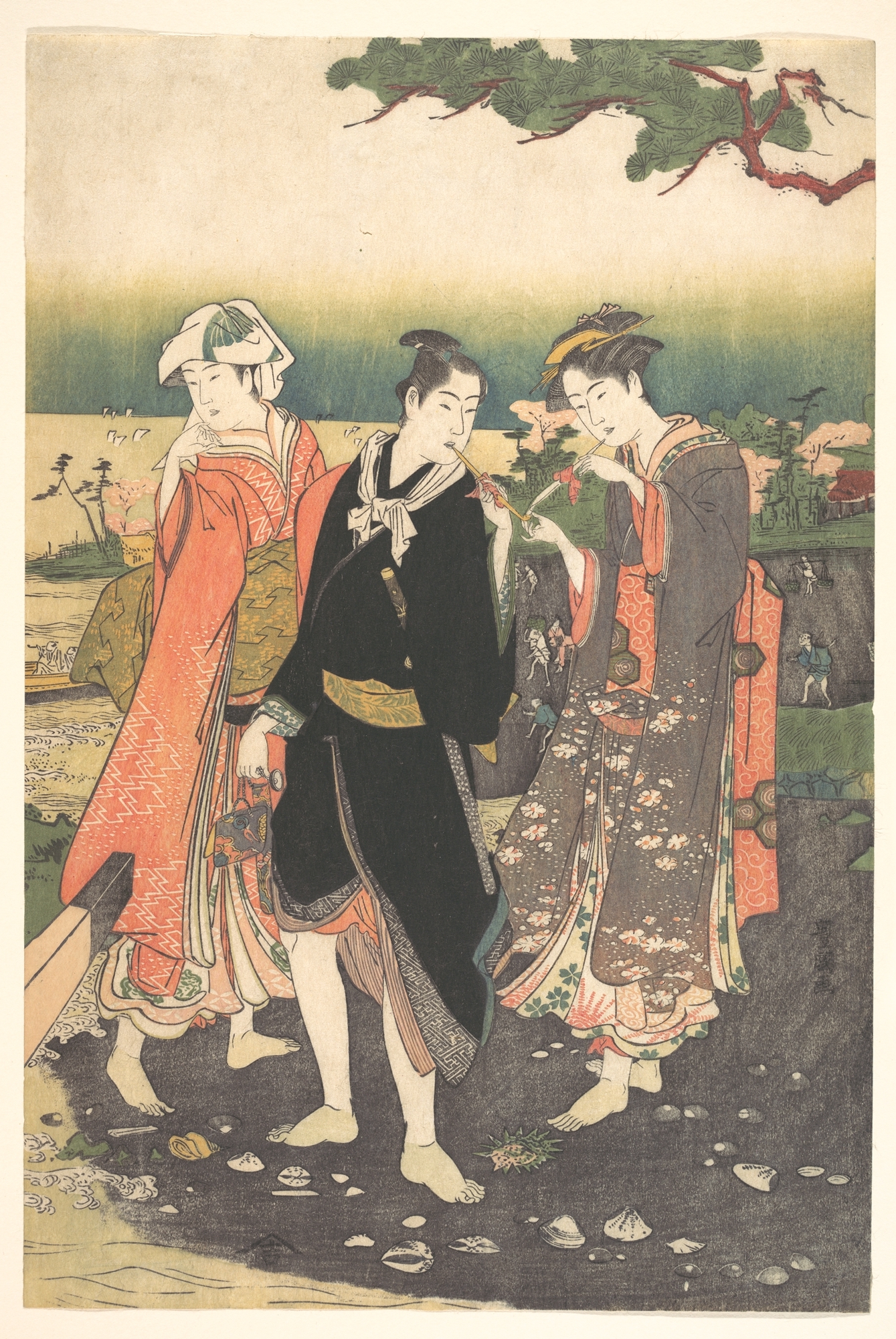
On Shinagawa Beach at Ebb-Tide
1769–1825
Woodblock print; ink and color on paper
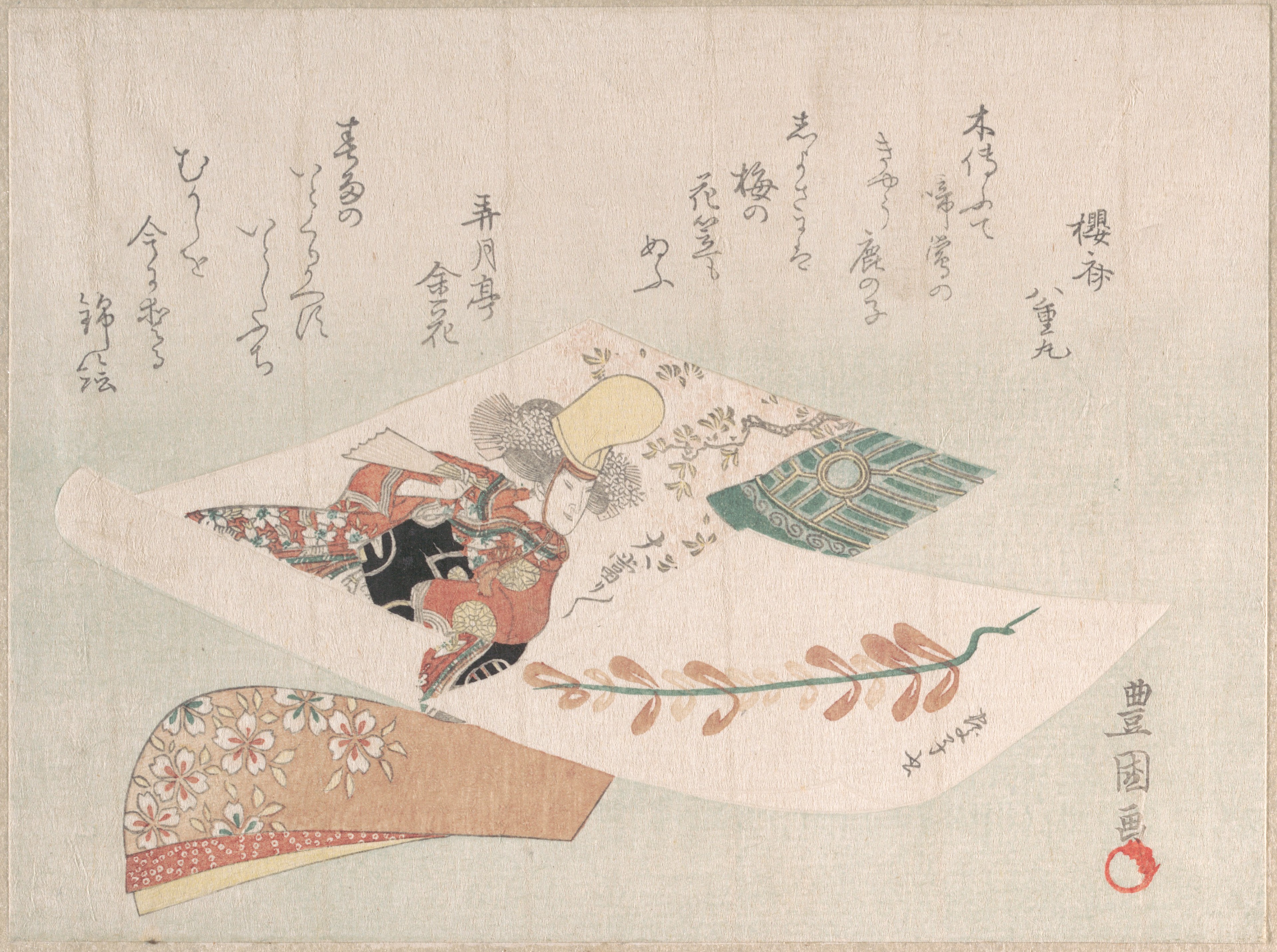
Representation of the Dance-Play "Dōjōji"
Woodblock print (surimono); ink and color on paper

The actors Sawamura Sojuro II as Satsuma Gengobei and Arashi Ryuzo II as Mawashi-otoko Yasuke in the play "Edo Sunago Kichirei Soga," performed at the Miyako Theater on the first month, 1795
c. 1795
Color woodblock print; oban
More Mount Fuji Prints
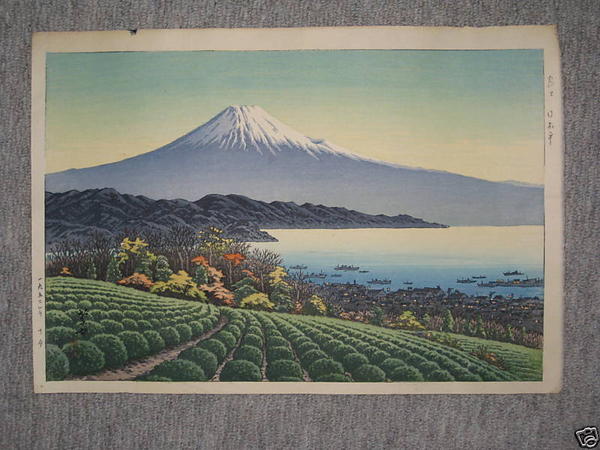
Fuji from tea farm
Woodblock print

Akasaka, Fujikawa, Okazaki, Chiryu, and Narumi, from the series "Famous Places on the Fifty-three Stations of the Tokaido, Five Stations (Tokaido gojusan eki goshuku meisho)"
c. 1830/35
Color woodblock print; oban
![Mount Fuji on a Moonlit Night, Kawai Bridge (Tsukiyo no Fuji [Kawaibashi]), from the series "Selection of Views of the Tokaido (Tokaido fukei senshu)" by Kawase Hasui](https://www.artic.edu/iiif/2/d0960668-1e73-339a-b182-fb995a54bff0/full/843,/0/default.jpg)
Mount Fuji on a Moonlit Night, Kawai Bridge (Tsukiyo no Fuji [Kawaibashi]), from the series "Selection of Views of the Tokaido (Tokaido fukei senshu)"
1947
Color woodblock print; oban

Mt. Fuji in Rain (Ame no Fuji)
n.d.
Color woodblock print
Featured in Collections
Curated cross-cuts that include this print.
Frequently Asked Questions
Evening Snow on Mount Fuji, Complete View of the Inner and Middle Shrines at Shimo Sengen (Fuji bosetsu, Shimo Sengen atomiya nakamiya zenzu), from the series "Eight VIews of Famous Places (Meisho hakkei)" was created by Utagawa Toyokuni I (歌川豊国) in c. 1833/34.
Evening Snow on Mount Fuji, Complete View of the Inner and Middle Shrines at Shimo Sengen (Fuji bosetsu, Shimo Sengen atomiya nakamiya zenzu), from the series "Eight VIews of Famous Places (Meisho hakkei)" depicts mount fuji and winter.