
Lord Oda Nobunaga Viewing the Restoration of Kiyosu Castle (Oda Nobunaga ko Kiyosujo shuzen goran no zu)
織田信長公清洲城修繕御覧之図
- Date:
- 1888 (printed posthumously)
- Medium:
- Woodblock print (nishiki-e), ink and color on paper; oban triptych
- Source:
- Art Institute of Chicago
Description
This color woodblock print (nishiki-e) triptych in ōban format, held by the Art Institute of Chicago (accession number 1995.206.2) and printed posthumously in 1888 after Utagawa Yoshifuji's death in 1887, depicts the warlord Oda Nobunaga inspecting the restoration of Kiyosu Castle. Kiyosu Castle, in present-day Aichi prefecture, was the principal seat of the Oda clan from which Nobunaga launched his sixteenth-century campaign to unify Japan. The restoration of the castle, undertaken after the original fortification was damaged in battle, is one of many ceremonial moments in Nobunaga's career that became canonical subjects of Meiji-era historical prints. Yoshifuji's triptych belongs to the broader 1880s vogue for richly coloured prints depicting episodes from the unification wars of Nobunaga, Toyotomi Hideyoshi, and Tokugawa Ieyasu, a genre that revived in the Meiji period as part of the new state's interest in narrating the historical foundations of Japan. The triptych was published in 1888, the year after Yoshifuji's death, and exemplifies the practice common among Meiji publishers of issuing previously commissioned designs after a designer's death. The print is part of the Art Institute of Chicago's Japanese print collection and is a representative late example of Yoshifuji's historical and warrior-print practice.
More Prints by Utagawa Yoshifuji

Five Men Doing the Work of Ten Bodies (Gonin jushin no hataraki)
五人十身の働き
1861
Woodblock print (nishiki-e), ink and color on paper; oban
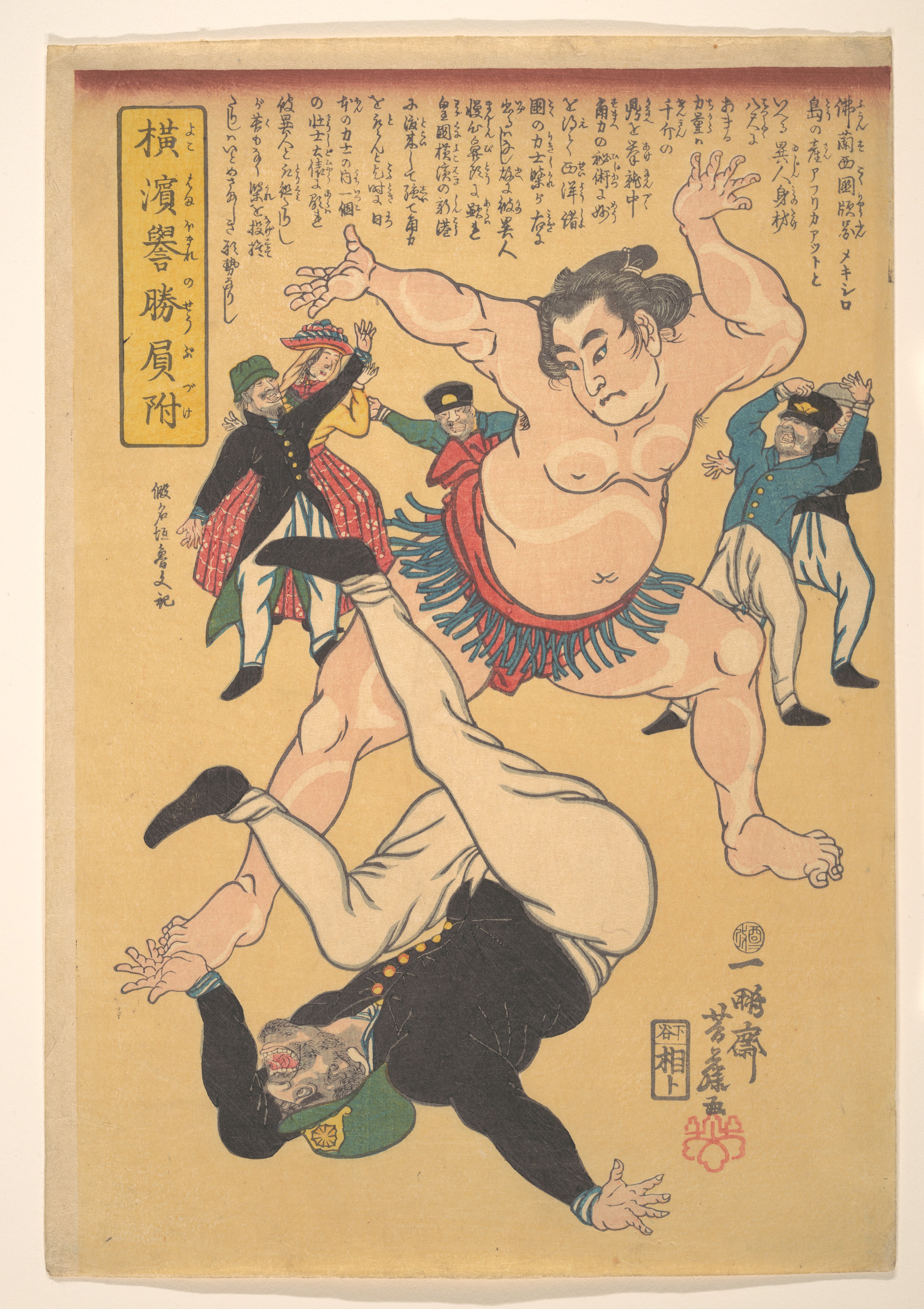
Yokohama Sumo Wrestler Defeating a Foreigner
2nd month, 1861
Woodblock print (nishiki-e), ink and color on paper

Woman Seamstress with Landscape Fan, from the series Toto Meisho Kurabe
東都名所競
1860s
Woodblock print (nishiki-e), ink and color on paper
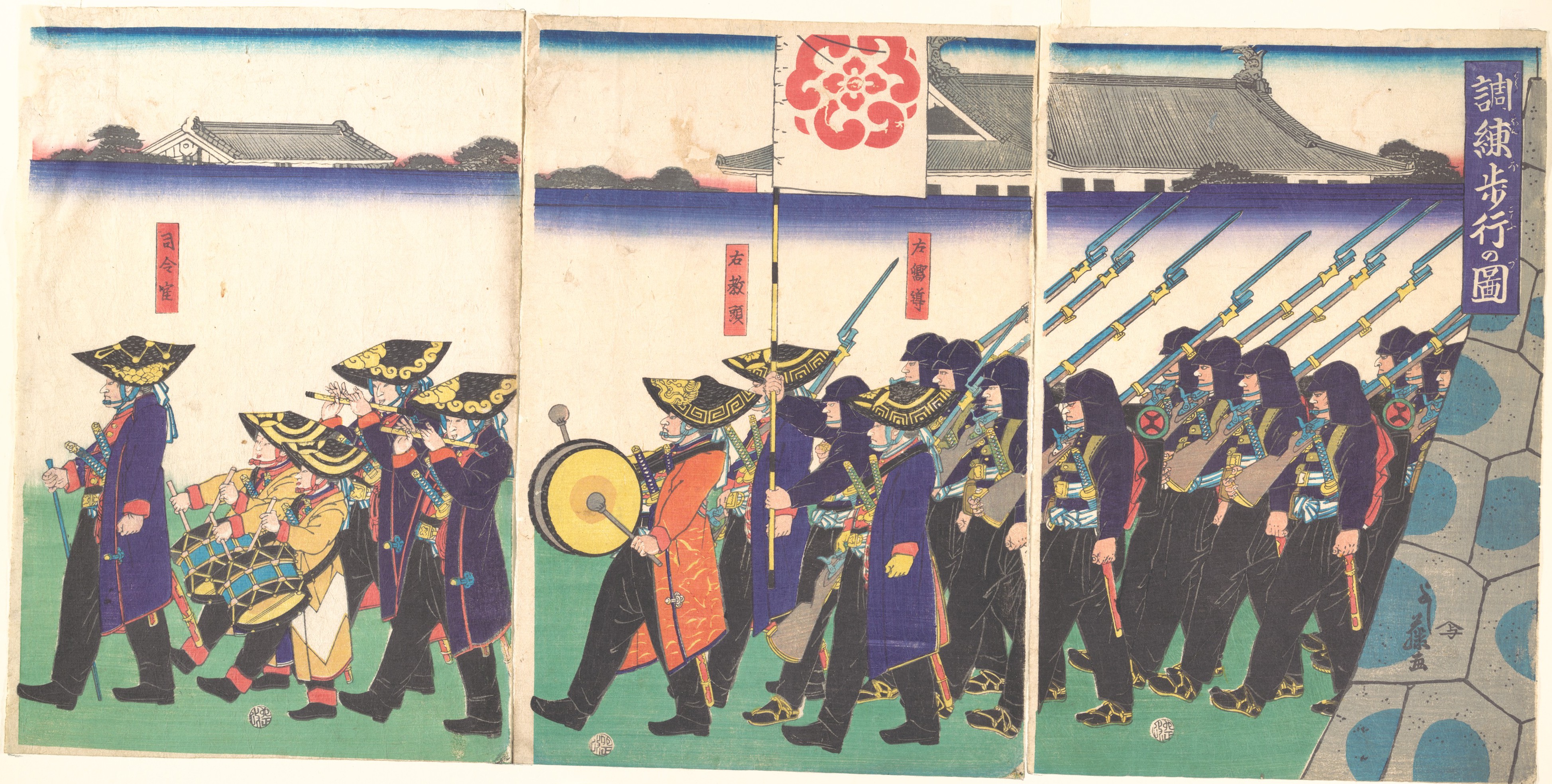
Parade of the Emperor's Troops
1867
Triptych of woodblock prints (nishiki-e), ink and color on paper; oban
More Castles Prints


Frequently Asked Questions
Lord Oda Nobunaga Viewing the Restoration of Kiyosu Castle (Oda Nobunaga ko Kiyosujo shuzen goran no zu) (織田信長公清洲城修繕御覧之図) was created by Utagawa Yoshifuji (歌川芳藤) in 1888 (printed posthumously).
Lord Oda Nobunaga Viewing the Restoration of Kiyosu Castle (Oda Nobunaga ko Kiyosujo shuzen goran no zu) depicts castles.