
Keirin bicycle race
by Wada Sanzo
- Medium:
- Mokuhanga (Japanese woodblock)
- Image courtesy of
- Saru Gallery
Description
This print belongs to Wada Sanzo's Showa Shokugyo Emaki (Picture Scroll of Showa Occupations), a sustained documentary project recording the working life of postwar Japan. Keirin, the velodrome cycling sport legalized in 1948 as a means of municipal fundraising, quickly became a fixture of Showa popular culture, and Wada turns his attention here to the racers themselves rather than the gambling crowd. The composition typically isolates cyclists in their racing posture — bent low over the handlebars, helmeted, clad in the numbered jerseys that distinguish each rider. Flat planes of color and confident outline drawing, carved by trained block cutters and printed with the baren on washi, give the figures a graphic clarity inherited from sosaku-hanga practice while retaining the legibility Wada favored. The print extends his long-running interest, visible across his oil paintings and woodblock work alike, in the dignity of ordinary modern labor — placing the professional cyclist alongside the carpenter, the fisherman, and the street vendor as a representative figure of mid-century Japan.
More Prints by Wada Sanzo
More Transportation Prints
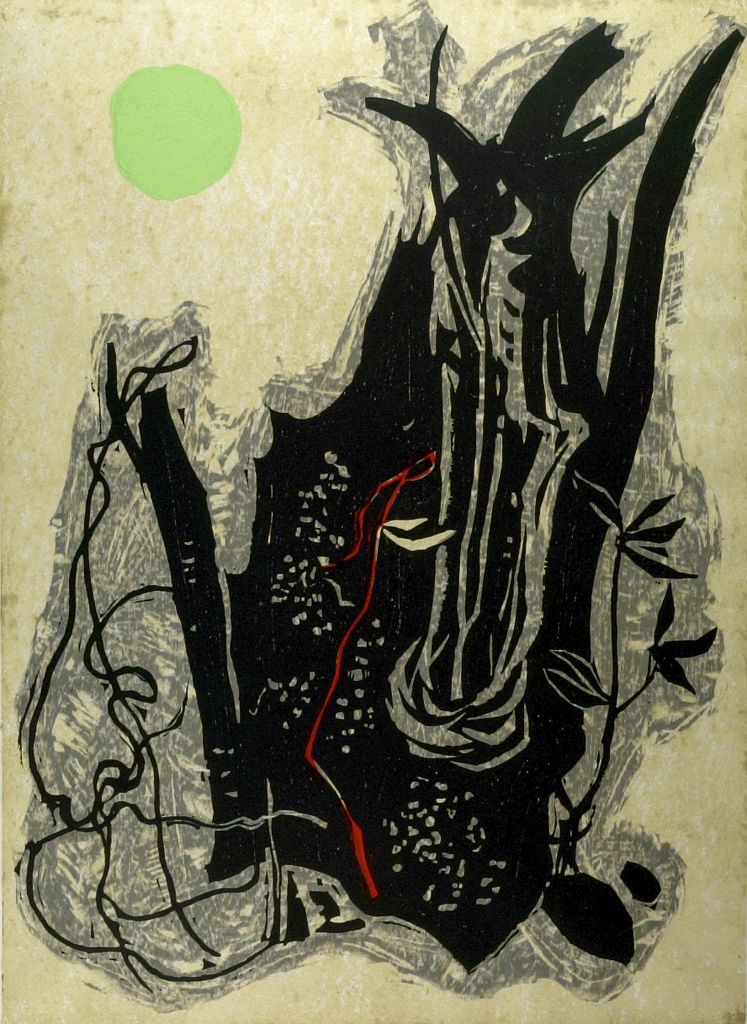
Old Tree and Path of the Sun, Shôwa period, dated 1961
Woodblock print
Nagoya Castle
Woodblock print
Battle at Jinzhoucheng on the Road to Port Arthur
1894 (Meiji 27)
Woodblock print (nishiki-e); ink and color on paper
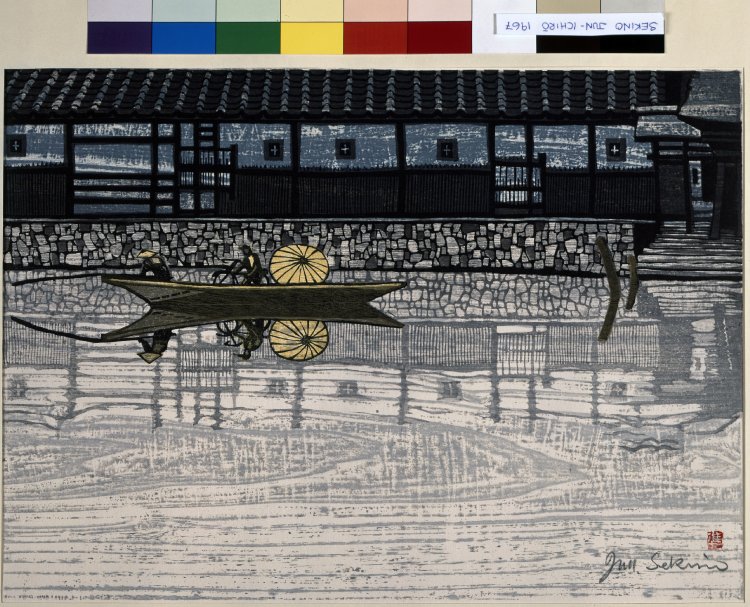
Mitsuke / Tokaido gojusan tsugi ('Fifty-three Stations of the Tokaido Road)
Woodblock print
Featured in Collections
Curated cross-cuts that include this print.
Frequently Asked Questions
Keirin bicycle race was created by Wada Sanzo (和田三造).
Keirin bicycle race depicts transportation.