
Camelia Garden
- Medium:
- Mokuhanga (Japanese woodblock)
- Image courtesy of
- Saru Gallery
Description
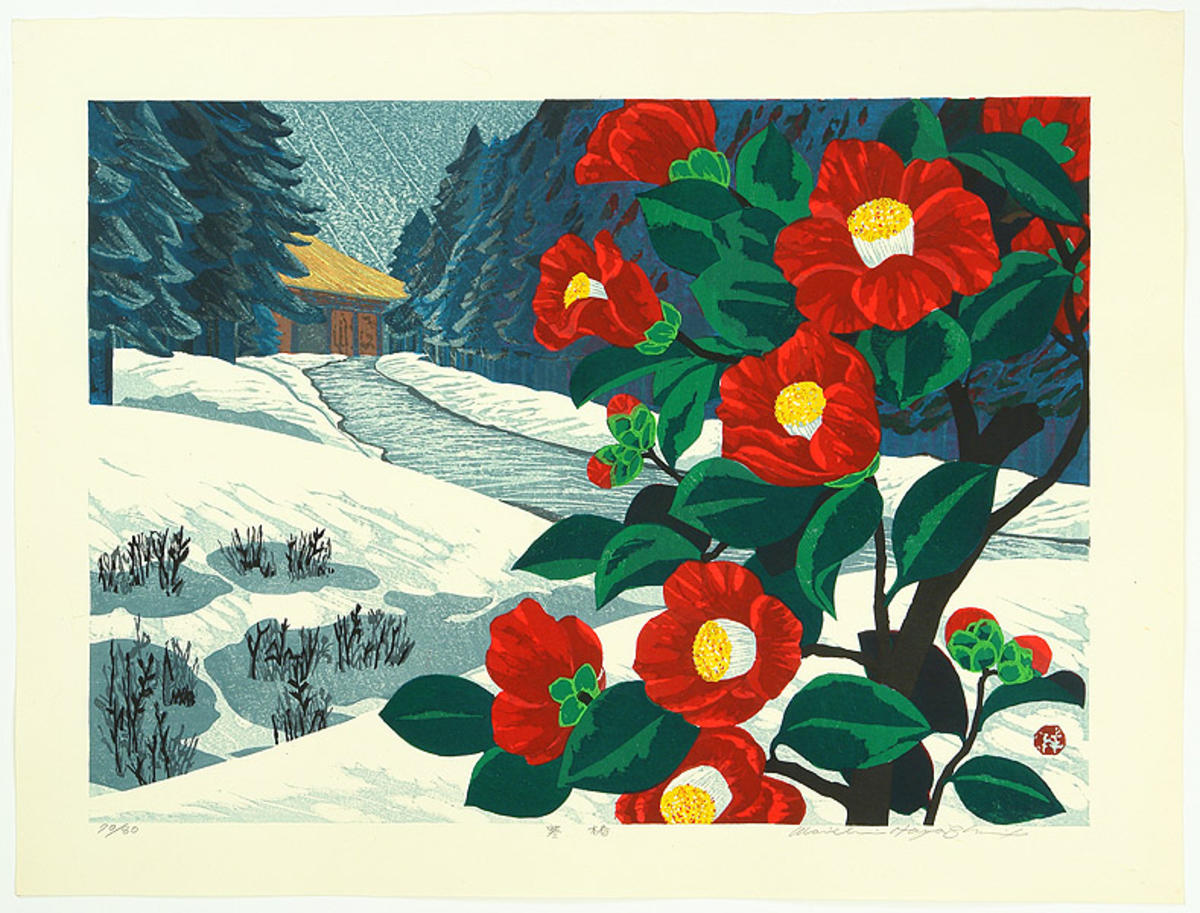
A garden composition centered on tsubaki (camellia), a flower long associated with late-winter and early-spring bloom in Japanese horticulture and tea-ceremony tradition. Camellia subjects sit within the kacho-e (bird-and-flower) lineage, but a 'garden' framing implies a broader landscape view rather than a single-stem botanical study — likely showing camellia bushes with their characteristic dark, glossy foliage and red blooms set within a cultivated ground. The contrast between deep evergreen leaves and saturated red petals offers natural color separation well-suited to woodblock printing, where each hue requires its own block. Hayashi's flattened, decorative approach would treat the foliage as massed shape rather than rendered detail, with blossoms reading as graphic accents. The mingei influence in his work tends to favor garden subjects that read as lived rather than ornamental — places of cultivation rather than display — and a camellia garden fits that quieter, working-landscape sensibility he carried through much of his output.
More Prints by Waichi Hayashi
More Gardens Prints
![[Garden of] Taj Mahal, No. 1 (Taji Maharu no niwa, dai ichi) by Hiroshi Yoshida](https://www.artic.edu/iiif/2/230993a7-d4f0-c979-c267-127d48e1ef1c/full/843,/0/default.jpg)
[Garden of] Taj Mahal, No. 1 (Taji Maharu no niwa, dai ichi)
Taji Maharu no niwa, dai ichi
1931
Color woodblock print; oban

Kiyozumi Garden in Moonlight
January 1938
Woodblock print, ink and color on paper

Moon over Kiyosumi Garden (Tsuki no Kiyosumien)
1938
Color woodblock print; oban
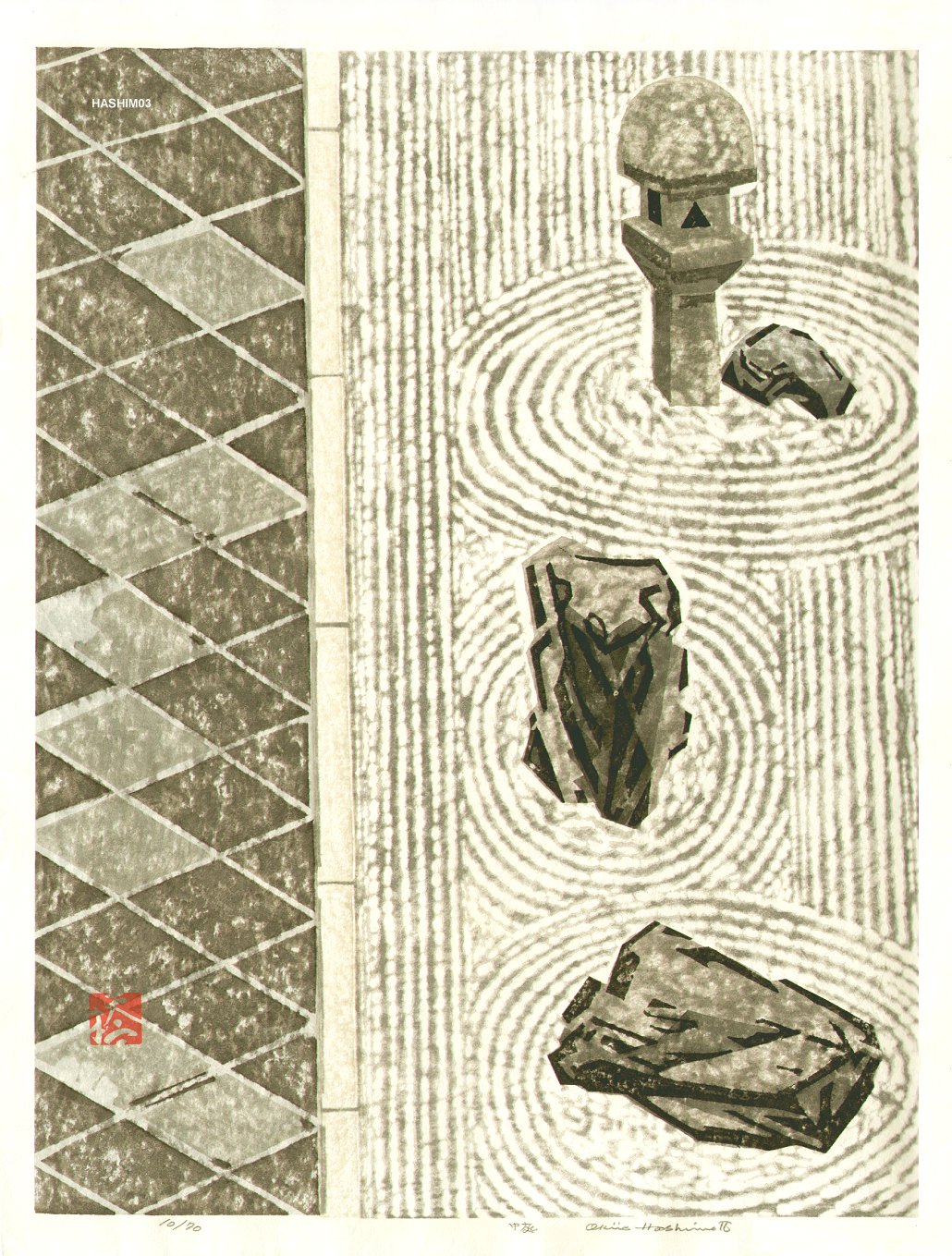
Rock garden
10/70, 1966
Woodblock print
Featured in Collections
Curated cross-cuts that include this print.
Frequently Asked Questions
Camelia Garden was created by Waichi Hayashi (林和一).
Camelia Garden depicts gardens.