
Kururu Village
- Medium:
- Mokuhanga (Japanese woodblock)
- Image courtesy of
- Saru Gallery
Description
A genre landscape depicting a village scene, of the kind that occupied Shoun's output alongside his bijin-ga and prints of children. Village subjects in Meiji-era woodblock typically combine architectural elements — thatched eaves, low fences, paths — with figural staffage going about ordinary tasks. Compositionally these prints favor a high vantage and oblique recession, drawing on the meisho-e tradition's strategies for organizing landscape but applied to a humbler subject than the famous-place print. The palette is generally muted, with bokashi used sparingly for distant hills or the strip of sky above a treeline. Within Shoun's body of work, village and rural scenes form a counterpart to the urban genre subjects he developed for the Tokyo print market, both feeding the same publishers' demand for affordable single-sheet designs at a moment when ukiyo-e was negotiating its survival against photography and lithography.
More Prints by Yamamoto Shoun
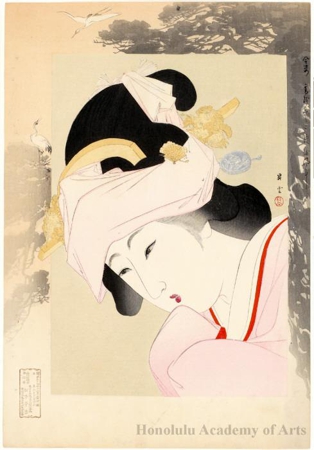



More Village Scenes Prints

A Farmhouse in Autumn, Ayashi, Miyagi Prefecture (Noka no aki (Miyagi ken Ayashi)
Noka no aki (Miyagi ken Ayashi
1946
Color woodblock print
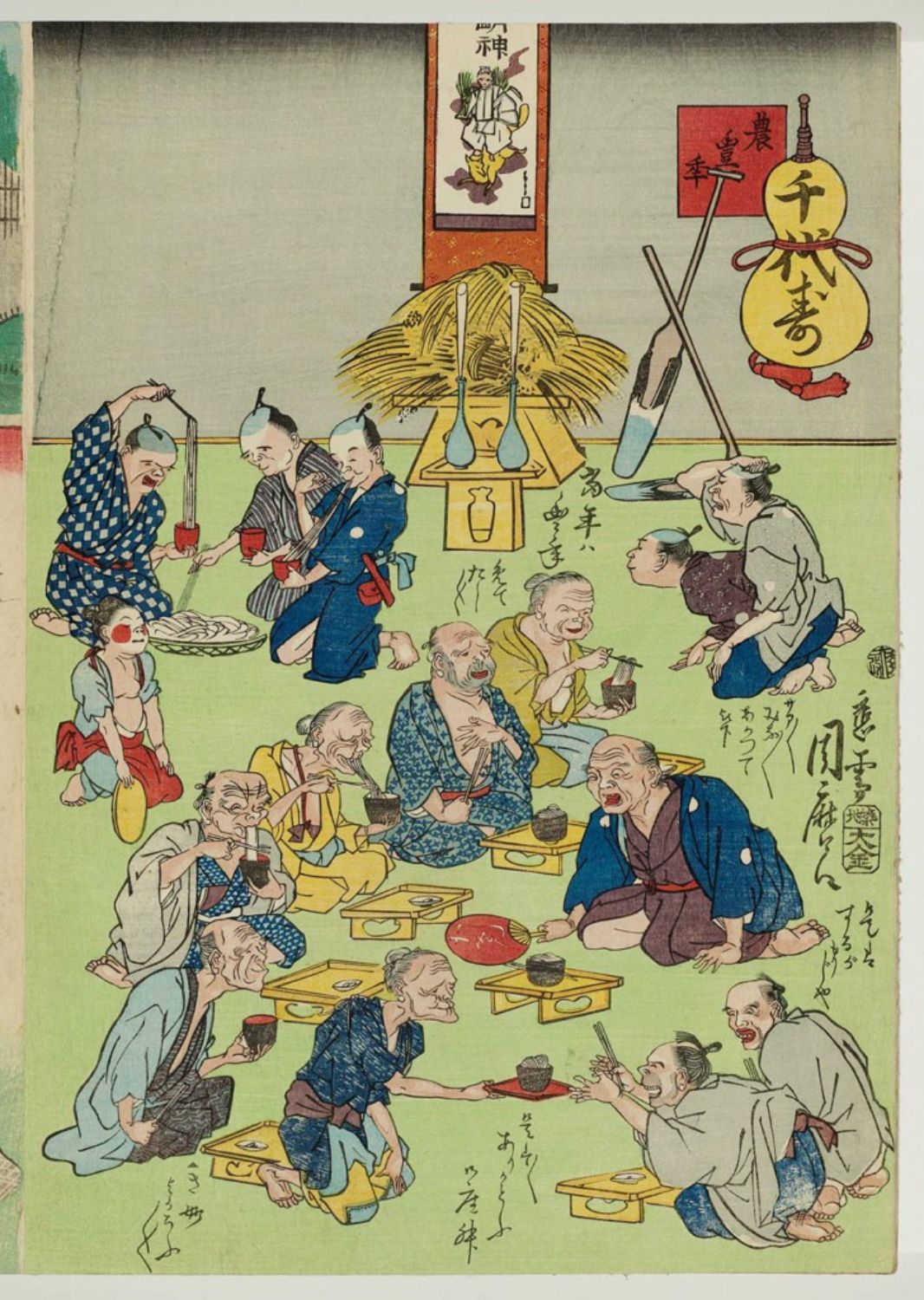
Celebrating the Good Harvest: Felicitations for a Thousand Ages (Nôhônen, Chiyo no kotobuki)
Woodblock print

Eastern Hamlet, Horyu Temple (Horyuji higashi sato)
1956
Color woodblock print
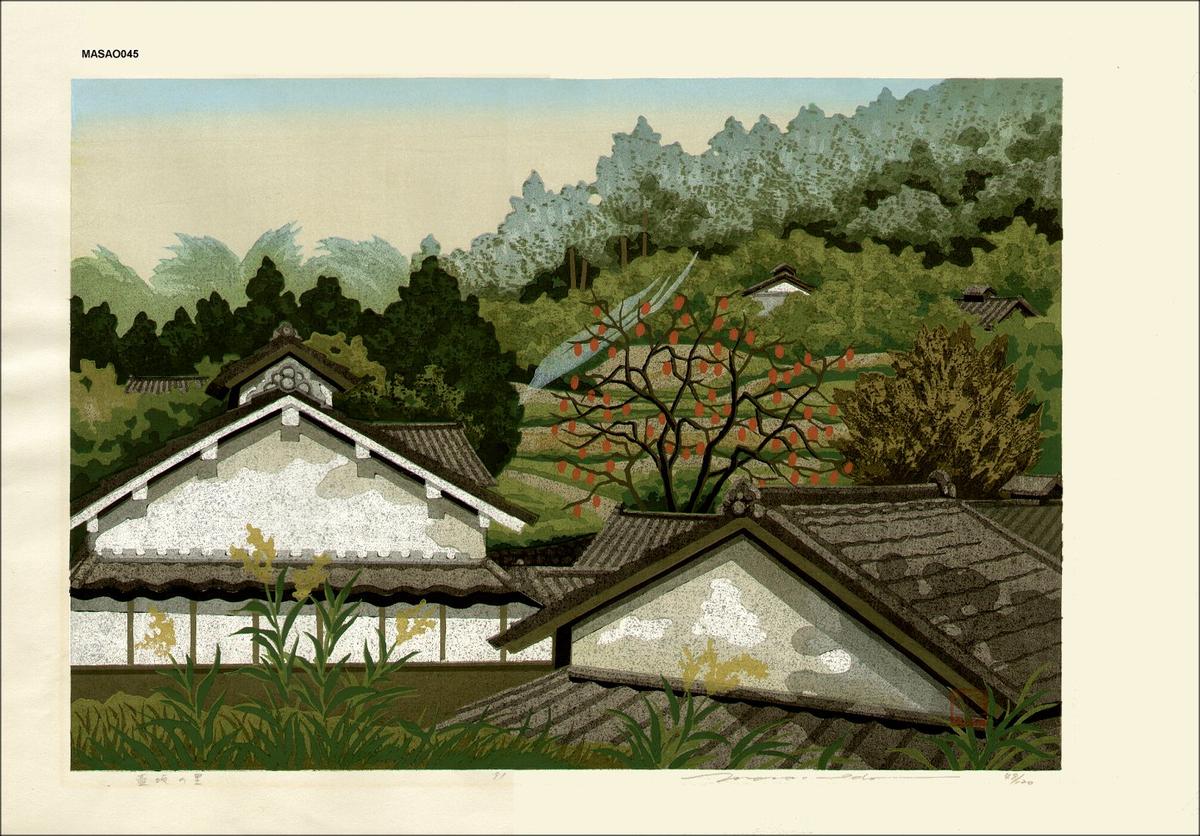
Village Scene in Nara
Woodblock print
Featured in Collections
Curated cross-cuts that include this print.
Frequently Asked Questions
Kururu Village was created by Yamamoto Shoun (山本昇雲).
Kururu Village depicts village scenes.