
A Poet in the New Year
- Date:
- late 1820s
- Medium:
- Color woodblock print; surimono
- Source:
- Art Institute of Chicago
Description
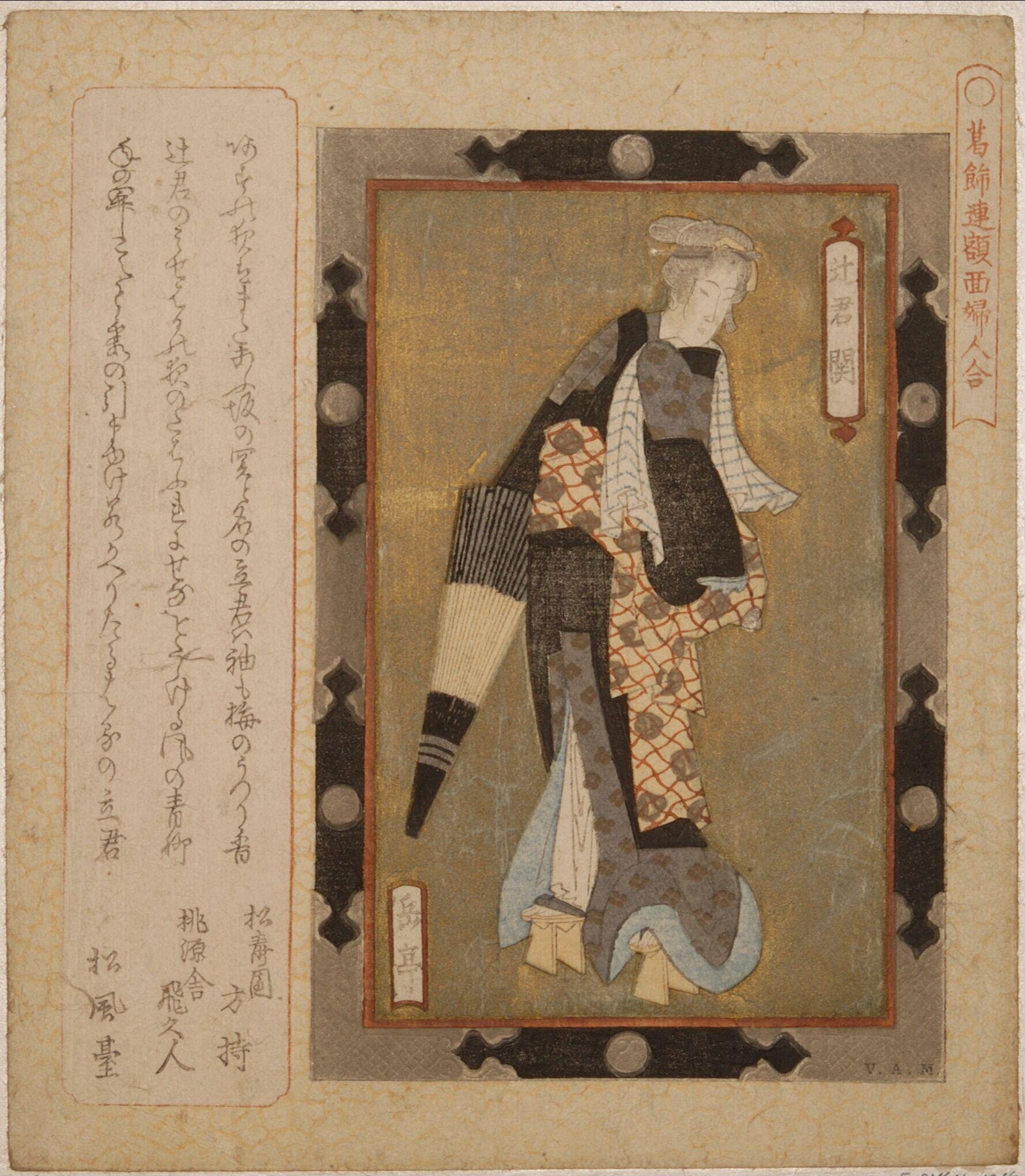
A Poet in the New Year, a 1826 surimono by Yashima Gakutei in the Art Institute of Chicago, sits at the heart of the surimono tradition's most characteristic occasion. New Year was the high season of kyoka-e: poetry circles commissioned surimono to be exchanged as auspicious greetings, and almost every motif - plum blossoms, the rising sun, the seven gods of good fortune, scholarly accessories - could be inflected toward the new year's symbolism. A print depicting a poet in the act of composing or contemplating verses at New Year is therefore self-referential, an image of exactly the kind of activity that produced the print itself. Yashima Gakutei, working within the Hokusai school under Katsushika Hokusai, builds the composition around a single seated figure, allowing the surrounding paper and the accompanying kyoka verses to extend the scene into the viewer's imagination. The print's deluxe surimono techniques - mineral pigments, karazuri embossing for the poet's robe and writing accessories, and burnished metallic accents that catch raking light - register the genre's commitment to handheld richness. The audience of poets who exchanged the sheet would have read it as a portrait of themselves at the New Year writing table, fitting their own verses into a long literary tradition. As a Yashima Gakutei kyoka-e in the Hokusai school manner, A Poet in the New Year is surimono's most explicit self-portrait, the picture in which the genre most clearly meets its own purpose.
More Prints by Yashima Gakutei


Frequently Asked Questions
A Poet in the New Year was created by Yashima Gakutei (八島岳亭) in late 1820s.