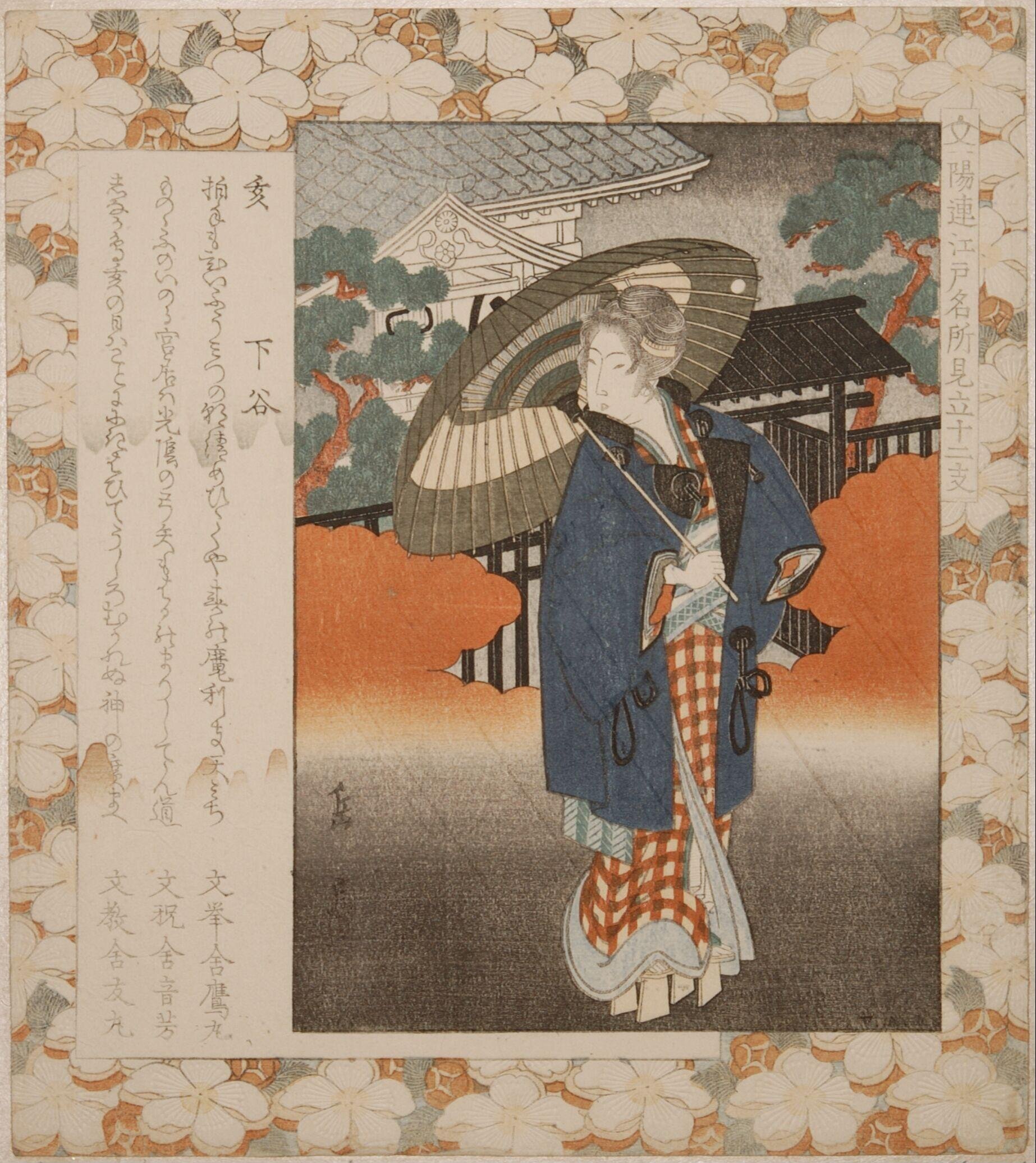
Boar (I)
- Date:
- ca. 1826
- Medium:
- Source:
- Victoria and Albert Museum
Description
Yashima Gakutei designed Boar (I) in 1826 as part of his complete zodiac surimono cycle, completing the twelve-print sequence with the final animal of the East Asian calendar. The Victoria and Albert Museum holds the print as part of the same set.
The wild boar, twelfth in the cycle, signifies courage, abundance, and strength in East Asian symbolism. Gakutei depicts the animal with bristling fur and the dense, low-slung body typical of mountain pigs, often set within or beside the autumnal grasses (hagi or susuki) traditional to its iconography. The composition's rhythmic interplay between the animal's heavy form and the slender flora demonstrates Gakutei's gift for balancing contrasting visual textures.
Gakutei trained in the Hokusai school under Totoya Hokkei, and his treatment of the boar follows the design discipline established by Katsushika Hokusai, who frequently rendered animal subjects with a balance of close observation and decorative concision. Hokusai's interest in seasonal flora and fauna informed his pupils' approach to zodiac imagery, and Gakutei applies that lesson here with careful overprinting on the boar's coat and subtle color accents on the surrounding grasses.
Surimono of this kind were commissioned by kyōka poetry clubs, particularly around the New Year of the corresponding zodiac animal, and circulated alongside members' verses. The Boar's auspicious associations made it especially appropriate to such exchanges. The Victoria and Albert Museum's impression preserves embossing, careful color registration, and metallic accents characteristic of the surimono format. Yashima Gakutei's contribution to this zodiac cycle exemplifies the Hokusai school's ability to bind animal observation, seasonal awareness, and refined printmaking into a coherent artistic program suitable for sophisticated collectors of Edo print culture.
More Prints by Yashima Gakutei


Frequently Asked Questions
Boar (I) was created by Yashima Gakutei (八島岳亭) in ca. 1826.