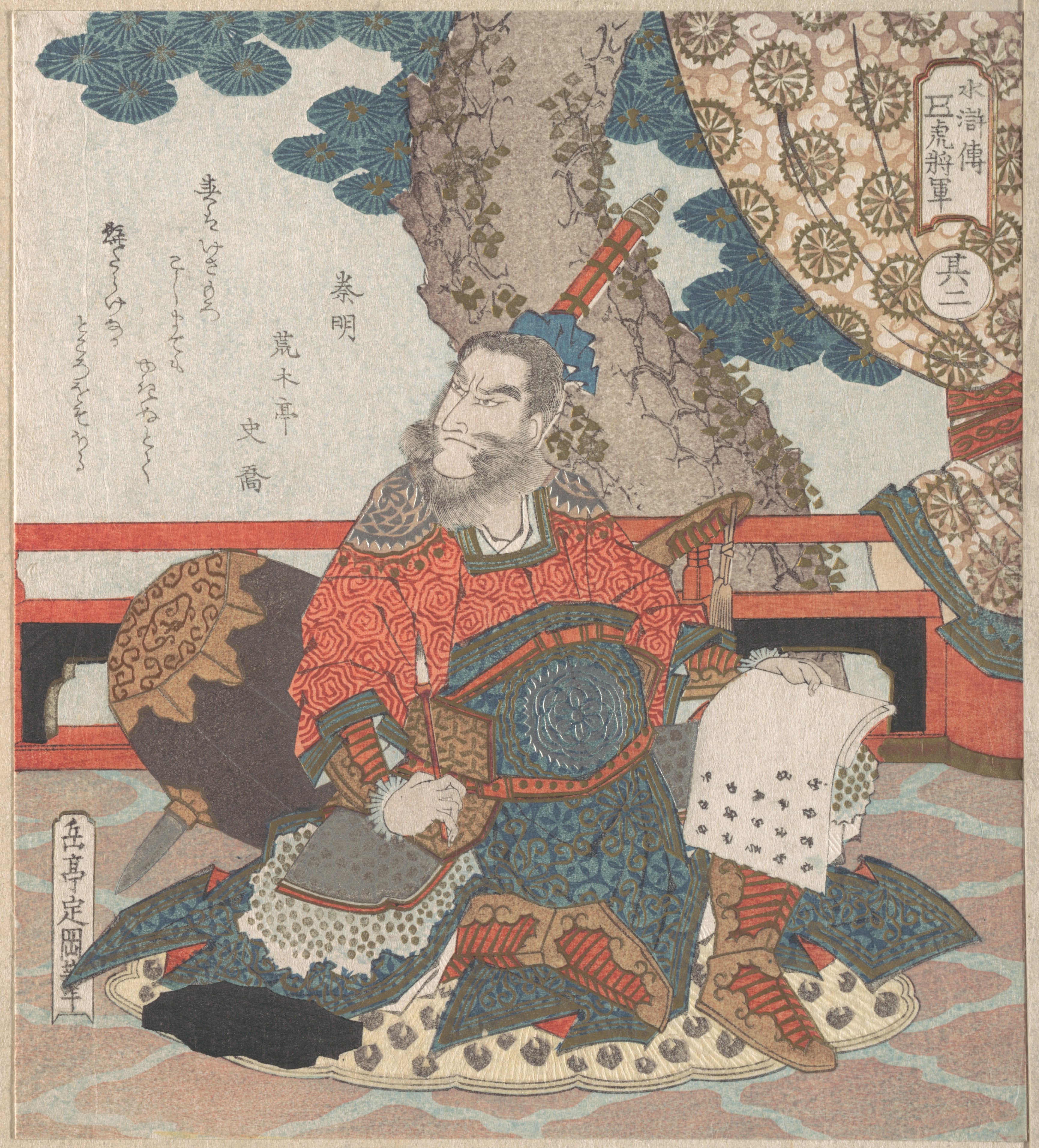
Chinese General "Tiger" from the Story "Suikoden"
- Date:
- 19th century
- Medium:
- Woodblock print (surimono); ink and color on paper
- Source:
- Metropolitan Museum of Art
Description
Chinese General Tiger from the Story Suikoden, by Yashima Gakutei, is held by the Metropolitan Museum of Art and engages the Suikoden craze that swept early nineteenth-century Japan. The Chinese vernacular novel Shuihu zhuan, or Water Margin, was popularized in Japanese translation by Takizawa Bakin and others, and its cast of righteous outlaws supplied print designers across schools with subjects ripe for visual celebration. Utagawa Kuniyoshi's famous Tsuzoku Suikoden series electrified the commercial print market, but Yashima Gakutei adapted the same body of stories to the privately distributed deluxe surimono idiom that defined his career. Trained in the Hokusai school under Katsushika Hokusai and active alongside Totoya Hokkei in the Edo and Osaka kyoka workshops, Gakutei brought the Hokusai school's mature graphic vocabulary to the warrior subject: tense anatomy, dramatic costume detail, and a compressed compositional rhythm suited to the small surimono sheet. The general identified here as Tiger refers to a Suikoden character distinguished by feline ferocity, presented with the iconographic attributes that allowed connoisseurs to recognize him at a glance, including a striped robe, a weapon, and a theatrical pose. The accompanying kyoka verses, typical of surimono, would have punned on the warrior's name or feats. The Metropolitan's holdings of Gakutei's Suikoden warriors complement his broader figural output and demonstrate how the Hokusai school engaged the Suikoden phenomenon from within the privately commissioned surimono idiom rather than the brash commercial format.
More Prints by Yashima Gakutei


Frequently Asked Questions
Chinese General "Tiger" from the Story "Suikoden" was created by Yashima Gakutei (八島岳亭) in 19th century.