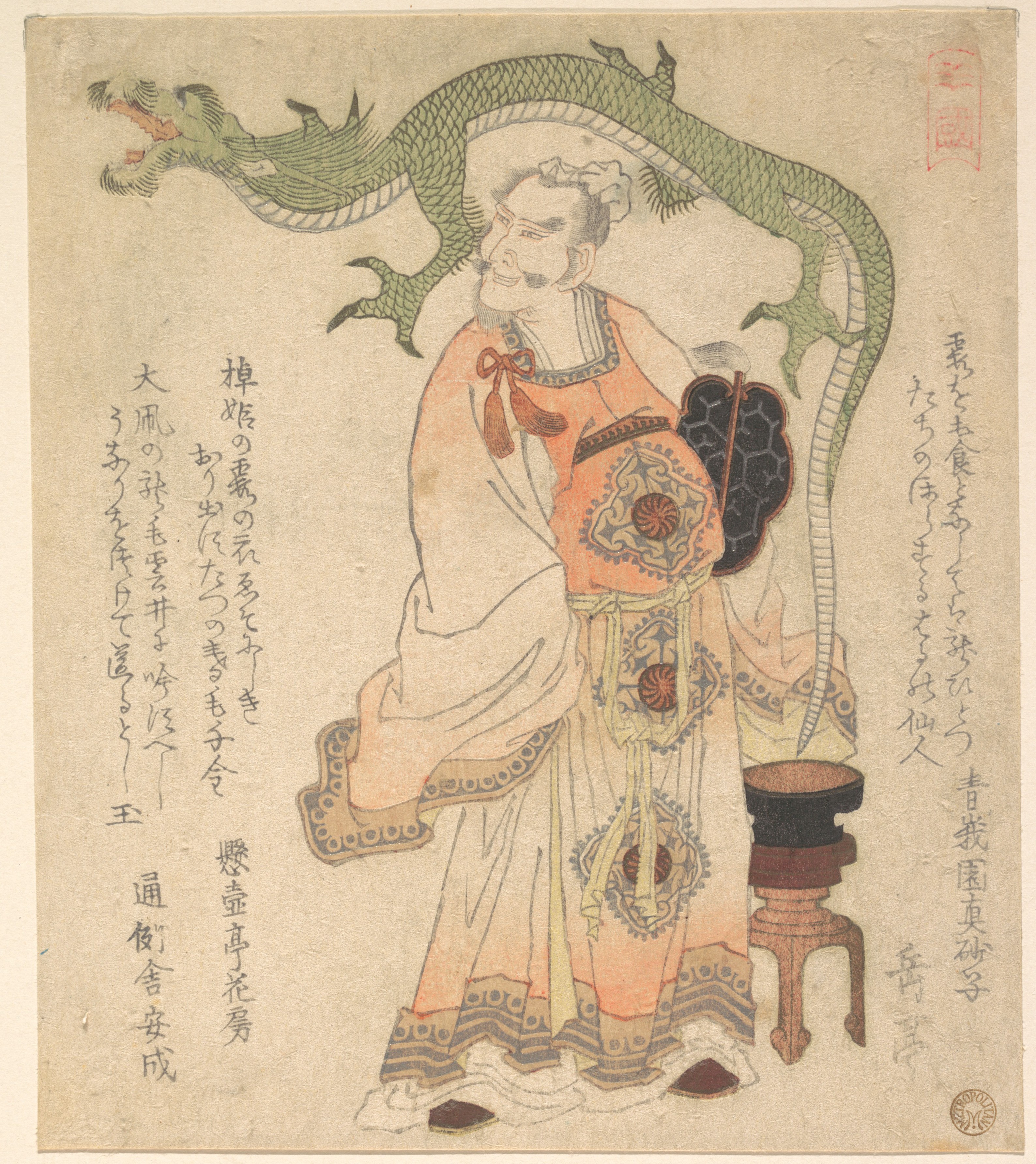
Chinese Sage Evoking a Dragon
- Date:
- ca. 1825
- Medium:
- Woodblock print (surimono); ink and color on paper
- Source:
- Metropolitan Museum of Art
Description
Chinese Sage Evoking a Dragon, in the Metropolitan Museum of Art, is Yashima Gakutei's contribution to the rich pictorial tradition of Daoist immortals and their command over natural forces. The sage gestures or chants, and from cloud or mist a dragon emerges, its serpentine form coiling through the upper portion of the design. The subject combines two visual fascinations of East Asian art: the lone scholar figure absorbed in study or ritual, and the dragon as a sign of cosmic energy, kingship, and weather. Yashima Gakutei was a leading designer within the Hokusai school, working closely with Totoya Hokkei and absorbing the lessons of Katsushika Hokusai. He frequently treated Chinese subjects with the same care he gave to native Japanese themes, finding in literati and Daoist iconography material that resonated with the educated kyoka audiences who commissioned his surimono. In a design of this kind he could display both his command of figural drawing and his interest in dynamic, weather-laden composition: the sage's stillness contrasts with the dragon's motion, and clouds become an active design element rather than a passive backdrop. The subject of a sage summoning a dragon also carried symbolic resonance. Dragons were associated with rainfall and with the moral authority of sages capable of moving heaven; their appearance in surimono and book illustrations could allude to political wisdom, scholarly achievement, or the felicitous turning of the seasons. Such allusions appealed to kyoka clubs because they layered Chinese classical learning with the wit and self-conscious refinement that defined their poetic culture. The Metropolitan Museum of Art's holding preserves a vivid example of Yashima Gakutei's engagement with continental themes.
More Prints by Yashima Gakutei


Frequently Asked Questions
Chinese Sage Evoking a Dragon was created by Yashima Gakutei (八島岳亭) in ca. 1825.