
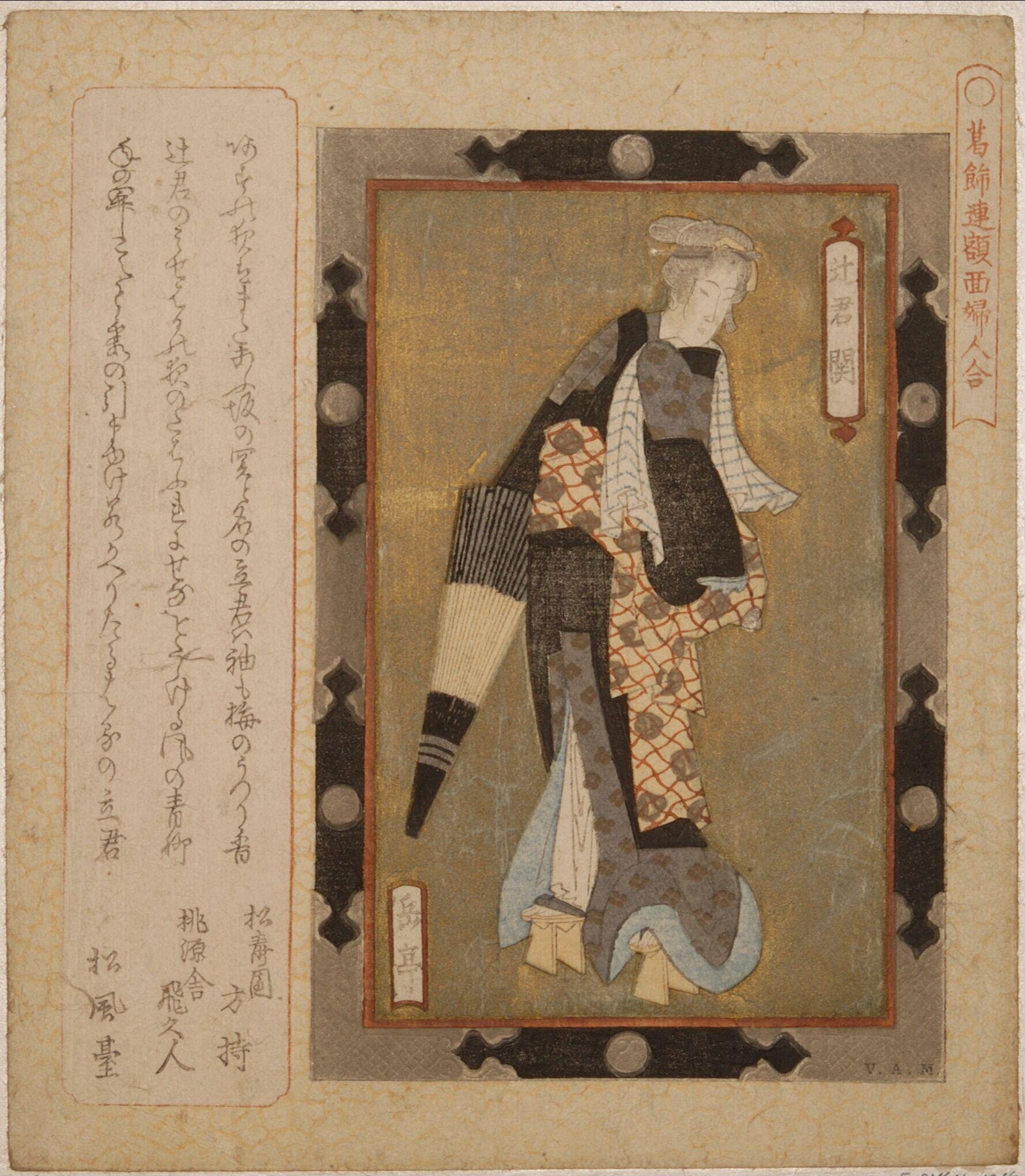
Court Lady with a Fan—a Cherry-Tree in Bloom
- Date:
- 19th century
- Medium:
- Woodblock print (surimono); ink and color on paper
- Source:
- Metropolitan Museum of Art
Description
Yashima Gakutei's Court Lady with a Fan, a Cherry-Tree in Bloom, recorded in the Metropolitan Museum of Art, sets an elegant Heian-style noblewoman against the most celebrated symbol of Japanese spring. The court lady is shown holding a fan and standing or seated beside a cherry tree in full flower, a juxtaposition designed to summon associations with the courtly literature of the Heian period and with the broader tradition of cherry-blossom viewing (hanami) that remained central to Edo cultural life. The print's modest scale belies the layered cultural references it asks the viewer to recognize. Gakutei trained within the Hokusai school, working closely with Totoya Hokkei and absorbing the visual lessons of Katsushika Hokusai. That training gave him a strong sense of how to place a single figure within a charged setting: the cherry tree functions both as background scenery and as iconographic shorthand for poetic sensibility, the fan signals refinement, and the lady's costume telegraphs a high social register. These choices are typical of surimono, the privately commissioned print format in which Gakutei excelled. Surimono celebrating the seasons were prized by kyoka poetry clubs, whose members exchanged verses written in response to particular images, and a print combining a courtly figure with cherry blossoms would have prompted reflections on transience, beauty, and the cyclical structure of the literary year. By integrating classical subject matter with the technical refinements of premium woodblock printing, Yashima Gakutei produced sheets whose appeal was at once visual and literary. The Metropolitan's record secures the image's place in the public record of Gakutei's surimono practice.
More Prints by Yashima Gakutei


Frequently Asked Questions
Court Lady with a Fan—a Cherry-Tree in Bloom was created by Yashima Gakutei (八島岳亭) in 19th century.