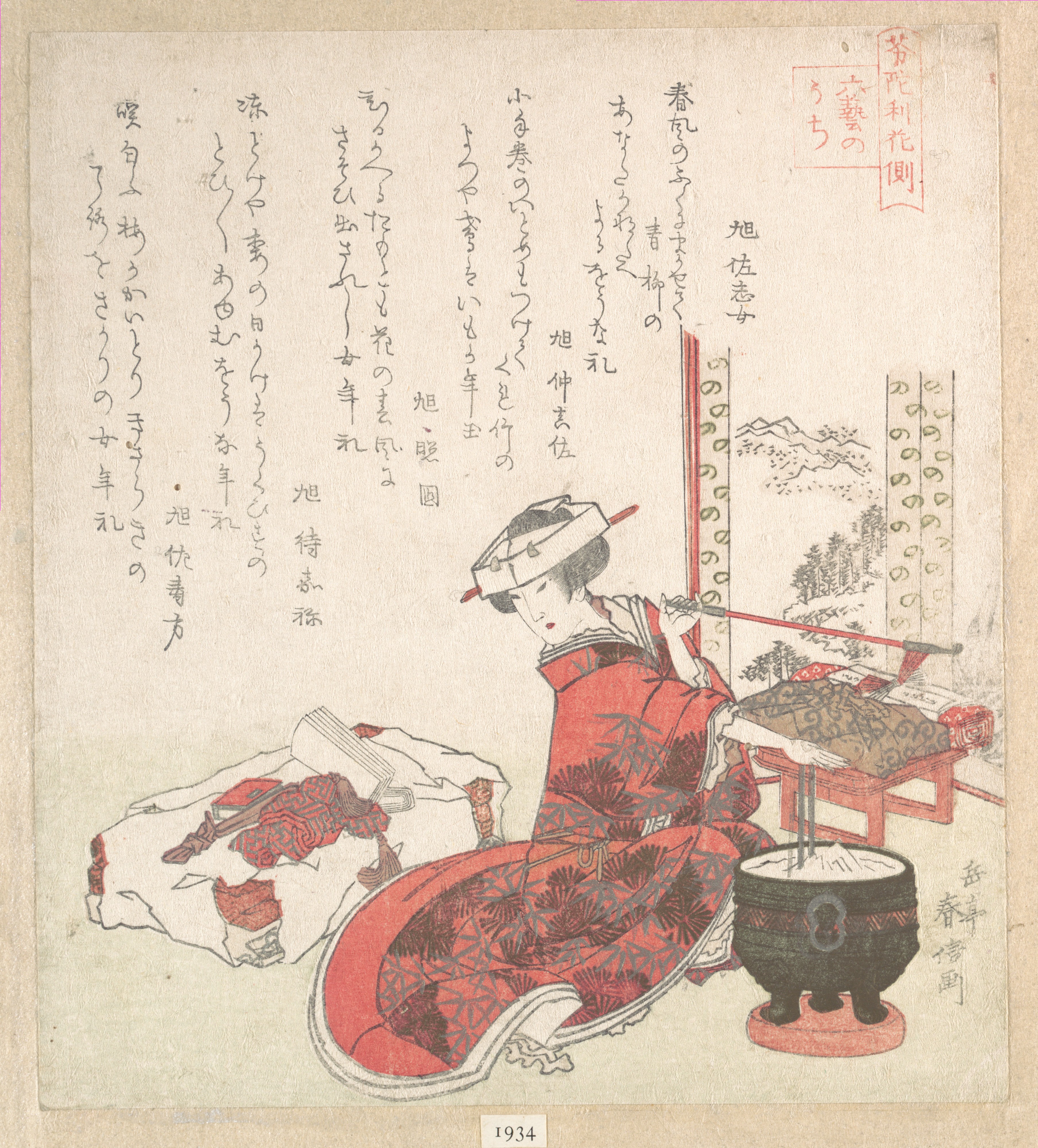
Courtesan
- Date:
- 19th century
- Medium:
- Woodblock print (surimono); ink and color on paper
- Source:
- Metropolitan Museum of Art
Description
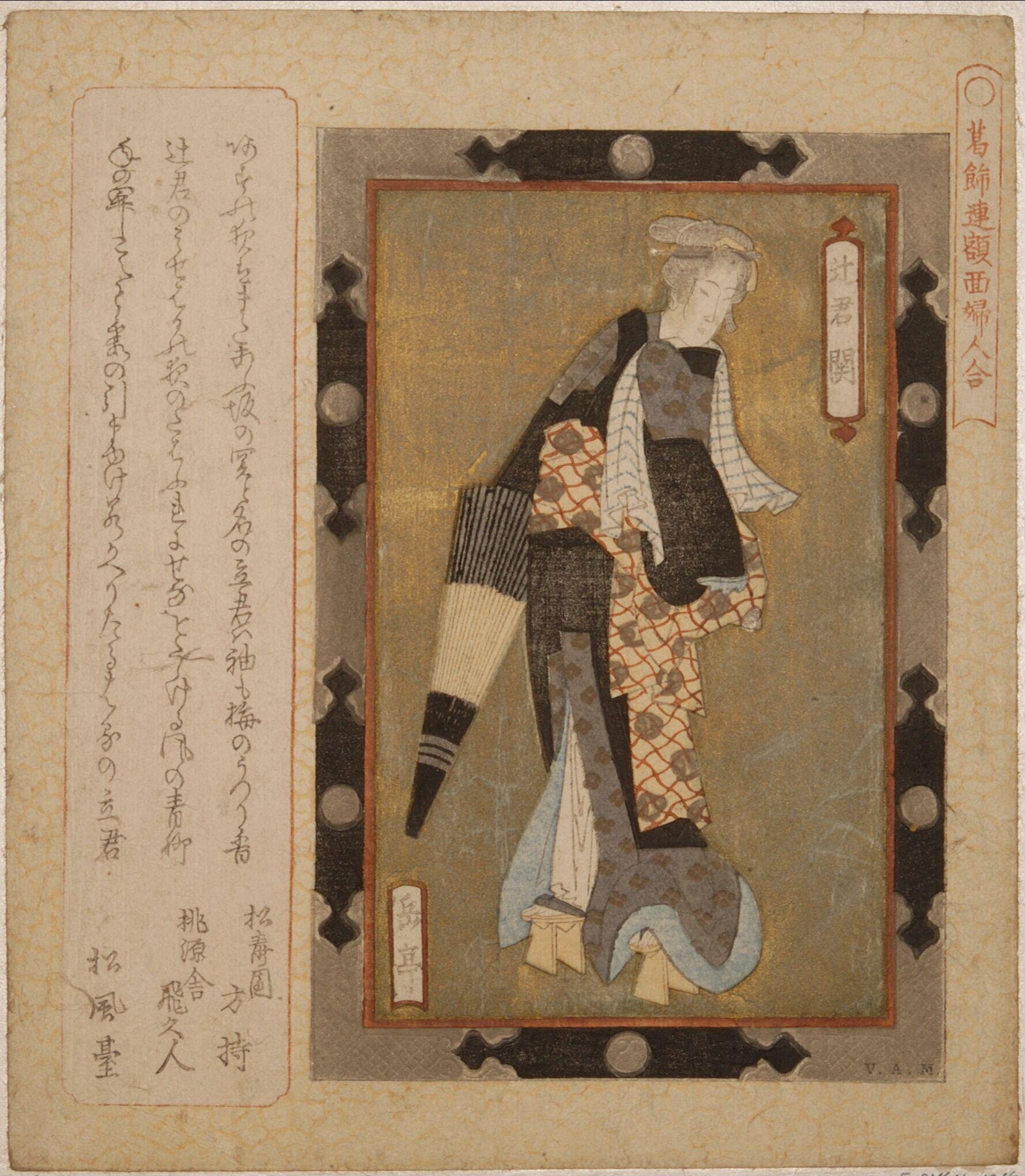
Courtesan, by Yashima Gakutei, is held by the Metropolitan Museum of Art and stands within his small but significant body of bijin (beautiful woman) surimono. Although the bijin-ga tradition was dominated in the early nineteenth century by designers such as Utagawa Kunisada and the late Utagawa school, Yashima Gakutei, trained in the Hokusai school under Katsushika Hokusai, brought the Hokusai school's discipline of figural composition and the surimono format's technical luxury to depictions of courtesans. The high-ranking Yoshiwara or Shimabara courtesan, identified by her elaborate hairstyle, layered uchikake outer robe, and the formal projection of her obi tied in front, served as a vehicle for the kind of lavish costume display that surimono printing could most fully realize. Surimono were privately commissioned by kyoka poetry clubs and distributed as gifts rather than sold publicly, which permitted the use of metallic pigments, embossing, and the finest registration. The accompanying kyoka verses, integral to the format, would have linked the visual subject to a literary occasion known to the original recipients. Gakutei's handling of the courtesan reveals the Hokusai school's interest in surface pattern and structural rhythm: the woman's silhouette is articulated by the cascading textile design and the careful balance of accouterments. The Metropolitan Museum's holdings of Gakutei's bijin surimono provide an essential reference for studying how the Hokusai school engaged the pleasure-quarter subject from within the privately distributed surimono idiom rather than the dominant commercial bijin-ga market.
More Prints by Yashima Gakutei


Frequently Asked Questions
Courtesan was created by Yashima Gakutei (八島岳亭) in 19th century.