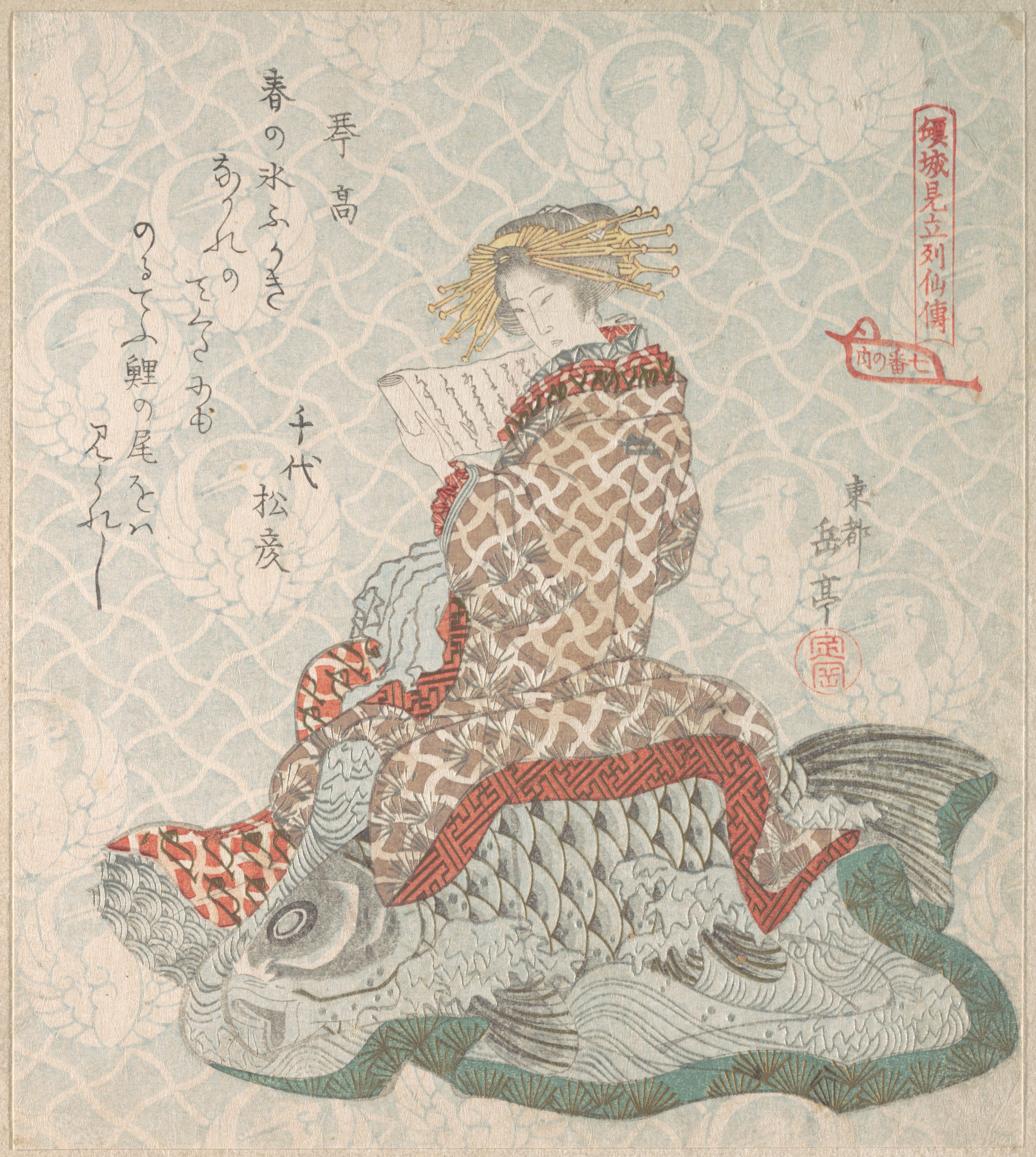
Courtesan Seated on a Carp
- Date:
- 19th century
- Medium:
- Woodblock print (surimono); ink and color on paper
- Source:
- Metropolitan Museum of Art
Description
Courtesan Seated on a Carp, by Yashima Gakutei, is held by the Metropolitan Museum of Art and represents one of the more whimsical iconographic conceits in his surimono output. The image combines the elaborate sartorial vocabulary of the high-ranking courtesan (oiran or tayu) with the auspicious motif of the carp (koi), invoking the legend of the carp that climbed the Yellow River's Dragon Gate to become a dragon. By seating a courtesan on a carp, Gakutei plays with the iconography of the Chinese immortal Kinkō (Qin Gao), often depicted riding a carp through the waves, transferring the conceit to the world of the Yoshiwara or Shimabara pleasure quarters. Such literary play is characteristic of the kyoka surimono tradition, where privately commissioned prints invited the kind of cross-reference that delighted educated poetry-club members. As a designer trained in the Hokusai school under Katsushika Hokusai and active alongside Totoya Hokkei in the surimono workshops of Edo and Osaka, Yashima Gakutei deployed the format's technical refinements, including metallic pigments, embossing, and careful gradation, to render the courtesan's elaborate robes and the gleaming surface of the carp. The Hokusai school's discipline of figural composition is evident in the structural balance between woman and fish, neither overwhelming the other. The Metropolitan Museum's holdings of Gakutei's mythological surimono provide a rich resource for studying how kyoka humor and Chinese mythological reference combined within the genre's privately distributed prints.
More Prints by Yashima Gakutei


More Fish Prints


Frequently Asked Questions
Courtesan Seated on a Carp was created by Yashima Gakutei (八島岳亭) in 19th century.
Courtesan Seated on a Carp depicts fish.