
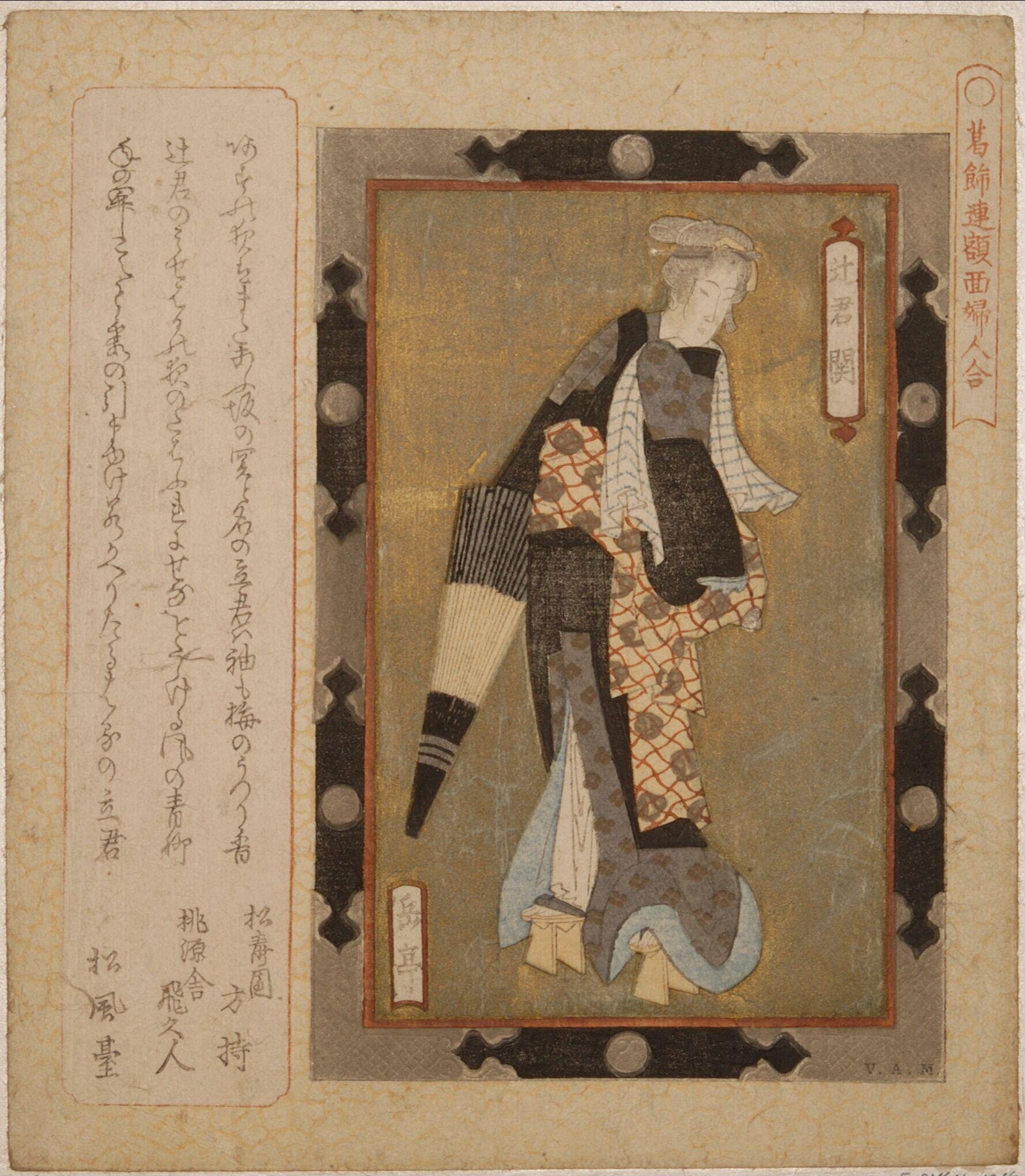
Furuichi Dance (No. 2 of a Set of Four)
- Date:
- 19th century
- Medium:
- Woodblock print (surimono); ink and color on paper
- Source:
- Metropolitan Museum of Art
Description
Furuichi Dance (No. 2 of a Set of Four), by Yashima Gakutei, is held by the Metropolitan Museum of Art and depicts a performance from the Furuichi pleasure quarter, the entertainment district that grew up alongside the Ise Grand Shrine and served pilgrims and travelers to the great sanctuary. The Furuichi dances, performed by the quarter's geisha and entertainers, became famous throughout Japan and supplied print designers with a vibrant subject that combined religious pilgrimage, regional travel, and the codified glamour of the geisha world. Yashima Gakutei, trained in the Hokusai school under Katsushika Hokusai and active as a leading designer in the deluxe surimono format, made multi-sheet sets like this Furuichi dance series a recurring feature of his work, inviting recipients to follow a coordinated narrative across coordinated prints. The Hokusai school's discipline of figural composition organizes the dancer's posture, the fall of her kimono, and the placement of accouterments such as a fan or a hand drum. Surimono printing techniques, including metallic pigments, embossed pattern in the kimono, and careful registration of the inscribed kyoka verses, would have lent the small sheet the technical luxury characteristic of the format. The accompanying kyoka verses, integral to the surimono idiom, would have linked the dance to a specific occasion known to the commissioning poetry club. The Metropolitan Museum's holdings of Gakutei's set-format surimono provide a critical resource for studying how he constructed multi-sheet narratives within the privately distributed deluxe print format.
More Prints by Yashima Gakutei


Frequently Asked Questions
Furuichi Dance (No. 2 of a Set of Four) was created by Yashima Gakutei (八島岳亭) in 19th century.