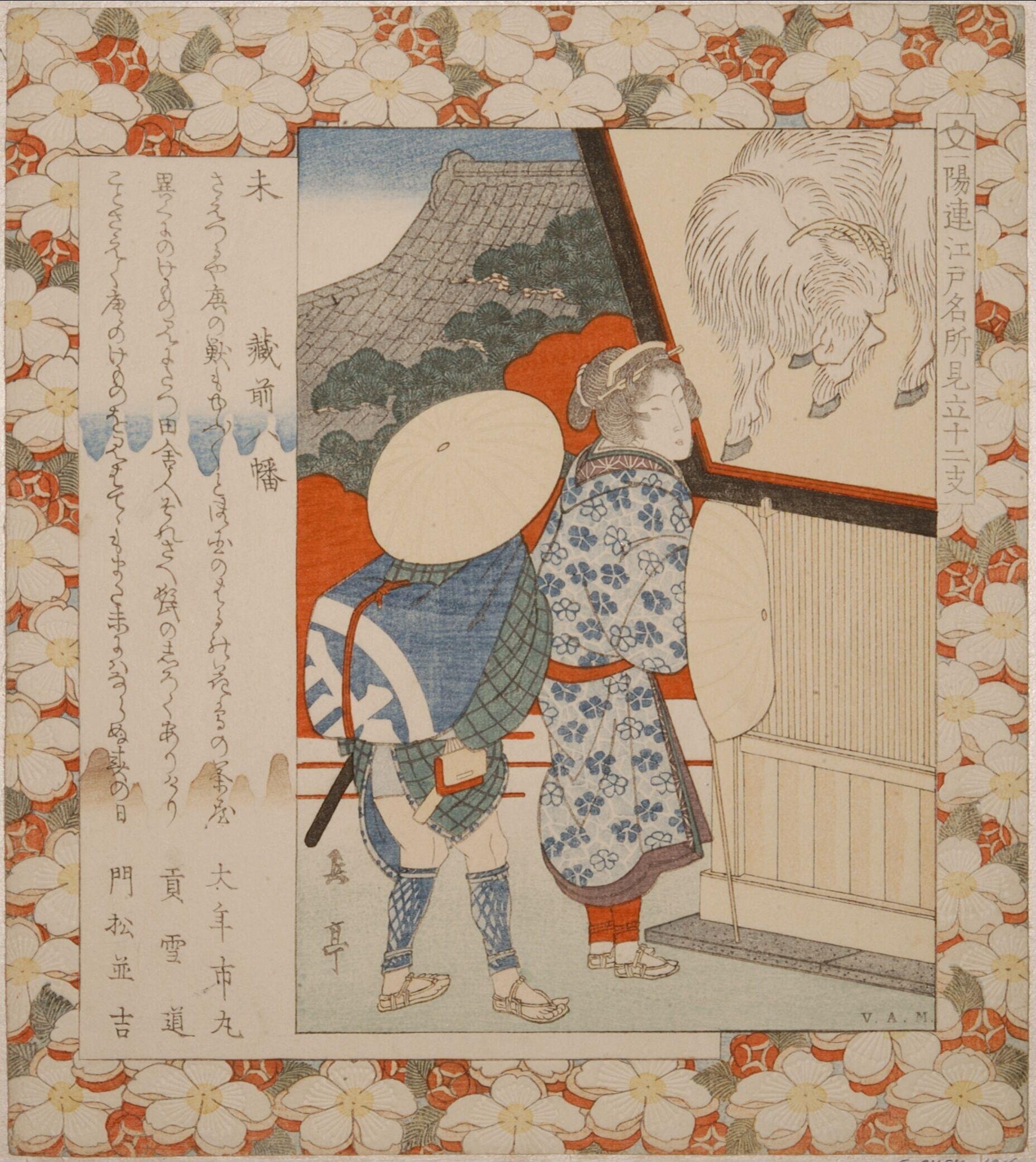
Goat (Hitsuji)
- Date:
- ca. 1826
- Medium:
- Source:
- Victoria and Albert Museum
Description
Yashima Gakutei designed Goat (Hitsuji) in 1826 as the eighth animal in his complete zodiac surimono cycle. The Victoria and Albert Museum holds the print as part of the same group of calendar designs.
Because goats were not common in Japan, Edo designers approached the zodiac sheep/goat through Chinese painting traditions and earlier Japanese precedents. Gakutei renders the animal with curling horns, a tufted beard, and a softly modulated white coat, often placed beside seasonal flora or rocky outcrops that establish a pastoral or auspicious mood. The figure conveys gentleness and patience, qualities long associated with the hitsuji in East Asian symbolism.
Gakutei trained in the Hokusai school under Totoya Hokkei, and Katsushika Hokusai's broader interest in domesticated and semi-domesticated animals provided a vocabulary of poses and textures that his pupils adapted to surimono. The Hokusai school favored clear silhouettes and economical color, both of which suit the gentle dignity of the goat. Gakutei's handling of the animal's curly fleece and articulated horns demonstrates his command of the medium's overprinting and embossing capacities.
Zodiac surimono like this one were commissioned by kyōka poetry clubs, particularly for the New Year of the corresponding animal. The format invited careful registration, occasional metallic pigments, and gauffrage that gave the prints a luxurious physical presence appropriate to private exchange. The Victoria and Albert Museum's impression of the Hitsuji print exemplifies how Yashima Gakutei integrated Hokusai school design discipline with the surimono medium's refined craft, producing an image of the goat that is at once observational, symbolic, and pleasingly decorative for the discerning Edo collector.
More Prints by Yashima Gakutei


Frequently Asked Questions
Goat (Hitsuji) was created by Yashima Gakutei (八島岳亭) in ca. 1826.