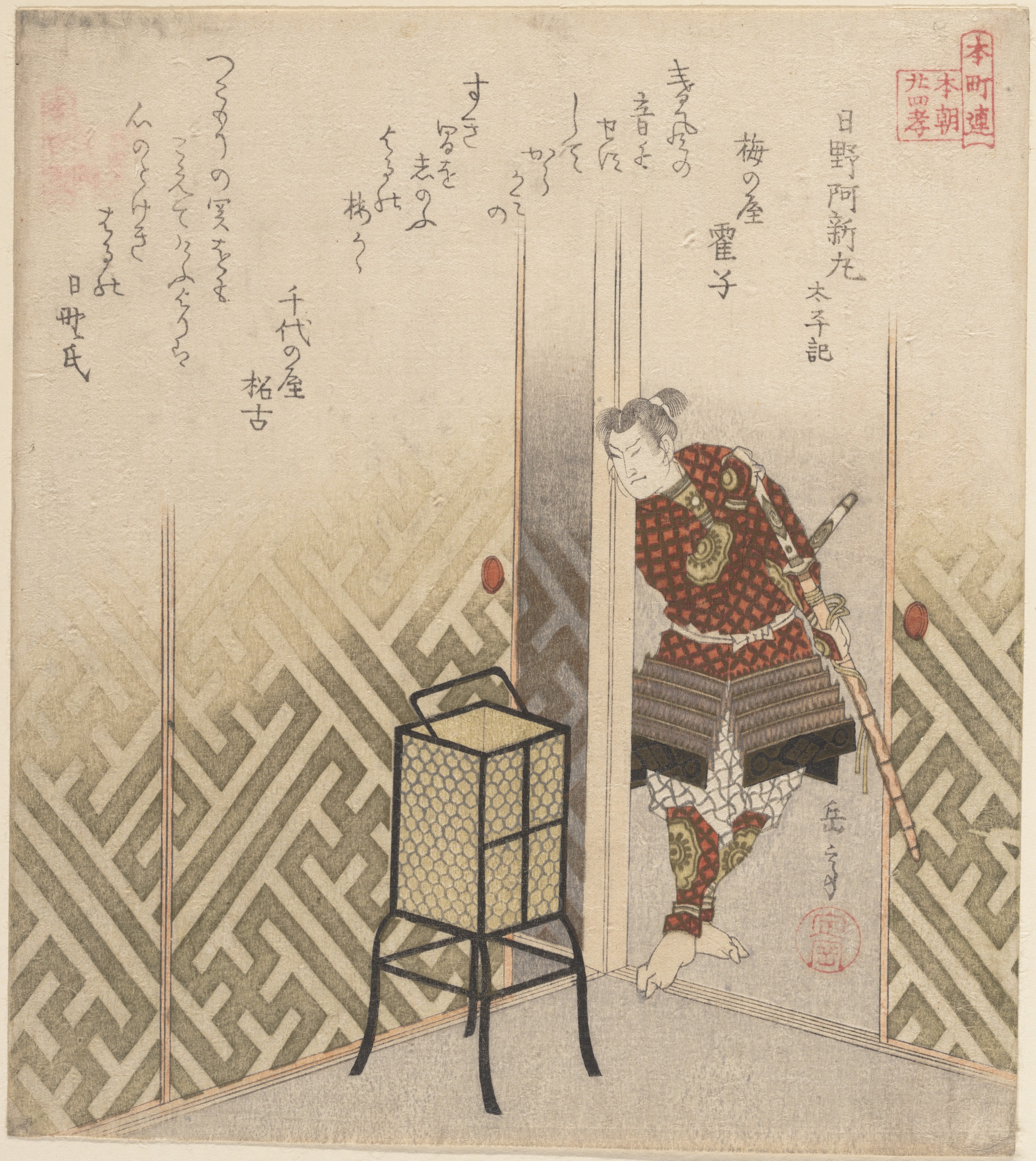
Hino Kumawakamaru (Warrior) From the Book: Taiheiki
- Date:
- ca. 1840
- Medium:
- Woodblock print (surimono); ink and color on paper
- Source:
- Metropolitan Museum of Art
Description
Hino Kumawakamaru, in the Metropolitan Museum of Art, is Yashima Gakutei's print of the famed boy avenger from the medieval war chronicle Taiheiki. According to the Taiheiki, Kumawakamaru was the young son of Hino Suketomo, a courtier who supported Emperor Go-Daigo's resistance to the Kamakura shogunate and was eventually executed in exile. The boy is celebrated for slipping into the residence of his father's killer and accomplishing a daring act of revenge despite his youth. Gakutei concentrates on the figure of Kumawakamaru himself, presenting him in a moment of action or determination drawn from this dramatic biography. As a designer within the Hokusai school, Yashima Gakutei worked under Totoya Hokkei and within the broader influence of Katsushika Hokusai. His warrior prints stand alongside his elegant figures of women, poets, and Chinese sages as part of a wide repertoire, and they demonstrate that the Hokusai school's interest in historical narrative was every bit as serious as that of more theatrically oriented Edo print designers. Hino Kumawakamaru's story carried strong moral resonance for nineteenth-century viewers, who saw in his filial revenge a touchstone of loyalty and courage. By taking the subject from a specific named source, the Taiheiki, Gakutei locates the print within the broader category of literary illustration as well as warrior imagery, and signals his audience's familiarity with classical Japanese historical writing. Surimono and related luxury prints often used premium materials and printing techniques to enhance such serious subjects. The Metropolitan Museum of Art's record secures Yashima Gakutei's contribution to this tradition of Taiheiki-derived imagery within the Hokusai school.
More Prints by Yashima Gakutei


Frequently Asked Questions
Hino Kumawakamaru (Warrior) From the Book: Taiheiki was created by Yashima Gakutei (八島岳亭) in ca. 1840.