
Ichirō gafu
- Date:
- c. 1823
- Medium:
- Woodblock- printed book; 1 vol.
- Source:
- Art Institute of Chicago
Description
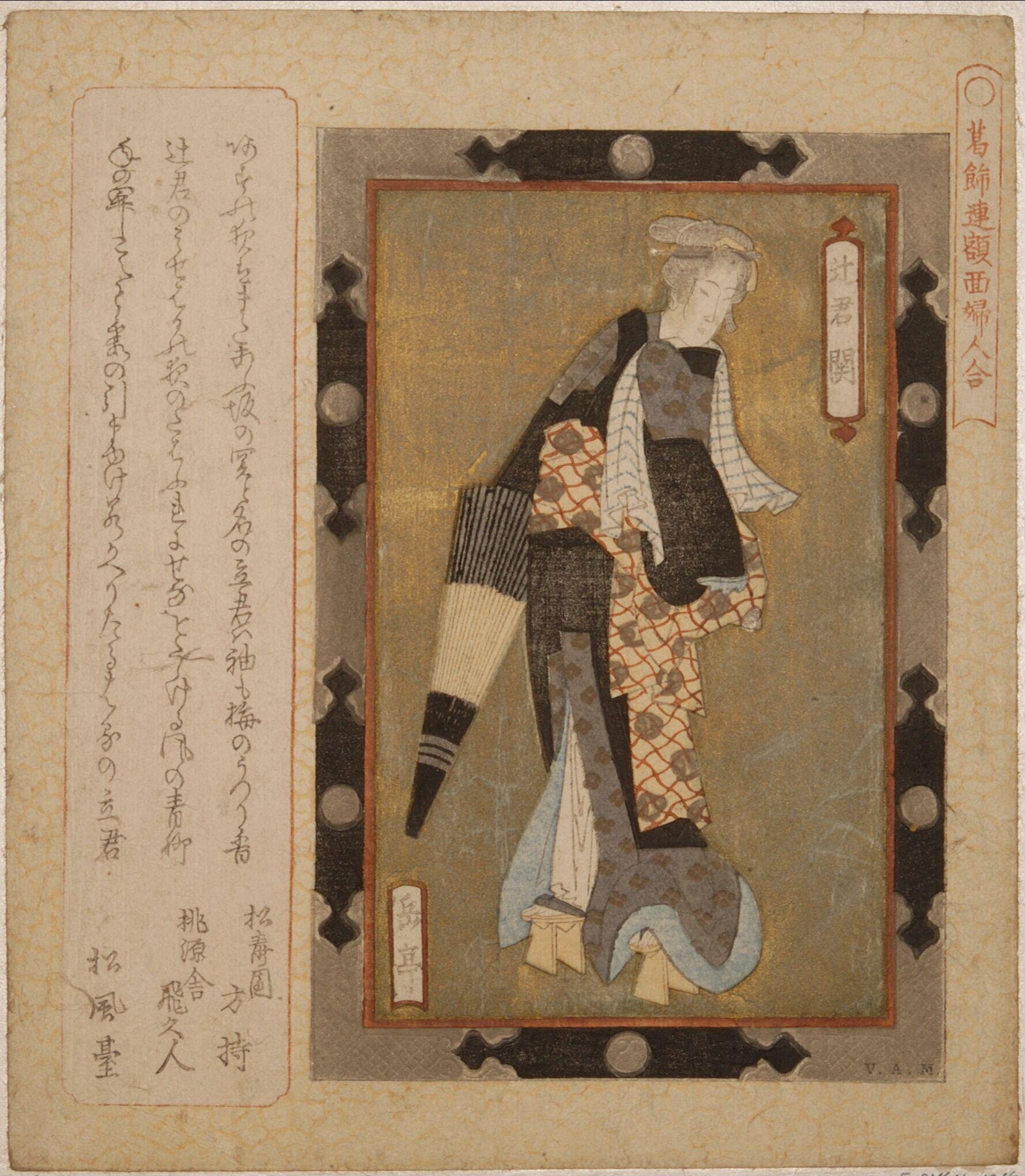
Ichirō gafu is a printed album by Yashima Gakutei held by the Art Institute of Chicago. The title translates roughly as Gakutei's Picture Album, and the volume gathers compositions in the spirit of the e-hon and gafu tradition that flourished alongside surimono in early nineteenth-century Japan. Gakutei, a leading pupil within the Hokusai school after his apprenticeship with Katsushika Hokusai and his subsequent association with Totoya Hokkei, used picture-album formats to circulate designs that did not fit the small single-sheet surimono format but still demanded the refined treatment his kyoka patrons expected. The album collects subjects ranging from figures and landscape to bird-and-flower studies and Chinese literary themes, displaying the breadth of reference that defined his career. Picture albums were printed in modest editions and bound rather than sold loose, which encouraged designers to think across multi-page narratives, juxtaposing motifs and rhythms in the way that Hokusai had done in his famous manga and gafu compilations. Gakutei's volume operates as both a portfolio and a sourcebook, demonstrating his graphic vocabulary to patrons, fellow artists, and aspiring printmakers. The Art Institute of Chicago's holding allows researchers to study his line, palette, and compositional habits in concentrated form. Within Gakutei's broader output, the gafu format complements his celebrated surimono series, including the Tenpozan suite and his Suikoden warrior set, by showing how he negotiated the multi-image album idiom that the Hokusai school had popularized. As a primary source for understanding nineteenth-century print culture, Ichirō gafu sits alongside the gafu volumes of Hokusai, Hokkei, and other school members in shaping what the deluxe printed book could be.
More Prints by Yashima Gakutei


Frequently Asked Questions
Ichirō gafu was created by Yashima Gakutei (八島岳亭) in c. 1823.